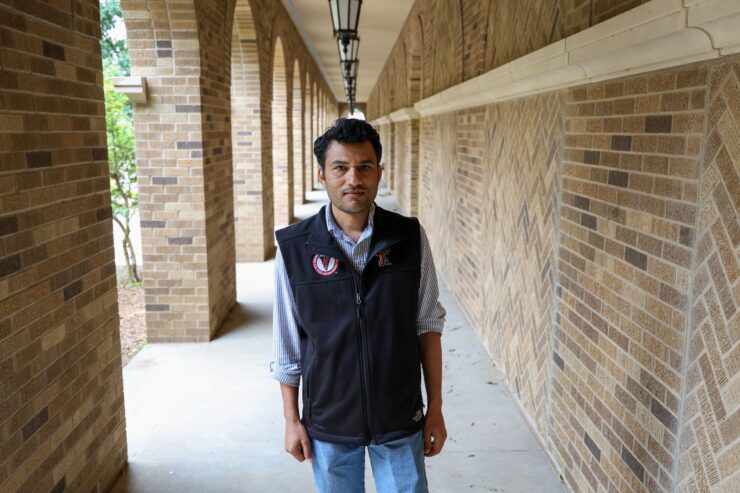
A School of Veterinary Medicine researcher will lead the funded project to study Streptococcus suis disease in pigs
Texas Tech University’s School of Veterinary Medicine received a $650,000 grant from the U.S. Department of Agriculture’s National Institute of Food and Agriculture to study Streptococcus suis (S. suis), a bacterium in pigs that can cause serious illness and economic losses. Led by assistant professor Tara Gaire, the research project aims to identify why some pigs become sick while others do not, helping improve disease prevention, animal welfare and sustainability in the U.S. swine industry.
Why This Matters:
- Advancing Research: The project will examine how pigs’ respiratory microbiomes interact with different strains of S. suis, potentially leading to earlier detection methods and more effective prevention strategies for producers.
- Reducing Dependence: By focusing on disease risk factors instead of reacting after outbreaks occur, the research could help reduce antibiotic use and combat growing antimicrobial resistance in livestock production.
- Public Health/Food Security: Because S. suis can spread from pigs to humans, the findings may improve occupational health protections while strengthening food security and reinforcing One Health connections between animals, people and the ecosystem.
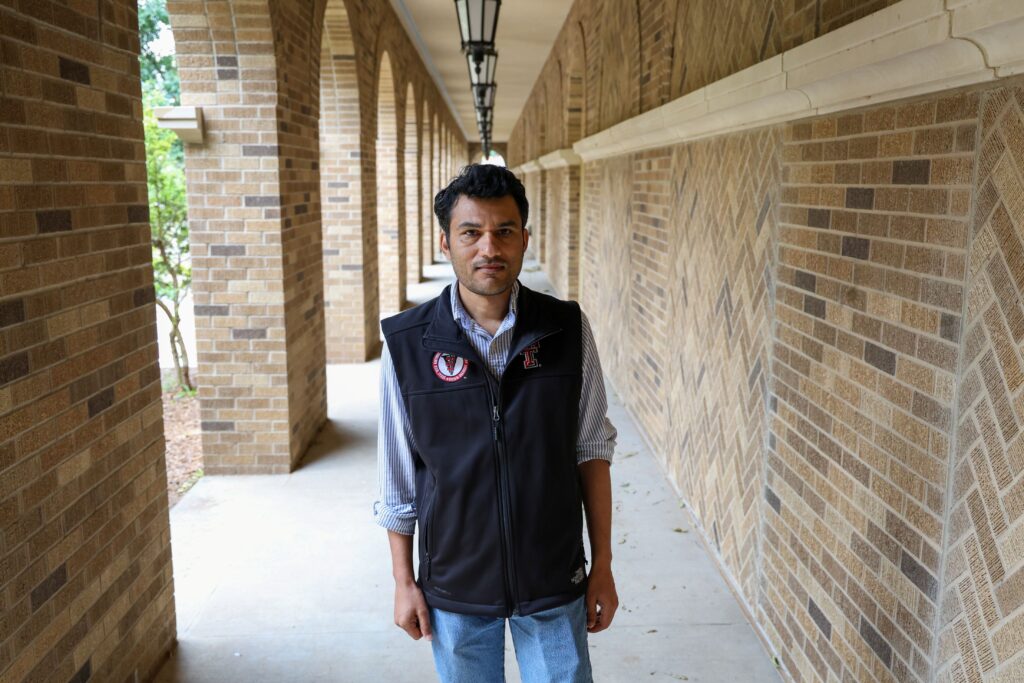
Tara N. Gaire
Assistant Professor, Veterinary Epidemiology and One Health
Texas Tech University’s School of Veterinary Medicine has received a $650,000 grant from the U.S. Department of Agriculture’s National Institute of Food and Agriculture (USDA‑NIFA) to support new research aimed at improving pig health and strengthening long‑term sustainability in the U.S. swine industry.
The multi‑year, multi‑institution project is led by Tara Gaire, assistant professor of epidemiology at the School of Veterinary Medicine. The study focuses on Streptococcus suis (S. suis), a common bacterium of the pig respiratory tract that can sometimes cause serious disease and significant economic losses for producers.
Although S. suis is widespread in swine herds, only some pigs become seriously ill, developing conditions such as meningitis, arthritis or sudden death. That uncertainty makes the disease especially difficult to manage on farms.
“This work is important because it moves beyond asking whether S. suis is present and instead asks why disease develops in some pigs but not others,” Gaire said. “By identifying the biological and management factors linked to disease risk, we hope to generate knowledge that supports more effective control strategies on farms.”
Researchers from Iowa State University’s Veterinary Diagnostic Laboratory and the University of Minnesota are collaborating on the project, along with commercial swine producers. The team will follow pigs from birth through postweaning on two commercial farms, collecting more than 4,000 samples to study how the pigs’ microbiome – the community of microbes in the respiratory system – interacts with different strains of S. suis.
By combining farm management data with advanced molecular sequencing and pathogen genomics from nasopharyngeal samples, the researchers aim to identify conditions that make pigs more likely to become sick. That knowledge could lead to better diagnostics and more targeted prevention strategies.
“This research shifts the focus from reacting to disease after outbreaks occur to understanding risk earlier in an animal’s life,” said Annelise Nguyen, associate dean for research and graduate programs. “The outcomes have the potential to reduce antibiotic use, improve on‑farm decision making, and train future scientists to work at the intersection of animal health and agriculture.”
Managing S. suis remains challenging because there are no widely effective commercial vaccines and pathogenic strains often co-circulate with commensal strains. Antibiotics are frequently used, but growing antimicrobial resistance is making prevention‑focused research increasingly important.
According to Guy Loneragan, dean of the School of Veterinary Medicine, the project reflects the school’s purpose to deliver practical solutions for producers and rural and regional communities.
“This USDA investment highlights the real‑world impact of our faculty’s work,” Loneragan said. “Dr. Gaire’s research addresses challenges facing the swine producers while also supporting animal welfare, food security and public health, which was exactly the kind of problem‑solving research our school was created to support. We are so fortunate that Dr. Gaire joined our school and is doing this great work providing solutions for producers.”
In addition to improving animal health, S. suis is considered a zoonotic pathogen, meaning it can infect people who work closely with pigs. Findings from this study may therefore also benefit occupational health and broader One Health efforts that recognize the connections between animals, people and the ecosystem.