How AI, CCTV, and Data Analysis Are Reducing Workplace Theft — And the Role of IoT Security Engineering Solutions
Introduction
Workplace theft remains a persistent challenge across industries, costing businesses billions annually through inventory shrinkage, asset misuse, and internal fraud. Traditional security measures—such as standalone CCTV systems and manual audits—are no longer sufficient in increasingly complex operational environments.
The integration of Artificial Intelligence (AI), advanced data analytics, and IoT (Internet of Things) security engineering is transforming how organizations detect, prevent, and respond to workplace theft. These technologies not only enhance visibility but also enable predictive and automated security strategies.
The Scale and Impact of Workplace Theft
Employee theft and internal fraud can take many forms, including inventory shrinkage, time theft, data exfiltration, and misuse of company resources. Beyond financial losses, these incidents erode trust, disrupt operations, and increase compliance risks.
Organizations are now shifting from reactive investigations to proactive monitoring systems powered by AI and connected devices.
AI-Powered CCTV: From Passive Monitoring to Intelligent Surveillance
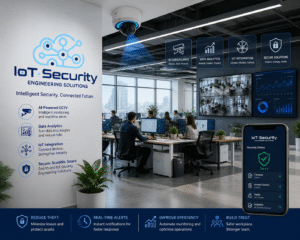
Traditional CCTV systems function primarily as recording tools. In contrast, AI-enhanced CCTV systems transform video feeds into actionable intelligence.
Key Capabilities:
- Behavioral Analysis: AI models can detect suspicious activities such as loitering, unusual movement patterns, or unauthorized access.
- Facial Recognition and Access Control: Identifies individuals and flags unauthorized personnel in restricted zones.
- Object Detection: Tracks movement of assets and identifies anomalies, such as items being removed without authorization.
- Real-Time Alerts: Sends instant notifications when predefined risk behaviors are detected.
By automating surveillance, organizations reduce reliance on manual monitoring and significantly improve detection speed.
Data Analytics: Turning Security Data into Insights
AI systems generate large volumes of data. Data analytics plays a critical role in extracting meaningful patterns and trends from this information.
Applications in Theft Reduction:
- Pattern Recognition: Identifies recurring incidents linked to specific times, locations, or individuals.
- Risk Scoring: Assigns risk levels to behaviors or employees based on historical data.
- Predictive Analysis: Forecasts potential theft risks before incidents occur.
- Audit Optimization: Focuses investigations on high-risk areas, reducing time and cost.
When combined with CCTV, analytics enables organizations to move from incident response to prevention.
IoT Integration: Expanding the Security Ecosystem
IoT devices extend visibility beyond cameras, creating a connected security network across the workplace.
Examples of IoT Devices:
- Smart locks and access control systems
- RFID and asset tracking sensors
- Environmental sensors (movement, temperature, proximity)
- Wearables for workforce monitoring in sensitive environments
These devices continuously generate data that feeds into centralized AI systems, enabling real-time situational awareness.
IoT Security Engineering Solutions: The Backbone of Modern Protection
IoT Security Engineering Solutions provide the infrastructure and expertise required to integrate, secure, and optimize these technologies.
Core Contributions:
1. System Integration
They unify CCTV, IoT devices, and analytics platforms into a cohesive architecture, ensuring seamless data flow and interoperability.
2. Cybersecurity Protection
IoT ecosystems introduce new vulnerabilities. Security engineering solutions implement:
- End-to-end encryption
- Secure device authentication
- Network segmentation
- Continuous vulnerability monitoring
3. Edge Computing Implementation
Processing data at the edge (near the source) reduces latency and enables real-time decision-making, which is critical for theft prevention.
4. AI Model Deployment and Optimization
They design and maintain AI models tailored to specific business environments, improving detection accuracy and reducing false positives.
5. Compliance and Governance
Ensures systems meet regulatory requirements related to surveillance, data privacy, and workplace monitoring.
Benefits of an Integrated Approach
Organizations adopting AI-driven CCTV, data analytics, and IoT security engineering solutions experience:
- Reduced theft and shrinkage
- Faster incident detection and response
- Improved operational transparency
- Lower security management costs
- Enhanced employee accountability
- Scalable and future-ready infrastructure
Challenges and Considerations
Despite the advantages, implementation requires careful planning:
- Privacy Concerns: Transparent policies and compliance with data protection laws are essential.
- Initial Investment: Upfront costs can be significant, though ROI is typically strong.
- System Complexity: Requires skilled engineering and ongoing maintenance.
- Data Management: Handling large data volumes demands robust infrastructure.
Future Trends
The future of workplace security will be driven by:
- Autonomous surveillance systems
- Advanced biometric authentication
- AI-driven anomaly detection with minimal human intervention
- Integration with enterprise resource planning (ERP) systems
- Increased use of digital twins for risk simulation
Conclusion
AI, CCTV, and data analytics are redefining workplace security by enabling proactive, intelligent monitoring systems. When combined with IoT Security Engineering Solutions, organizations gain a comprehensive framework that not only reduces workplace theft but also enhances operational efficiency and resilience.
Businesses that invest in these integrated technologies position themselves ahead of evolving security threats while building a safer and more accountable work environment.
Contact Information
IoT Security Engineering Solutions
📞 Phone: 346-531-1340
✉️ Email: service@iotsecurityes.com