 KATY, Texas — Residents shopping for burgers, steaks, brisket, and other beef products may have noticed a growing trend at grocery stores and restaurants: prices continue to rise.
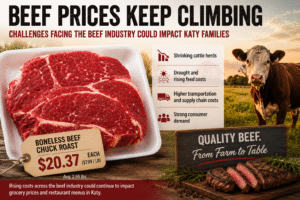
Industry analysts say the increase is being driven by a combination of shrinking cattle supplies, years of drought in key cattle-producing regions, rising feed costs, transportation expenses, and strong consumer demand. Experts note that while cattle prices have reached record levels, rebuilding the nation’s herd is a slow process that could take several years.
The United States cattle inventory remains near historic lows after ranchers spent years reducing herd sizes due to drought conditions and higher operating costs. Fewer cattle entering the market means less beef available for consumers, contributing to higher prices at grocery stores and restaurants.
For Katy-area families, the impact can be felt during weekly grocery trips. Ground beef prices have increased significantly over the past year, while steaks and other premium cuts continue to command higher prices. Some consumers are purchasing smaller quantities or turning to alternative proteins such as chicken and pork to help manage household budgets.
Local restaurants also face challenges. Barbecue restaurants, burger establishments, and steakhouses often operate on tight margins. Rising beef costs can force operators to make difficult decisions regarding menu pricing, portion sizes, or sourcing strategies.
Supply chain concerns remain another factor. Industry observers point to higher transportation costs, labor shortages, and ongoing adjustments within the meat-processing industry. Recently, JBS USA, one of the nation’s largest meat suppliers, announced the closure of two beef processing facilities as part of a restructuring effort amid rising costs and a shrinking cattle supply.
Despite the higher prices, demand for beef remains surprisingly strong. Consumers continue purchasing beef even as prices reach record levels, helping keep pressure on an already limited supply. Analysts say strong demand combined with reduced production has created the conditions for continued price increases.
Looking ahead, experts do not expect immediate relief. Rebuilding cattle herds takes years, not months, and the industry continues to monitor weather conditions, feed costs, and consumer demand. Many forecasts suggest beef prices could remain elevated through 2026 and potentially beyond.
For Katy residents planning summer cookouts, family gatherings, or restaurant outings, beef may remain one of the more expensive items on the menu. While Texas remains the nation’s leading cattle-producing state, the economic forces affecting ranchers and processors across the country are increasingly being felt at dinner tables throughout communities like Katy.