Cyclospora Outbreak 2026: Texas Lettuce Recall Update
Federal officials are investigating several clusters of the intestinal illness while retailers, restaurants and food suppliers remove recalled lettuce and review their supply chains.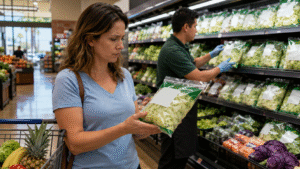
By Staff Editor
KATY, Texas (July 22, 2026) — Families in Katy and across the Houston area are being urged to check their refrigerators as federal health officials investigate a major increase in illnesses caused by Cyclospora, a microscopic parasite commonly associated with contaminated food or water.
Since May 1, the Centers for Disease Control and Prevention has received reports of 4,173 laboratory-confirmed, domestically acquired cases across 41 states. At least 308 people have been hospitalized, and no deaths have been reported. The CDC is also reviewing more than 7,400 additional cases that have not yet been laboratory confirmed.
Those figures do not represent one single outbreak. Health officials are investigating several clusters with potentially different food sources. One large five-state outbreak has been linked through epidemiological and supply-chain evidence to shredded iceberg lettuce supplied by Taylor Farms de Mexico and served at certain Taco Bell restaurants.
Texas was not one of the five states included in that restaurant cluster, but recalled lettuce was distributed in Texas, including Marketside products sold at select Walmart stores. Texas and Harris County are also reporting locally acquired Cyclospora cases that remain under investigation.
Cyclospora outbreak numbers at a glance
According to the CDC’s July 21 surveillance update:
- 4,173 laboratory-confirmed domestic cases have been reported since May 1.
- More than 7,400 additional reported illnesses require further investigation.
- 308 confirmed patients have been hospitalized.
- Cases have been identified in 41 states.
- No deaths have been reported.
- The CDC is investigating multiple clusters, not one nationwide outbreak with a single confirmed source.
The five-state outbreak connected to iceberg lettuce includes more than 1,644 illnesses and 94 hospitalizations in Indiana, Kentucky, Michigan, Ohio and West Virginia.
On July 22, the FDA also announced a separate Cyclospora investigation involving 72 cases and an unidentified food source. The agency has started tracing the product’s supply chain but has not named a food, store, restaurant or producer in that investigation.
What does this mean for Katy and the Houston area?
The latest publicly reported Texas count showed 68 cases as of July 13, including 15 hospitalizations and no deaths.
Harris County Public Health subsequently reported 34 cases as of July 15. Because state, county and city reports may cover different time periods and sometimes overlap, those figures should not be added together.
Katy crosses Harris, Fort Bend and Waller counties, but officials had not released a Katy-specific case count as of publication.
The local numbers remain significantly smaller than those reported in the Midwest, but the presence of illnesses in Harris County and the distribution of recalled lettuce in Texas make the outbreak relevant for area shoppers.
Which lettuce products have been recalled?
On July 17, Taylor Farms voluntarily recalled all iceberg lettuce sourced from central Mexico that was identified as a potential source of the outbreak.
The consumer products named in the FDA recall notice include:
| Brand and product | Package sizes | Best if Used By dates |
|---|---|---|
| Marketside Iceberg Salad | 12 ounces and 24 ounces | July 18 through August 3, 2026 |
| Marketside Shredded Lettuce | 8 ounces and 16 ounces | July 18 through August 3, 2026 |
The recalled Marketside products were sold at select Walmart stores in Texas and 14 other states.
Additional recalled iceberg lettuce and lettuce blends were supplied to restaurants and other food-service customers under several labels and package configurations. Consumers may not always see the original supplier’s name when lettuce is served in a restaurant or prepared meal.
Anyone who has one of the recalled products should not attempt to wash and eat it. The lettuce should be discarded or returned to the place of purchase for a refund.
Did the FDA withdraw the recall after a false-positive test?
No. Consumers should continue following the recall instructions.
The FDA initially reported that a lettuce sample had tested positive for Cyclospora. After laboratory experts reviewed the result, the agency determined that it was a false positive. As of July 19, the FDA had no confirmed positive food sample.
However, the agency’s epidemiological interviews and supply-chain investigation still pointed to iceberg lettuce from Taylor Farms de Mexico as the common connection among restaurants where many patients reported eating.
A false-positive product test does not erase the illness data or the supply-chain evidence. It means investigators have not yet directly detected the parasite in an analyzed food sample.
The outbreak investigation remains open, and the recall should still be followed.
What are food suppliers, grocery stores and restaurants doing?
There is no single plan covering every supermarket. Retailers are responding according to their suppliers, affected product codes and FDA notices.
Taylor Farms
Taylor Farms said it has:
- Completed the removal of the recalled products from the marketplace.
- Stopped receiving and distributing the implicated iceberg lettuce.
- Notified affected customers.
- Stopped sourcing iceberg lettuce from central Mexico for the remainder of the growing season.
- Sent experts to the region to investigate potential sources of contamination.
The company says Taylor Farms-branded retail products are not included in the current recall. The recalled retail products were sold under the Marketside brand, while additional products went to food-service customers.
Walmart
The FDA identified select Walmart stores as sellers of the recalled Marketside Iceberg Salad and Marketside Shredded Lettuce. Customers should check the product name, package size and “Best if Used By” date.
Affected products should be thrown away or returned for a refund, even if the lettuce looks and smells normal.
H-E-B
H-E-B has said that no products sold in its stores are included in the current FDA recall. The company also said its suppliers had not reported Cyclospora problems and that it was continuing to monitor the investigation.
That does not mean consumers should ignore ordinary produce precautions. Shoppers should continue monitoring official recall updates in case additional products or suppliers are identified.
Taco Bell and other restaurants
Taco Bell removed potentially affected lettuce from restaurants in select states and stopped using iceberg lettuce supplied by Taylor Farms nationwide while the investigation continues.
The FDA advises customers to ask restaurants about the source of iceberg lettuce if they are uncertain. Restaurants and food-service businesses that received recalled lettuce have been instructed to discard it and clean any containers, counters, utensils or refrigeration areas it touched.
What symptoms should consumers watch for?
Symptoms typically begin two to 14 days after exposure, often around one week after eating contaminated food.
The most common warning sign is frequent, watery diarrhea. Other symptoms can include:
- Loss of appetite
- Unexplained weight loss
- Stomach cramps or pain
- Bloating and increased gas
- Nausea
- Fatigue
- Vomiting
- Body aches
- Headache
- Low-grade fever
One unusual characteristic of cyclosporiasis is that symptoms can appear to improve and then return. Without treatment, the illness may continue for several weeks or longer.
Children, older adults, pregnant patients and people with weakened immune systems should contact a healthcare professional promptly if symptoms develop.
What should consumers do now?
First, check all bagged salad and shredded lettuce in the refrigerator against the recall information. Do not rely on appearance, smell or taste to determine whether a product is safe.
Consumers should also:
- Discard or return recalled lettuce. Do not wash it and attempt to use it.
- Clean containers and surfaces. Wash refrigerator shelves, drawers, cutting boards, utensils and countertops that touched recalled lettuce with hot, soapy water. Use a dishwasher for dishwasher-safe items.
- Rinse other produce under running water. Do not use soap, detergent or bleach on food.
- Understand the limits of washing. The FDA warns that rinsing may reduce contamination but cannot reliably eliminate Cyclospora. The parasite may also resist common chlorine-based produce sanitizers.
- Cook produce when practical. The FDA says cooking produce to at least 158 degrees Fahrenheit is the safest option when the food can be cooked.
- Ask questions at restaurants. Consumers can ask whether iceberg lettuce came from a recalled supplier.
- Keep receipts or photographs. Product labels, package codes, purchase dates and restaurant receipts can help investigators trace an illness.
Consumers do not need to stop eating all fruits and vegetables. The current retail recall applies to specific iceberg lettuce products, while other investigations have not yet identified a food source.
When should someone contact a doctor?
Anyone experiencing diarrhea or other significant gastrointestinal symptoms lasting more than three days should contact a healthcare provider. Seek care sooner for dehydration, severe weakness, inability to keep fluids down or worsening symptoms.
Patients should tell their provider about any lettuce, bagged salad, restaurant meal or other fresh produce eaten during the two weeks before symptoms began.
It is also important to specifically ask whether testing for Cyclospora is appropriate. According to the CDC’s clinical guidance, routine stool examinations and some gastrointestinal testing panels may not automatically test for the parasite.
The preferred prescription treatment is trimethoprim-sulfamethoxazole, commonly known as TMP-SMX. Treatment decisions should be made by a healthcare professional, particularly for children, pregnant patients, people with weakened immune systems and anyone with a sulfa-drug allergy.
Federal, state and local health officials are continuing to investigate the outbreak, test samples and trace products through the food-distribution system. The Katy News will update this report if additional Texas stores, restaurants or food products are identified.
For continuing local safety alerts, readers can follow The Katy News and access updates through The Katy News app.