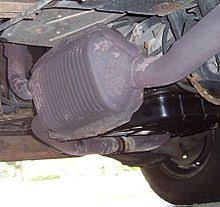
 All automobiles, including trucks, cars, buses, and motorcycles need to be integrated with a catalytic converter. With an increasing number of vehicles on the road, catalytic converters are more important than ever. They work towards cleaning the emissions coming out of your vehicle and are located between the engine and the muffler.
The primary job of catalytic converters is to convert harmful gases, like nitrogen oxide, carbon monoxide, and hydrocarbons into less harmful emissions. Unfortunately, replacement costs of catalytic converters are usually high. You may feel tempted to not have these components replaced at all. But, you could face fines to the tune of $10 000 in some states if your vehicle is not installed with a catalytic converter.
You can consider direct fit converters if you want to keep costs to a minimum. These can be installed directly in a vehicle without making any additional adjustments which can go a long way in keeping labor costs to a minimum.
These are some of the best catalytic converters on the market.
- Nissan Altima 2.5L Direct-Fit
The Nissan Altima 2.5L Direct-Fit is a great product which can allow you to save up to $400. It is easy to install and you would not have to make any adjustments to get the converter changed. The outer shell is created out of durable stainless steel with an internal honeycomb structure that allows maximum air flow.
The best part about the catalytic converter is that it takes care of the check engine light and removes all other restrictions that may hinder a car’s overall performance.
Pros
- High quality materials
- Easy installation
Cons
- Bolt holes can be problematic
- EvanFischer REPG960301 Silver Powder-Coated Catalytic Converter
The catalytic converter is manufactured out of aluminized steel that offers reliable durability. The converter maximizes air flow with a single inlet and dual outlet system. There are four oxygen ports that are located both upstream and downstream.
EvanFischer REPG960301 is one of the best direct fit converters because of its Y-shaped pipe design. The product is designed keeping OEM standards in mind and comes complete with gaskets, bolts and nuts.
Pros
- Economical and robust
- Easy to install
Cons
- Rattles sometimes
- MagnaFlow 51356 Universal Catalytic Converter
The MagnaFlow 51356 is a tried and tested brand and product that has been carefully engineered to work efficiently with petrol and diesel engines. The converter is made from stainless steel for increased strength and durability.
The catalytic converter uses ceramic as a substrate material for even flow and has an oxygen sensor that is located mid-bed. The converter is designed specifically to keep the check engine light off. It is made as per OEM standards and exceeds EPA requirements.
Pros
- 50,000 mile construction warranty
- Works great with diesel engines
Cons
- Doesn’t fit all vehicles
- Walker 15634 Catalytic Converter
Walker 15634 boasts of the most flexible design where direct fit converters are concerned. It can be fitted easily and without much hassle in both domestic and imported applications. The OEM standard design can be installed in pre-OBDII vehicles as well. This refers to cars that were built in 1995 or earlier.
The converter sports stainless steel on the outer shell for enhanced durability. The design sports a pipe for outlet and has four bolt welded flange inlets. It may be Federal EPA certified but there are no oxygen sensor ports or air tubes.
Pros
- Built from high quality materials
- Increases efficiency and horsepower
Cons
- Doesn’t support CARB standards
- Flowmaster 2230130 223 Series
This is one of the most economical and budget-friendly direct fit converters. The outer shell is built out of premium stainless steel. It has ceramic substrate. This is a typical 3-way converter style and is best for vehicles with an engine size of 5.9L.
The Flowmaster is Federal EPA approved in 49 US states, though it is not of CARB standards. The only drawback to this converter is that the design has a universal component. This means additional modifications may be required in certain vehicles before installation.
Pros
- Reduces foul exhaust smell
- Tight and compact component
Cons
- Makes a rattling sound
- MagnaFlow 27402 Direct Fit Catalytic Converter
The MagnaFlow 27402 catalytic converter is an OBDII compliant unit and fits like a wonder on newer models. The outer shell is made from robust stainless steel with a metallic finish. The product comes with a gasket and a closely welded seam for a tighter bond.
The converter is known to exceed EPA standards and work surprisingly well towards minimizing emission issues in the vehicle. The converter is built to keep check engine light turned off to eliminate any emissions code. The catalytic converter keeps foul exhaust gases away from the engine and minimizes air pollution.
Pros
- Increased efficiency
- Useful in petrol and diesel
Cons
- Installation may be difficult
- Pontiac G6 Catalytic Converter
Pontiac’s G6 catalytic converter is engineered to fit all post-OBDII models or cars made after 1998. The outer shell is made from stainless steel while the inner substrates are built from precious metals. The converter has a honeycomb internal construction.
This ensures that gases are allowed to react completely without compromising on air flow. By increasing flow, Pontiac’s G6 catalytic converter reduces back pressure and helps in improving performance.
Pros
- Improved efficiency
- Direct fit
Cons
- Not CARB compliant
When Should You Change Your Catalytic Converter?
Catalytic converters can typically last for a decade or longer. There is no set maintenance timeline for these devices. You should consider replacing the converter with a new one when you experience reduced acceleration, excessive heat under the hood, or foul smell from the exhaust. If delayed, you may experience frequent stalling and a big drop in gas mileage.
It is recommended that you change the catalytic converter before push comes to shove. This way you can increase the efficiency of your car while adhering to EPA regulations. Just make sure you buy a converter after checking your car’s EFN or Engine Family Number. This number is on the VECI (vehicle emissions control information) label and will ensure the direct fit converter actually fits.