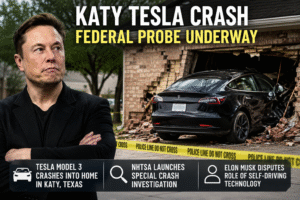
 KATY, Texas — A deadly crash that shook a quiet Katy neighborhood is now at the center of a growing national debate over vehicle automation, driver responsibility, and the future of self-driving technology.
Federal investigators have opened a review into the June 19 crash that left 76-year-old Martha Avila dead after a Tesla Model 3 slammed into her home. While initial reports indicated that a driver-assistance feature may have been engaged, Tesla CEO Elon Musk is strongly disputing suggestions that the company’s technology was responsible for the tragedy.
The crash occurred in a residential area west of Houston, where neighbors reported hearing a loud impact before discovering that a Tesla had crashed through the home. Emergency crews responded quickly, but Avila later died from injuries related to the incident.
As investigators work to determine exactly what happened, the National Highway Traffic Safety Administration (NHTSA) has launched a Special Crash Investigation. These investigations are typically reserved for significant crashes involving advanced vehicle technologies or emerging transportation safety concerns.
The federal review comes as Tesla continues to expand the capabilities of its driver-assistance systems, including Full Self-Driving (FSD), a feature that has generated both excitement and controversy among consumers, regulators, and safety advocates.
Musk Challenges Early Assumptions
In the days following the crash, Musk publicly questioned reports that connected Tesla’s self-driving technology to the collision.
According to Tesla officials, vehicle data suggests the driver was actively pressing the accelerator before impact. Company representatives have stated that the available information does not support the conclusion that the vehicle independently accelerated or operated without driver input.
Those statements highlight an important distinction often overlooked in public discussions: Tesla’s systems are considered driver-assistance technology rather than fully autonomous driving systems. Drivers are expected to remain alert and maintain control of the vehicle at all times.
Still, critics argue that the names “Autopilot” and “Full Self-Driving” can create confusion about the level of automation available in Tesla vehicles.
A Broader Debate Beyond Katy
For many observers, the Katy crash represents more than a single traffic incident. It has become another chapter in a nationwide conversation about how rapidly advancing vehicle technologies should be regulated and monitored.
Supporters of automated driving systems point to studies suggesting that technology can reduce certain types of crashes caused by distracted, impaired, or fatigued drivers. Critics counter that overreliance on automation can create new risks when drivers place too much trust in systems that still require human supervision.
The outcome of the federal investigation could influence future discussions about vehicle safety standards, driver monitoring requirements, and how advanced driving systems are marketed to consumers.
Local Impact Felt Across Katy
While national headlines focus on Tesla and self-driving technology, many Katy residents remain focused on the human cost of the tragedy.
The crash has sparked conversations across the community about neighborhood safety, speeding concerns, and the increasing presence of advanced technology on local roads. Residents have also expressed sympathy for the victim’s family as investigators work to determine what led to the deadly collision.
For now, key questions remain unanswered. Investigators must determine whether driver actions, vehicle technology, roadway conditions, mechanical factors, or a combination of circumstances contributed to the crash.
Until the federal review is complete, officials have not assigned blame or released final findings.
What is certain is that a tragic event in a Katy neighborhood has once again placed the future of automated driving under the national spotlight, with regulators, technology leaders, and the public all watching closely for answers.