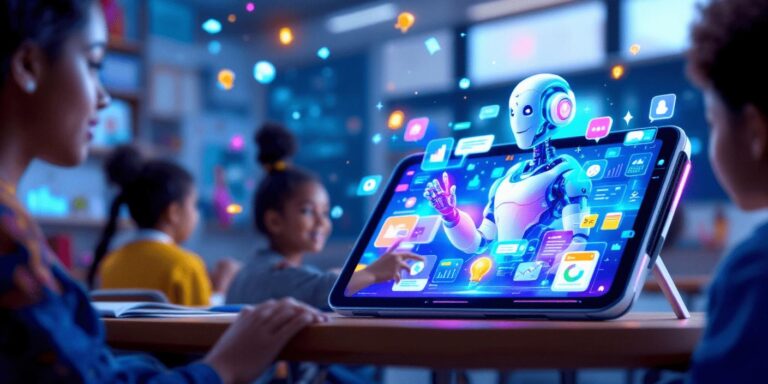
Artificial Intelligence is no longer a futuristic concept confined to science fiction. It is already reshaping industries, education, healthcare, communication, and daily life. Future generations will grow up in a world where AI systems are embedded into nearly every aspect of society. From personalized learning platforms to autonomous transportation and intelligent healthcare diagnostics, AI will influence how people work, think, create, and interact.
The question is no longer whether AI will change the future. The real question is how future generations can prepare themselves to thrive alongside it.
The Growing Influence of AI
AI is transforming the workforce faster than previous technological revolutions. Tasks that once required large teams can now be automated through machine learning, robotics, and intelligent software systems. Repetitive jobs in manufacturing, data entry, transportation, and customer service are increasingly handled by machines.
At the same time, AI is creating entirely new industries and opportunities. Careers in AI development, cybersecurity, robotics, digital ethics, biotechnology, and data science are rapidly expanding. Future generations may work in jobs that do not even exist today.
Education will also evolve dramatically. AI-powered tutoring systems can personalize lessons according to a student’s strengths and weaknesses. Medical advancements driven by AI could lead to earlier disease detection and improved treatments. Smart cities may use AI to reduce traffic, improve energy efficiency, and enhance public safety.
However, these benefits also come with challenges. AI raises concerns about privacy, job displacement, misinformation, and overreliance on technology. Future generations will need more than technical knowledge; they will need judgment, adaptability, and ethical awareness.
Skills Future Generations Must Develop
1. Critical Thinking
As AI systems generate massive amounts of information, people must learn how to evaluate what is accurate, biased, or misleading. Critical thinking will become one of the most valuable human abilities.
Future generations must learn to:
- Analyze information carefully
- Question sources and assumptions
- Detect misinformation and manipulation
- Make informed decisions independently
AI can provide answers quickly, but humans still need to determine whether those answers are trustworthy and appropriate.
2. Creativity and Innovation
AI can automate repetitive tasks, but human creativity remains difficult to replicate. Future success will increasingly depend on imagination, originality, and innovation.
Creative skills include:
- Problem-solving
- Artistic expression
- Product design
- Strategic thinking
- Entrepreneurship
People who can combine creativity with technology will have a significant advantage in the future economy.
3. Emotional Intelligence
Machines can process data, but they cannot fully replace human empathy, compassion, and interpersonal understanding. Emotional intelligence will remain essential in leadership, healthcare, education, counseling, and teamwork.
Important emotional intelligence skills include:
- Communication
- Empathy
- Conflict resolution
- Collaboration
- Self-awareness
As automation increases, human connection may become even more valuable.
4. Digital and AI Literacy
Understanding how AI works will become as important as basic computer literacy is today. Future generations do not necessarily need to become programmers, but they should understand:
- How algorithms influence decisions
- How data is collected and used
- The strengths and limitations of AI systems
- Basic cybersecurity and online safety
AI literacy will help people use technology responsibly and avoid manipulation.
5. Adaptability and Lifelong Learning
The pace of technological change means that many careers will evolve multiple times during a person’s lifetime. Future generations must become comfortable with continuous learning and adaptation.
This includes:
- Learning new technologies quickly
- Updating skills regularly
- Remaining flexible during career changes
- Embracing innovation rather than fearing it
The ability to learn continuously may become more important than mastering any single profession.
6. Ethical Decision-Making
AI systems can affect privacy, employment, justice, and even human rights. Future leaders will need strong ethical reasoning to guide how technology is developed and used.
Young people should learn to ask:
- Is this technology fair?
- Who benefits from it?
- Could it cause harm?
- How should AI be regulated responsibly?
Ethics will play a major role in ensuring that AI serves humanity positively.
The Human Advantage
Despite AI’s growing capabilities, humans still possess qualities machines cannot fully duplicate: consciousness, morality, intuition, empathy, and purpose. The future will not simply belong to those who understand technology. It will belong to those who can combine human strengths with technological tools.
AI should be viewed not only as competition, but also as a powerful partner. People who learn how to work alongside intelligent systems will likely achieve greater productivity and innovation than ever before.
Conclusion
AI will profoundly shape the future of society, creating both extraordinary opportunities and serious challenges. Future generations will live in a world where automation, intelligent systems, and digital technologies are deeply integrated into everyday life.
To succeed in this environment, they must develop more than technical skills. Critical thinking, creativity, emotional intelligence, adaptability, ethical reasoning, and AI literacy will become essential foundations for success.
Technology may continue to evolve rapidly, but human values, judgment, and creativity will remain at the center of progress. The future will favor those who can balance technological advancement with uniquely human strengths.