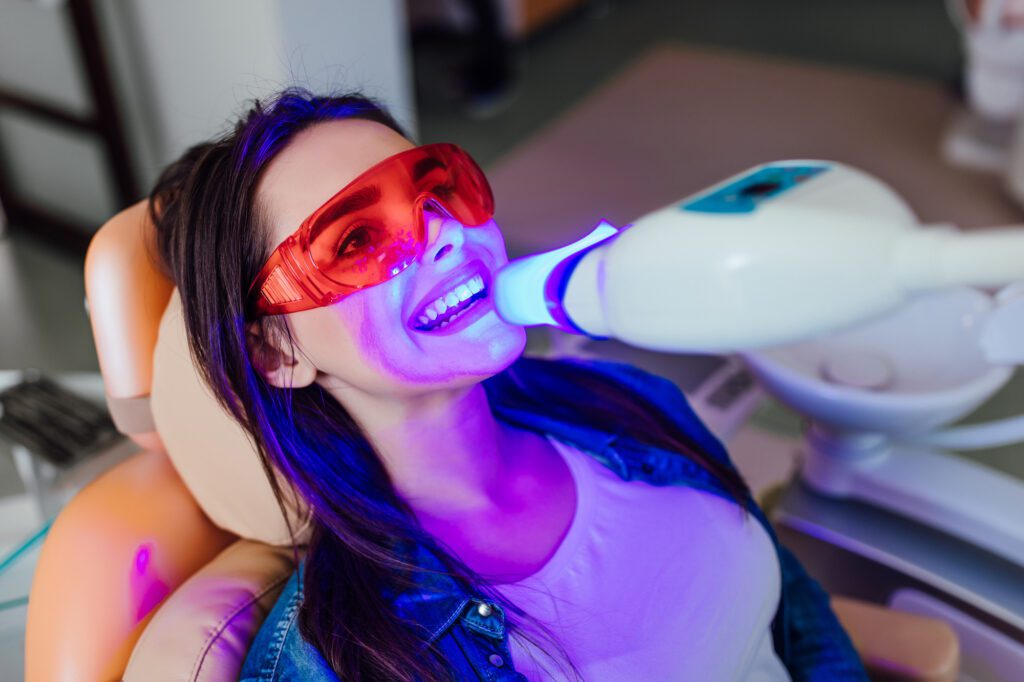
Teeth whitening for woman. Bleaching of the teeth at modern dentist clinic.
In the pursuit of a dazzling smile, teeth whitening has become a common practice. Have you ever wondered about the link between teeth whitening and dental health? On the surface, teeth whitening might appear purely cosmetic, a simple route to achieving a bright, attractive smile. However, the connection between this popular procedure and overall dental health is deeper than it seems.
In this article, you’ll delve into the connection between teeth whitening and dental health, understand the importance of maintaining well-established oral hygiene, address some misconceptions about teeth whitening, explore what to expect during the procedure, learn how to manage potential side effects and maintain the results, and discuss safety precautions and considerations.
The Importance Of Oral Hygiene
Teeth whitening procedures often act as a catalyst for better oral hygiene practices. Commitment to regular brushing, flossing, and dental check-ups becomes crucial in maintaining the effects of the procedure. This dedication to oral care greatly benefits dental health. Additionally, undertaking teeth whitening treatments under the supervision of a professional provides further advantages. Professionals can identify any oral issues that may affect the treatment’s outcome or be aggravated by the whitening agents.
Understanding Dental Health and Teeth Whitening
Having healthy gums and teeth is crucial for successful teeth whitening. Any dental issue, such as cavities or gum disease, can complicate the process. These conditions must be addressed before whitening to prevent further damage or discomfort.
It’s crucial to remember that teeth whitening agents are not designed to improve oral health. Instead, their purpose is to brighten your smile. Nevertheless, the process does encourage an improved oral health routine.
If you’re considering professional teeth whitening solely for aesthetic purposes without intending to improve oral hygiene and maintenance, it’s essential to understand that long-term success may be limited. While teeth whitening can enhance your smile, it’s necessary to prioritize a comprehensive oral care routine to maximize the benefits and ensure overall dental health.
Also, talk to your dental professional first if you have a history of oral diseases or are currently experiencing one before having a teeth whitening appointment. Some teeth whitening procedures may worsen your condition or reverse your expected stellar results.
Choosing professional services like the dentists Idaho Falls is paramount when looking for dental care. They should be known for their comprehensive approach to dental health, considering both aesthetic and health aspects. And that their teeth whitening methods showcase the essential link between a bright smile and healthy gums and teeth.
Misconceptions About Teeth Whitening
A common misconception is that teeth whitening damages tooth enamel. The safety of the whitening process depends on proper execution and professional guidance. When carried out correctly by trained professionals, the whitening process is considered safe. Following the recommended guidelines and seeking professional advice is essential to ensure a safe and effective outcome. Most whitening agents use a peroxide-based compound, which doesn’t erode the enamel but merely breaks down the stains.
The key to preventing any potential damage lies in moderation and professional guidance. Overdoing whitening treatments can lead to tooth sensitivity or gum irritation.

Woman brushing her teeth with electric toothbrush on white background, closeup. Banner design with space for text
What To Expect In A Teeth Whitening Procedure
Are you getting ready for a teeth whitening procedure? You might feel slightly anxious, especially if it’s your first time. Don’t worry; this guide will help you understand what to expect before your appointment.
- Initial Consultation
The first thing on your teeth whitening journey is a dental consultation. This meeting allows you and your dentist to discuss your dental history and the results you hope to achieve. Your dentist will also conduct a thorough examination to assess your oral health, ensuring no conditions could compromise the procedure.
- Oral Health Assessment
Your oral health plays a vital role in the success of teeth whitening. It’s crucial that any existing dental issues, like cavities or gum disease, are addressed before the procedure. Teeth whitening is a cosmetic process and won’t solve underlying dental health problems. Moreover, these conditions could cause unnecessary discomfort during whitening if left untreated.
- Cleaning The Teeth
Following the oral health assessment, a professional cleaning session is often required. Even if you take great care of your teeth at home, professional cleaning is necessary to remove hard-to-reach plaque or tartar. This step ensures a clean surface, which allows the whitening agent to work effectively.
- Selecting The Shade
The fun part of the process is selecting your shade of white. You and your dentist will collaborate to decide the perfect shade for your teeth. Choosing the brightest white is tempting, but remember, the goal is a natural-looking result. A shade that complements your skin tone and facial features will provide the most appealing outcome.
- Understanding And Setting Expectations
Your dentist will explain the procedure in detail. It includes the steps, duration, and care your teeth will need post-treatment. It’s the perfect time to ask questions and clear any doubts. Understanding the process can help you feel more relaxed and prepared.
It’s essential to have realistic expectations about teeth whitening. While the procedure can significantly brighten your smile, results can vary based on individual factors, such as the original shade of your teeth and the type of staining. Additionally, teeth whitening is not a one-time procedure. Maintaining the results will require regular touch-ups and good oral hygiene habits.
Managing The Side Effects
It’s normal to experience some tooth sensitivity or gum discomfort after a whitening procedure. These effects are typically temporary and can be managed with the proper care.
For instance, using toothpaste designed for sensitive teeth can help. Additionally, avoiding hot or cold foods and drinks for a few days post-treatment can reduce sensitivity. Always consult with your dental professional if discomfort persists.
Maintenance Is Key To Long-Lasting Results
The longevity of your teeth whitening results largely depends on your oral care routine post-procedure. Here are some specific guidelines and tips to help you maintain your bright smile:
- Regular Brushing: Brushing your teeth at least two times daily with a fluoride toothpaste and soft-bristled toothbrush helps remove surface stains and prevent plaque buildup.
- Flossing: Remember to floss every day to get rid of debris and plaque between your gum line and the teeth. It helps prevent stains and maintains overall oral health.
- Minimize Foods And Beverages That Cause Stains: Steer clear of foods and beverages that are known to cause stains on your teeth. Examples include coffee, tea, red wine, berries, and dark-colored sauces. It’s best to limit your consumption of these items. If you do indulge, try rinsing your mouth with water afterward or, if possible, brush your teeth to minimize the potential for staining.
- Use A Straw: When drinking beverages that can stain teeth, like coffee or tea, consider using a straw to minimize contact with your teeth.
- Quit Smoking: Smoking or using tobacco products can cause tooth discoloration. Quitting or reducing tobacco use can help maintain teeth-whitening results and improve oral health.
- Regular Visit To A Dentist: Schedule regular dental check-ups and cleanings to check your oral health and address potential issues. Your dentist can also provide professional touch-up treatments to maintain the whiteness of your teeth.
- Professional Touch-ups: Consider scheduling touch-up treatments as recommended by your dentist. These treatments can help prolong the effects of teeth whitening and keep your smile looking its best.
Remember, maintaining oral health is not just about keeping your teeth white; it’s about ensuring their overall health and well-being. By considering these guidelines and incorporating them into your daily routine, you can enjoy long-lasting results from your teeth whitening procedure.
Precautions And Considerations
It’s essential to remember that teeth whitening may not be suitable for everyone. Certain factors, like age, pregnancy, and pre-existing dental conditions, can affect eligibility for treatment. Therefore, always consult a dental professional before whitening your teeth.
The Bottom Line
There is a clear connection between teeth whitening and dental health. While teeth whitening is primarily aimed at enhancing the aesthetics of your smile, it indirectly promotes better oral hygiene practices, emphasizes the importance of professional dental care, and contributes to overall oral health. Remember, a charming smile is one that not only shines bright but also reflects a healthy mouth.