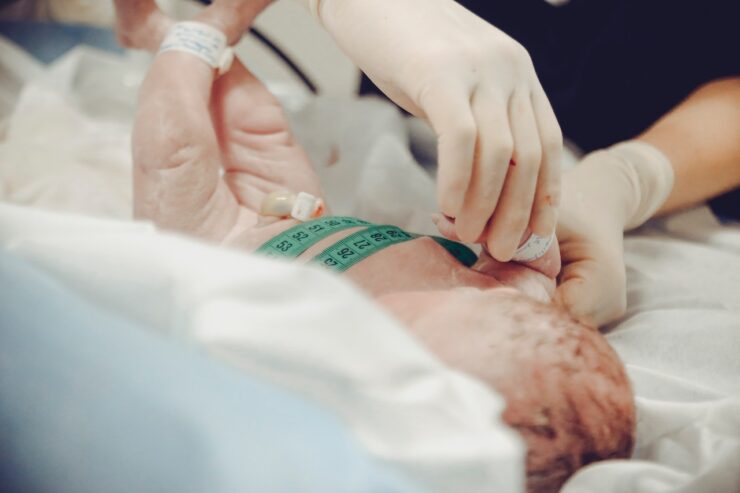
Managing newborns with PICC lines can be a challenging task for healthcare providers in hospitals. PICC lines are commonly used in neonatal intensive care units (NICUs) to provide long-term intravenous access to newborns. However, complications such as infections, dislodgement, and blockage can occur during PICC line insertion and maintenance, leading to increased hospital stays and healthcare costs.
To address these challenges, healthcare providers can take several steps to streamline care for newborns with PICC lines. One critical solution is to improve communication and collaboration among the healthcare team. Nurses, physicians, and other providers involved in the care of newborns with PICC lines must work together to ensure that the lines are correctly placed, monitored, and removed. Effective communication can help prevent complications, detect issues early, and prevent unnecessary interventions.
Furthermore, healthcare providers must prioritize ongoing education and training for healthcare providers involved in PICC placement in neonates. Training can help reduce the risk of complications and promote best practices in care. Additionally, standardizing procedures for PICC line insertion, maintenance, and removal can help reduce variability and promote consistent care across healthcare settings.
Moreover, healthcare providers can consider using technology to streamline care for newborns with PICC lines. Electronic health records (EHRs) can help track and monitor newborns’ PICC lines.
Another crucial step is involving parents and families in the care of newborns with PICC lines. Parents can be educated on the importance of proper hygiene, monitoring for complications, and seeking medical attention when necessary. Additionally, involving parents in decision-making regarding care and treatment can help promote a sense of partnership and collaboration in the care of their newborn.
Lastly, healthcare providers must ensure that the newborns’ PICC lines are inserted and maintained correctly to prevent complications. PICC lines should be inserted using ultrasound guidance, and sterile techniques must be followed during insertion and maintenance. Providers must also monitor the lines for signs of complications such as infection, occlusion, or dislodgement.
In conclusion, managing newborns with PICC lines can be a challenging task for healthcare providers in hospitals. However, by improving communication and collaboration, prioritizing ongoing education and training, standardizing procedures, leveraging technology, and involving parents and families in care, healthcare providers can streamline care for newborns with PICC lines, reduce complications, and improve outcomes. Finally, effective care for newborns with PICC lines requires a multidisciplinary approach in which all members of the healthcare team collaborate to provide the best care possible for these vulnerable patients.