


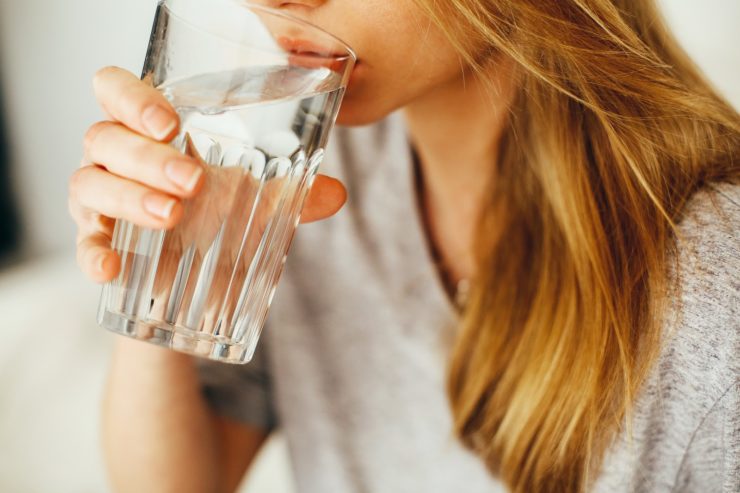
 The Coronavirus pandemic is now a few months old in the United States. Yet, there are so many myths surrounding how one contracts it or how to prevent it. We want to demystify one such tale. Can Coronavirus contaminate drinking water? Well, to answer this objectively, we want to share some scientific facts. For, fighting the pandemic by making informed choices is the best way to flatten the curve. Are you ready to learn a few tips? Let’s get to it!
What We Know
The Coronavirus disease (COVID-19) originates from SARS-CoV-2, a new strain of Coronavirus that was yet to affect humans. Like other coronavirus strains, COVID-19 came from animals and is now spreading from person to person. More so, it is the seventh Coronavirus strain known to infect humans. The strain is in the same family as SARS and MERS, the two strains that have caused a Coronavirus outbreak before. It takes between one to 14 days after exposure to the virus before one sees the first onset of the symptoms.
Mode of Transmission
Coronavirus spreads from person to person as small respiratory droplets. Hence, when an infected person sneezes, coughs or interacts close to other people in less than a meter, he passes on the virus to the uninfected persons. The other persons can inhale the droplets. Or, often, the droplets land on the person’s body. Then, the person gets the infection by touching his nose, mouth, or eyes.
The European Center for Disease Prevention and Control notes that so far, no findings support any claims of airborne transmission of the Coronavirus strain. Still, governments worldwide are taking precautionary measures to eliminate the virus being transmitted via any other route.
Can The Virus Survive Outside the Human Body?
Yes. COVID-19 survives on different surfaces for several hours or days. For example, when the respiratory droplets land on a cardboard or a copper object, they may be active for the next few hours. But, when they fall on stainless steel or plastic material, the virus stays active for days. Still, its viability declines over time. Indeed, after some hours or days, the virus loads may not be sufficient enough to cause an infection.
How Does Coronavirus Behave in Water?
Coronavirus is an enveloped strain that struggles to survive in water. More so, unlike on hard surfaces, the virus is highly sensitive to degradation when in aqueous environments. For, external elements like oxidation agents, predator microorganisms, or even sunlight can effectively eradicate the Coronavirus from water.
Water Treatment
Since COVID-19 can be removed and inactivated when in water, our water treatment filtration and disinfection processes can eradicate any threat caused by the virus in our drinking water. Then, what happens if a surface water treatment plant is exposed to virus contamination during or after an outbreak? Such a threat is easy to contain. Hence, our regular disinfectants used in drinking water are quite useful.
Efficacy of Chlorination
Currently, chlorination is the most common water treatment method for tap water and swimming pool water. This treatment is as per the World Health Organization’s recommendations. For, over the years, chlorine remains effective in containing and preventing many water-borne diseases. WHO recommends adherence to the current chlorine doses in tap water to inactivate the Coronavirus.
The Way Forward
Coronavirus news confirms that COVID-19 is now spreading worldwide. Hence, water professionals must stay informed of any developments to safeguard our drinking water. More so, our public health structure must remain robust in maintaining disinfection systems that will protect our water from the broad spectrum of pathogens threatening human life.
On February 5, 2020, the U.S. Occupational Safety and Health Administration issued out new guidelines for the wastewater workers. In particular, it observed that the current oxidation measures are sufficient in inactivating the Coronavirus.
What Can You Do to Keep Your Drinking Water Safe?
We pass the Coronavirus from one surface to the other via our hands. Hence, wash your hands for at least 20 seconds regularly. Here, use an alcohol-based disinfectant to sanitize your hands. Note, soap and water only are also quite useful.
Maintain social distancing. That is, keep a distance of at least 1 or 2 meters between you and the next person. This way, any infected respiratory droplets will not land on you from someone sneezing or coughing near you.
Observe respiratory hygiene. It involves covering your mouth and nose when in public places. Plus, using a tissue to cover the mouth and nose when coughing or sneezing. Then, remember to dispose of the tissue immediately after use.
Conclusion
Coronavirus is yet to be detected in drinking water. Still, governments worldwide are adopting filtration and disinfection systems that are sufficient to remove or inactivate the virus should it get into municipal drinking water.






