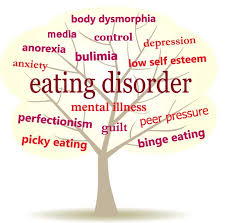
 Eating disorders are complicated – they almost never appear by themselves, instead being accompanied by a wide range of psychological and psychiatric conditions. These might be milder disorders like depression or they can range to severe disorders such as schizophrenia that necessitate intensive psychiatric care. When treating clients with an eating disorder like anorexia or bulimia nervosa, therapists and clients should be ready to address both the eating disorder and the accompanying psychiatric condition.
Types of Psychiatric Disorders Often Appearing Alongside Eating Disorders
Dissociative Disorders
Unlike some psychiatric disorders, dissociative disorders are more likely to appear in women than in men. This puts adolescent girls and young women more at risk to develop both dissociative and an eating disorder simultaneously. These mental health illnesses consist of an involuntary separation from reality, normally occurring in episodes. The most well-understood forms of dissociative disorder are:
- Depersonalization disorder
This disorder, usually beginning at age 16 to 18, causes the individual to feel a sense of “unreality.” People with the disorder describe a feeling that they are not living a real life but instead watching a movie of their life. This kind of distorted sense of reality is also common in the body image issues that are part and parcel of eating disorders.
- Dissociative amnesia
The individual will have difficulty remembering events in their life and feels that memory can’t be trusted. Like with disordered eating behaviors, this is often triggered by a traumatic event and the result of PTSD.
- Dissociative identity disorder
This type of dissociative disorder occurs when an individual has two or more distinct personalities. Amnesia is common here as well when one personality cannot remember the actions or experiences of another.
Schizophrenia
Schizophrenia is an extremely serious psychiatric disease that skews people’s perceptions of reality in a variety of ways. Hearing voices or experiencing visual hallucinations are common in severe cases, and are often accompanied by delusions and paranoia. People with schizophrenia are often unable to understand or make sense of their surroundings, which is similar to body dysmorphia (body image disorder), a common contributing factor for eating disorders.
Unfortunately, schizophrenia medication often brings severe side effects which can worsen eating disorders. Individuals with co-occurring eating disorders and schizophrenia have to be extremely careful in balancing the medications provided for the latter with the nutritional intake needs resulting from the former.
Borderline Personality Disorder (BPD)
BPD, which commonly co-occurs with bulimia nervosa, is a disorder where the individual has difficulty regulating emotion. Feelings are intensified and can rage out of control, and the individual may struggle to return to a neutral baseline after an emotional outburst. People with BPD may experience:
- Intense, uncontrollable feelings
- Low self-image
- Distorted perception of reality
- Fear of abandonment
- Increased risk of self-harm
- Impulsive behaviors
- Intense anger, followed by feelings of guilt and shame
Many of these symptoms are similar to those found in eating disorders. For example, a negative and distorted self-image is a central root cause of essentially every eating disorder. Additionally, after a BPD-triggered emotional outburst, the individual might feel shame similar to the guilty feelings following a binge eating episode for a binge eating disorder patient.
In contrast to schizophrenia, depression, or anxiety BPD does not have a standard form of medication that psychiatrists rely on. Instead, a combination of talk therapy and cognitive training is more effective in regulating emotions and actions. This is nearly identical to the methodology applied to psychological treatments for eating disorders.
The Developmental Aspect of Psychiatric Care for Adolescents with Eating Disorders
Psychiatric conditions that present in teenagers and adolescents necessitate an approach to treatment that takes into account the adolescent’s natural development. The ages of 13 to 21 are fundamental periods in people’s physical, emotional, and even social lives. A cookie-cutter treatment plan at this critical stage of development leaves too much to chance during these crucial years. For this reason, when treating psychiatric disorders concurrent with eating disorders, specialists in adolescent medicine, psychiatry, and psychology should lead the planning of every course of treatment.
Why an Adolescent-Centric Program Is Essential
At the best eating disorder treatment centers, adolescent-focused psychiatric care is at the center of each program. Before the client’s admission, a psychiatric assessment is completed, and its results form the base of the psychiatric and therapeutic implementation of a treatment plan. By working with specialists in adolescent psychiatric treatment, the team can create a program that is sensitive to developmental issues.
If you suspect your adolescent child needs eating disorder treatment combined with psychiatric care, or if you have received a co-occurring diagnosis yourself, reach out to a reputable center today.