Special Report | The Katy News
KATY, TEXAS — You live in Katy. Your children may attend Katy ISD. Your driver’s license says Katy, your mail arrives at a Katy address, and you probably tell everyone you live in Katy, Texas.
But here’s something many residents may not realize.
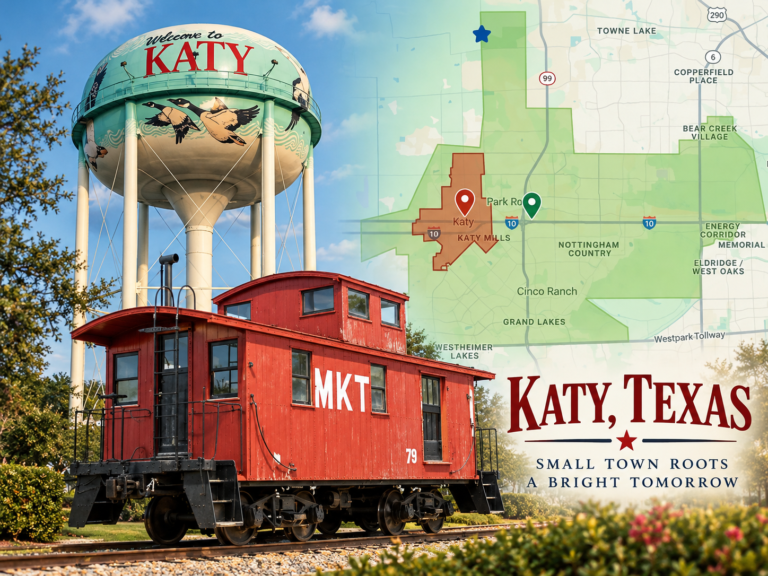
You can live in Katy without actually living inside the City of Katy.
And that distinction matters more than you might think.
When a road develops potholes, a drainage ditch overflows, a streetlight stops working, or questions arise about property taxes, the government responsible for addressing the problem may not be Katy City Hall.
In fact, depending on where your home is located, you could be dealing with Harris County, Fort Bend County, Waller County, a municipal utility district, an emergency services district, or another public agency.
As Greater Katy continues to expand, residents deserve to know exactly who is responsible for the communities they call home.
Katy Is One Community, But Not One Government
The City of Katy is an incorporated municipality with its own mayor, City Council, police department, fire department, and public works services.
But Greater Katy extends well beyond those boundaries.
Communities throughout Cinco Ranch, Elyson, Firethorne, Tamarron, and other developments may have Katy mailing addresses while receiving services from county governments and special-purpose districts.
That means two families who both consider themselves Katy residents may have different property tax bills, public service providers, and elected representatives.
One household may receive municipal services from the City of Katy.
Another may rely on a municipal utility district for water, a county agency for road maintenance, and an emergency services district for fire protection.
Both families live in what most people consider the Katy community.
But their local government responsibilities are not the same.
Who Is Responsible When Katy Roads Need Repairs?
Traffic is already one of the most frequently discussed frustrations among residents throughout the Katy area.
New neighborhoods and commercial developments bring additional vehicles onto roads used by school buses, commuters, delivery trucks, and emergency responders.
When a road deteriorates, residents naturally want it repaired.
But identifying the responsible agency is the first step.
Inside the City of Katy, municipal public works officials handle city-maintained infrastructure.
In unincorporated parts of Harris County, residents may need to contact Harris County’s service request system.
Fort Bend County maintains a Road and Bridge Department that handles eligible county-maintained roadway concerns.
Waller County also has a Road and Bridge Department responsible for certain roads and drainage-related infrastructure.
State highways and many farm-to-market roads fall under the Texas Department of Transportation.
Some neighborhood streets or facilities may involve private maintenance responsibilities.
The problem is that a Katy mailing address alone does not tell residents which agency maintains a particular road.
A homeowner could report an issue to the wrong office and spend valuable time trying to find the responsible department.
Residents should not need extensive knowledge of government boundaries just to find out who maintains the road outside their neighborhood.
What Happens When Drainage Problems Cross Neighborhood Boundaries?
Flooding is another issue where jurisdiction matters.
Water does not stop at county lines or city limits.
A drainage problem affecting one neighborhood may involve stormwater systems, roadside ditches, detention facilities, or waterways maintained by several different entities.
Some drainage infrastructure is managed by cities or counties. Other facilities may be maintained by drainage districts, utility districts, or private property owners.
Determining responsibility can be complicated.
And as Greater Katy grows, cooperation between these agencies becomes increasingly important.
Residents deserve clear explanations about who maintains local drainage systems, who is responsible for repairs, and how planned developments may affect surrounding infrastructure.
A community cannot effectively address drainage concerns if residents do not know where to take their questions.
Your Water Bill May Reveal Another Layer of Government
Many Katy-area residents receive water services through municipal utility districts, commonly called MUDs.
These districts can finance, construct, operate, and maintain infrastructure such as water and wastewater systems.
They may also collect property taxes or other charges to support their operations and repay debt.
A homeowner might recognize the name of a MUD on a tax statement without understanding what the district does.
That raises several questions worth asking.
- Who serves on the district’s board?
- How much outstanding debt does the district have?
- What infrastructure projects are planned?
- How are tax rates and utility charges determined?
- And where can residents find meeting agendas, budgets, and financial reports?
Municipal utility districts are important to the development and operation of many Greater Katy neighborhoods.
Residents should have access to understandable information about their district’s responsibilities and finances.
Who Protects Your Family During an Emergency?
Public safety is another area where the Greater Katy map can become complicated.
The Katy Police Department serves the incorporated City of Katy.
Outside city limits, law enforcement responsibilities depend on the jurisdiction and may involve county sheriff’s offices and constables.
Fire protection and emergency medical services can also be provided by different agencies depending on the address.
For example, Harris County Emergency Services District No. 48 reports serving approximately 160,000 residents within its coverage area in western unincorporated Harris County.
That service territory includes numerous Katy-area neighborhoods, businesses, and schools.
Other districts and departments serve different portions of the region.
For residents, understanding local coverage areas is important, especially when preparing emergency plans or seeking non-emergency assistance.
During an immediate emergency, residents should call 911 rather than delay help while trying to identify an agency.
But outside an emergency, it is worth knowing which organizations serve your neighborhood and where to find reliable information about their operations.
Who Receives Your Property Taxes?
Property taxes are another source of confusion for many Katy homeowners.
A property tax bill may include charges from a school district, county, emergency services district, municipal utility district, or other taxing authorities.
Not every homeowner with a Katy address pays City of Katy property taxes.
The taxing entities listed on a bill depend on the property’s actual location and applicable districts.
That is why comparing property taxes between two neighborhoods can be misleading without examining the full list of taxing jurisdictions.
Residents should review their property tax statements carefully and identify the agencies receiving their money.
Each taxing entity has its own responsibilities, financial decisions, and public accountability requirements.
Understanding those details can help residents ask informed questions about spending, infrastructure, and services.
Who Decides What Gets Built Near Your Home?
Development decisions bring another layer of complexity.
The City of Katy makes planning and zoning decisions within its legal authority.
But not every project marketed as being in Katy falls within the city’s municipal boundaries.
Land located in unincorporated areas may be subject to county development regulations, special districts, deed restrictions, or other applicable rules.
In areas outside incorporated city limits, county governments generally do not exercise the same broad zoning powers available to cities.
That distinction can affect how developments are reviewed and which government body residents should contact.
Before attending a meeting or submitting comments about a development, residents should determine which agency has approval authority over the property.
A project may affect Katy-area traffic, schools, and businesses without falling under Katy City Council’s direct jurisdiction.
That is a reality of living in a region divided among multiple governments.
How Can Katy Residents Find Out Who Is Responsible?
Fortunately, residents can begin answering these questions using public resources.
The City of Katy offers an “Am I a Resident?” tool to help determine whether a property is within city limits.
Residents can also use county appraisal records to identify taxing entities associated with their property.
The Texas Commission on Environmental Quality provides tools for identifying municipal utility districts.
Katy ISD offers an online school boundary map, and counties provide geographic information systems showing jurisdictional boundaries and public facilities.
Residents can begin with these resources:
City of Katy: https://www.cityofkaty.com/
Harris County: https://www.harriscountytx.gov/
Fort Bend County: https://www.fortbendcountytx.gov/
Waller County: https://www.co.waller.tx.us/
Katy ISD School Maps: https://www.katyisd.org/district-maps
For property-specific questions, residents should contact the agency responsible for the address rather than assuming a Katy mailing address establishes jurisdiction.
The Bigger Question: Who Is Looking Out for Greater Katy as a Whole?
This is the question that deserves more attention.
Greater Katy is one connected community in everyday life.
Residents travel across county lines to work, shop, attend school, visit doctors, and participate in community events.
Traffic congestion in one jurisdiction can affect people living in another.
Drainage systems cross government boundaries.
Commercial developments draw customers from neighborhoods throughout the region.
Yet government decisions are made by separate cities, counties, school districts, and special-purpose authorities.
Each organization has its own responsibilities and legal limitations.
That does not necessarily mean any agency is failing to do its job.
But it does create a need for greater communication, transparency, and coordination.
As Greater Katy continues growing, residents should be able to understand how government decisions fit together.
- Which agencies are working together on major road projects?
- How are drainage improvements coordinated?
- Who is responsible for planning infrastructure around rapidly growing communities?
- And how can residents track whether identified problems are actually being resolved?
These questions matter whether someone has lived in Katy for 40 years or moved here last month.
The Katy News Wants to Hear From Your Neighborhood
Local journalism has an important role in helping residents find answers.
The Katy News is inviting readers throughout Greater Katy to share community concerns that deserve closer examination.
- Are there recurring drainage problems in your neighborhood?
- Have you struggled to determine who maintains a damaged road?
- Do you have questions about a municipal utility district, public infrastructure project, or government decision affecting your community?
- Have you been directed from one agency to another without receiving a clear answer?
We want to hear about those experiences.
Residents are encouraged to provide the general location of the issue, a description of the concern, relevant dates, and any available public records or photographs.
Information submitted to The Katy News may be reviewed and independently verified before publication.
The goal is not simply to collect complaints.
It is to identify legitimate community concerns, seek responses from responsible agencies, and help residents better understand the decisions affecting their neighborhoods.
One Community Deserves Clear Answers
Katy’s growth has brought extraordinary opportunities.
New families, businesses, schools, and neighborhoods continue contributing to the region’s development.
But growth also makes government accountability more important.
Residents should know who maintains their roads, who manages their water systems, who receives their tax dollars, and who makes development decisions affecting their homes.
They should also know how to contact the appropriate agency when something goes wrong.
Greater Katy may be divided among three counties and numerous public districts, but the people who live here share a common interest in safe neighborhoods, reliable infrastructure, and responsible government.
Understanding the boundaries is the first step.
Making sure residents have a voice is what comes next.
One Katy. Three Counties. Thousands of Neighbors. Everyone Deserves Answers.
SHARE YOUR COMMUNITY CONCERNS WITH THE KATY NEWS
Email: articles@thekatynews.com
Phone: 281-396-3333
Contact: https://thekatynews.com/contact-us/
Website: https://thekatynews.com/
The Katy News — Locally Owned. Community Focused. Serving Katy Since 1989.