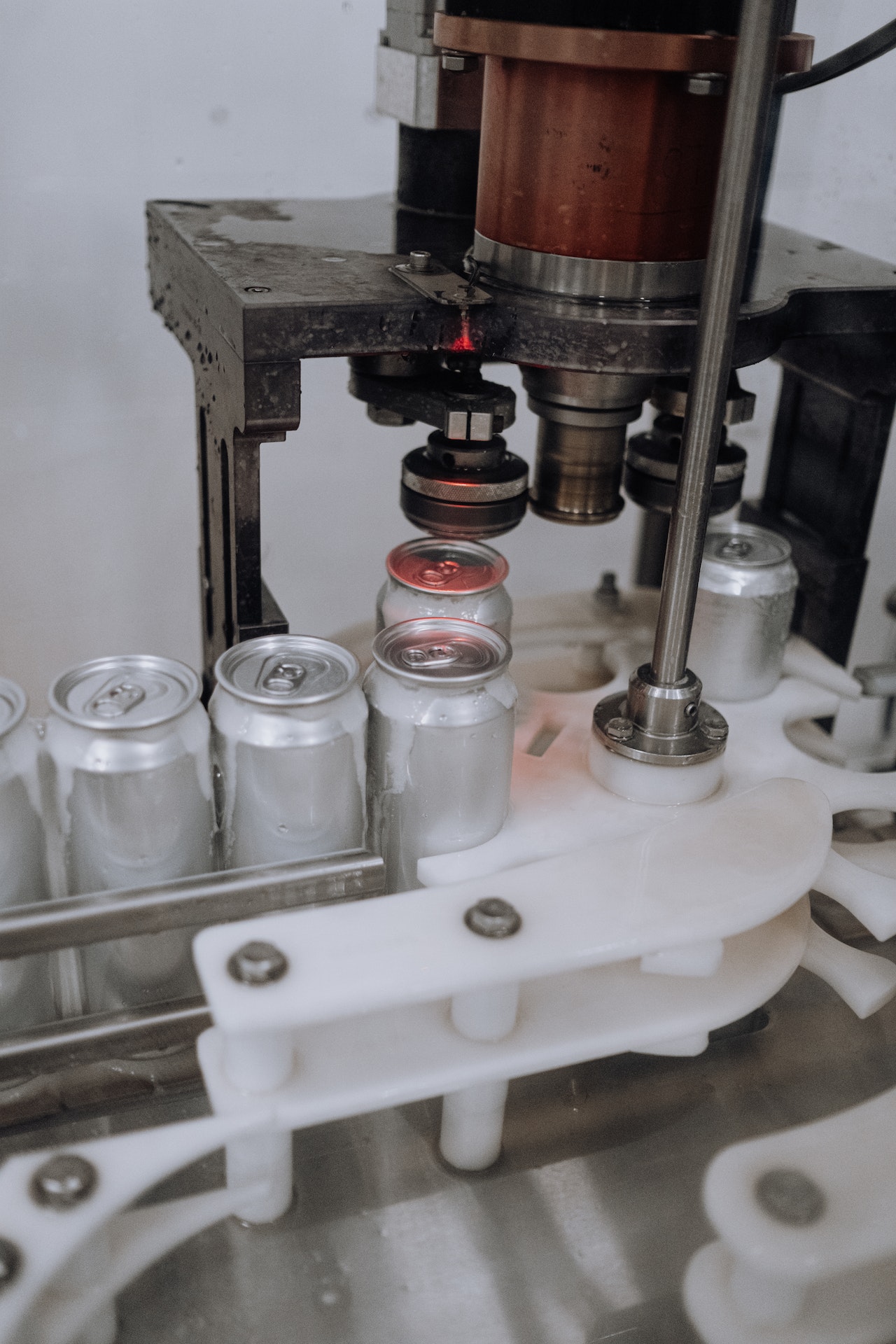
 Because we live in a technologically driven society, commonly referred to as the Age of Digital Darwinism, it is imperative that all companies be at the top of their game in order to survive, prosper, and differentiate themselves from their rivals. Numerous advantages have been created for manufacturing facilities as a result of the rapid development of the technology sector.
For example, the MRO Electric and Supply Company is among the greatest wholesale contributors to automation and offers the finest industrial automation goods on a global scale. They are among the best in the business. In light of this, the automation of factories is absolutely necessary in order to achieve a greater level of efficiency and production, improve the quality of goods, and increase profitability.
The greatest advantage of automating a factory is that it calls for either very little or none at all in the way of human intervention or involvement in order to achieve peak efficiency. The terms “material handling,” “assembling,” and “disassembling,” as well as “inspection,” “analysis,” and “processing,” are often included in the scope of factory automation.
The following are four reasons why factories and manufacturing organizations could consider incorporating factory automation into their workflow:
Workers and the Safety of the Working Environment
There are a lot of risks involved with factory automation, and some of them may even lead to major accidents. Some examples of these risks include the cutting and assembly of heavy material. The introduction of automated machinery into a factory may reduce the risk of people being hurt while simultaneously making the working environment far less hazardous than it would have been otherwise.
As a result of the fact that automated devices are operated with the assistance of a computer, there is a much-reduced possibility of human mistakes, danger, and inefficiency. Since the adoption of the Occupational Safety and Health Act in 1970, the safety and health of workers have been the primary concern of employers. As a result, industrial automation has contributed to the creation of a more secure working environment for workers.
Reduced Costs Associated with Production
Another crucial advantage that firms may get from industrial automation is a significant reduction in the amount of money that they spend on labor. This element suggests that the producer is able to make more goods of a higher quality while simultaneously devoting less time and effort to the process.
Factory owners and manufacturers may also profit from an improvement in worker productivity, which is made possible with the growing use of factory automation and efficient technology. This makes it feasible for factory owners and manufacturers to benefit from lower production expenses.
Increase in the Productivity of the Workforce
Automated technologies, such as the CNC equipment produced by FANUC (FANUC CNC), provide manufacturers the ability to outperform human labor and increase both the labor productivity ratio and the overall output ratio of their factories. In addition, the automation of various manual processes in a plant may reduce the number of jobs that are not only monotonous but also repetitive.
Employees are able to spend their time, energy, and concentration on other duties, which in turn increases the factory’s overall productivity, outperforms rivals and stands out in their particular niches. This is made possible as a result of the decrease in manual chores.
Realize One-of-a-Kind Objectives
Businesses have been able to do one-of-a-kind activities that were formerly thought to be impossible to complete as a direct result of the rise of automation and new technologies. Certain stages of the production process are impossible to complete without the assistance of certain pieces of equipment.
An excellent illustration of how a factory has elevated the standard operating processes for producing products to a higher level is the creation of intricate and one-of-a-kind surfaces using programmable logic controllers (PLC). It is not feasible to get manufacturing processes like this using human labor.
Conclusion
The widespread adoption of factory automation has resulted in a significant rise in product quality, productivity, and overall efficiency, as well as an increase in sales and revenue. As a result, manufacturing businesses have been able to distinguish themselves from their potential rivals by developing a more favorable public image.