“The middle-aged crisis is a very typical performance. What we were good at may not be needed by the market today or in the future. Therefore, we need to master new things, change a new model, and deal with this dilemma of weak growth with new methods and thinking. “Wang Bingfeng, partner and business development general manager of VMware China. Recently, at the 2018 VMware China Partner Leaders Summit, Wang Bingfeng delivered a speech entitled “Midlife Crisis – Rebirth: VMware partner strategy”.
In China’s IT market, the traditional “partner” is actually a sales channel, which can be simply understood as an extension of the marketing department of multinational corporations in China. This is related to the simple application, large market volume and capacity of IT in early China – it is difficult for a multinational IT enterprise to establish a product marketing team that can penetrate into second and third tier cities and small and medium-sized enterprises, not only because of the consideration of management cost and personnel cost, but also considering the business profit.
However, with the IT application getting closer to the actual business needs of the enterprise, the provision mode of IT solutions has gradually changed from sales mode to service mode. Although the “partner” has been greatly upgraded compared with the original “channel”, its understanding and control ability of the original products has become an important factor limiting its service ability. This may be the “middle-aged crisis” that Wang Bingfeng refers to in the field of Chinese partners: after the struggle in the start-up stage and the joy in the growth stage, he always habitually makes gradual innovation on the basis of his original advantages, and rarely makes subversive growth. Therefore, he is more and more different from the requirements of the outside world… Although we know sooner or later, we will encounter a stall point, but we are still at a loss about the future.
“The partner defined by VMware is no longer an upstream or downstream relationship linked by solutions in the traditional definition, but a three-dimensional ecological partnership. Our cooperation is not necessarily a product, not necessarily a trading relationship. It may be technology, a core concept, a strategy to the market, or capital.” Wang Bingfeng stressed that this is a cloud service-oriented environment and a major adjustment to the whole structure in the past. VMware’s definition of the new partner model also represents an ideal model for most IT system providers for the future development direction of partners and environment.
Or you can also see it as a change in the IT industrial structure of the whole enterprise and an opportunity to help the “partner” enterprises in the original business chain out of the middle-aged crisis.
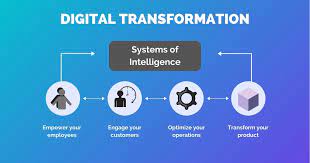
An obvious reason: as a typical representative of current IT products and service providers, whether in helping customers realize data center modernization, public cloud integration, network and security transformation, or in embracing digital workspace, VMware emphasizes the application of IT technology in its own products and services, securely connect and effectively manage enterprise digital architecture and applications, so as to help Chinese enterprises realize “digital transformation”. All these cannot be achieved by simple product delivery and project implementation.
All of them need combining the actual business and real IT needs of specific industries and enterprises, even considering the future business transformation mode and IT expansion of the application enterprise… This is not only the change of product delivery mode, but also the change of business model for the partners directly facing the end enterprise users.
At the same time, as a typical multinational company with high dependence on “partners” – in the words of GuoZunhua, global vice president of VMware and President of VMware China, more than 99% of VMware’s business in the Chinese market is completed jointly with partners – the quality of partners largely determines their achievements in this market, even the health of future development.
In Wang Bingfeng’s words, in building the partnership, spoto vmware is most concerned about how to make the partners really have the ability to master the new technological achievements of VMware. In addition, it is the improvement of partners’ enterprise leadership ability and enterprise operation ability – which is obviously the focus of the upgrading of the whole partnership.
In 2016, as the first step of business environment building, VMware launched the “magic cube program”, which helps local partners accurately grasp market dynamics and customer needs, improve professional ability and service level, find new business growth points and explore new market opportunities by creating a series of professional training tailored for local partners, so as to improve competitiveness and profitability.
This time, Wang Bingfeng also talked about the upgraded magic cube program: through more targeted arrangements, VMware will launch empowerment plans in five aspects – leadership, marketing, technology, marketing and operation – for partners at different levels and people at different levels among partners, so as to help partners improve their abilities in all aspects, help partners transform into professional service providers.
If the focus of the Rubik’s cube program is to improve the capabilities of partners, the “VMware Innovation Network” program is to transform the linear cooperation mode into a three-dimensional structure.
In March 2018, VMware officially announced the Cloud Harbor(the future IT cloud environment carrier)strategic blueprint: create an open online community for customers in various industries, excellent enterprises in the industry, start-ups, investors, universities and research institutions and industry associations, so as to make it have strategic alliances, incubators, industrial development engines, innovation centers, open community, education and training. “We need to break the pipeline and value chain of research, design, production, promotion and adoption, rebuild a network innovation system and turn pipeline into network.”GuoZunhua once said this when the Cloud Harbor strategic blueprint was released. This can also be seen as a strategic deployment of VMware to weave partners into an environment. At the summit, Cloud Harbor strategy was officially implemented through the “VMware Innovation Network” program. Wang Bingfeng stressed that in the future, VMware will work with a number of investment institutions, partners, start-ups, customers and universities to further promote the construction of “VMware Innovation Network”.
According to a data provided by VMware, VMware currently has more than 500,000 customers and 75,000 partners worldwide. In China, the total number of partners increased by 14% in fiscal 2018 compared with fiscal 2016. In the past two years, VMware related businesses have shown double-digit rapid growth in partner revenue. In the recent satisfaction survey, the partner satisfaction of VMware China reached the highest point in nearly five years this year, in which the “trust” dimension increased by 8 percentage points.
“We all talk about digitization. What is digitization? It is definitely not simply the application of cloud technology, big data, AI and IoT. ” In an interview, Wang Bingfeng stressed that IT technology is only the simplest aspect of enterprise digitization. For enterprises, what is more important is how to adjust enterprise strategy, how to organize talent structure, how to build a new organizational structure and process to adapt to new technologies, and how to create integration between industries. “This is the real digitization. Therefore, for partners, if you do not develop and invest in new technologies, it is difficult for you to adapt to the new direction and provide value to your customers.”
https://cciedump.spoto.net/blog/what-does-it-take-to-get-pmp-certification_3879.html