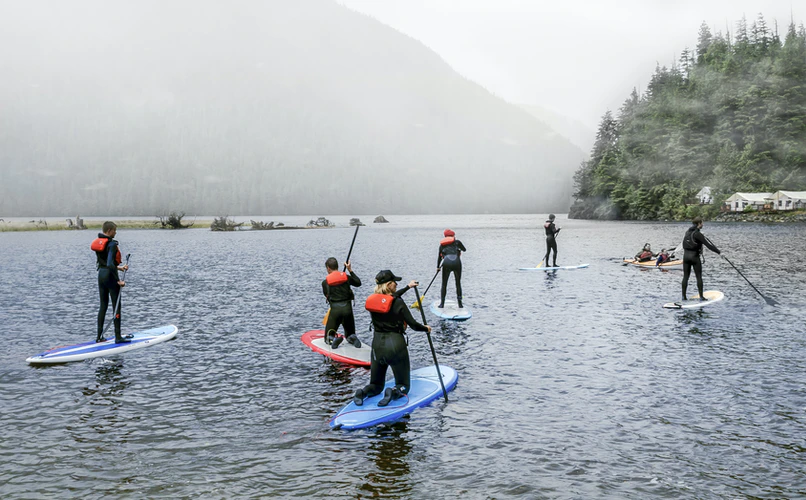
Stand up paddleboarding, or shortly SUP is a fun and relaxing activity which has been growing more and more popular in past years. It consists of standing with your feet on a board while using a paddle to maneuver your way through the water with something that resembles a canoe paddle, only longer. It was initially inspired by surfing, and it seems quite similar but instead of sitting or lying on the board until the wave arrives, in paddle boarding, you move forward anytime you want with the help of the trusty paddles. Below is a list of a few important tips for beginners in this fast-growing water sport, which are crucial for anyone interested in trying this one out.
Use a Leash
When engaging in any kind of water sport, the first thing you need to prioritize is your safety. In paddleboarding, the first thing you want to do is to keep yourself safe at any point is to tether yourself to a board using a leash. There are many different types of board leashes on the market (straight or coiled, the ones that are attached to an ankle or a calf, etc.), and which one you choose is completely up to you. The most important thing, however, is getting a high-quality board leash that can’t be broken off easily but can be quickly detached.
Choose the Right Gear
Having the right gear is essential in every sport if you want to fully enjoy it and have the best performance yourself. When it comes to paddle, there are a few characteristics that have to be considered when getting one. The most important is length (it should be 6-12 inches taller than the height of the paddler) and material, which impacts its weight (aluminum and plastic are significantly lighter than perhaps carbon fiber and fiberglass paddles). Although this is less important for recreational paddling, it is significant for long-distance paddles or races.
Learn the Correct Paddling Technique
There are a couple of common mistakes beginners tend to make when starting with paddleboarding. As for everything else, today, you can find that the internet is fully stacked with various online tutorials on this subject as well. But if you still feel more comfortable with traditional learning, the folks from SantaBarbaraSurfSchool.com advise you to take high-quality lessons. A professional can help you out with everything you need for this sport.
Engage Your Core
Speaking of techniques, when you hear someone say you shouldn’t be paddling with your hands, as strange as it might sound, it is entirely right. The core muscles are the strongest in your body and therefore provide the most effective power for your stroke. Compared to our more core muscles, our arm muscles provide much less power and will easily tire out. Engaging your core helps ensure higher efficiency in any kind of physical activity, paddling as well, and allows you to maintain good balance on the board. Plus, this approach to paddling gets you in a good, light workout that will increase your core strength and build muscle definition in your midsection.

Give Yourself Enough Space
As a beginner in this kind of activity, especially since it is a water sport, the best way to start practicing is to isolate yourself from others as much as possible. Several things are increasing the chances of you falling off the board, hurting yourself, or/and someone else. Just think about only how many waves can a group of beginners make, and that alone should be enough of a distraction, which leads you to easily lose stability. Make sure that you have plenty of space to move around because it is for your and everybody else’s safety. After all, there’s plenty of room in the sea, or lake, river, ocean, depending on where you plan to paddle.
Learn How to Fall Off the Board and Get Back Up Correctly
Falling off the board is inevitable and completely natural regardless if you are a beginner or a professional. It makes you even more determined to stay on the board, and it serves as a good experience for future learning as it can teach you how you are supposed to fall correctly to minimize potential injuries. The main thing is to try and fall as far away from the board as you can so you don hit the board or its edge and get hurt in the process. Don’t worry, your board isn’t going anywhere since it is safely attached to your leg. You can get back on as fast as you fell off in the first place.
Hopefully, these tips will help you make up your mind about trying outboard paddling or help you out with becoming a better paddler if you have already started enjoying this wonderful sport.