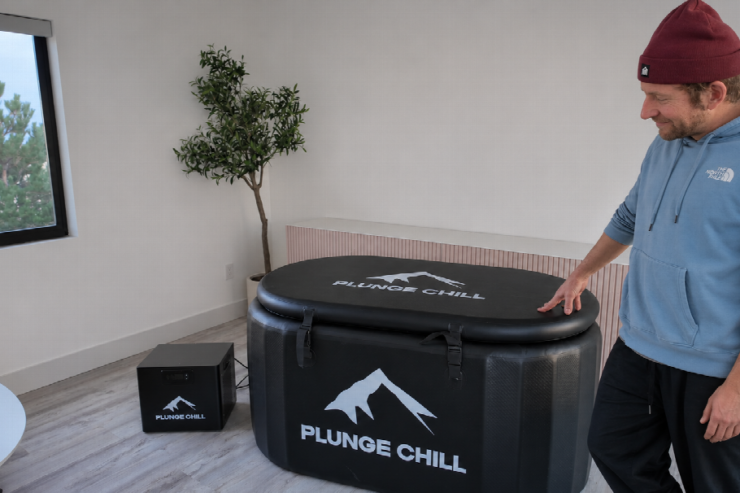
At the gym, a cold plunge is ready when you walk up to it. At home, there’s usually a little more planning involved. A friend might swear by an ice bath after a long run, but that still leaves you with some questions. What does a first dip feel like? Can it help with soreness? And if you put a tub on the patio, how do you keep the water cold enough to use?
Here are six things worth knowing before you take your first dip or set up a cold plunge at home.
1. An Ice Bath Is One Way to Cold Plunge
Cold plunging is a form of cold-water immersion, usually done in a tub or small pool. An ice bath uses ice to lower the water temperature. A gym or recovery studio may use a cooling system to keep its tub at a set temperature. At home, both approaches are possible, depending on how often you plan to use the tub and how much preparation you want to do.
The shape of the tub affects how you sit. An upright tub usually puts you in a bent-knee position, while a longer model gives you more room to stretch out. If you try a supervised plunge at a facility, notice where your feet rest and how easily you can step out. Those details are hard to judge from a product photo and worth remembering if you decide to buy a tub later.
2. Cold Water May Ease Soreness After Some Workouts
Some runners and recreational athletes use cold-water immersion after a long run or a demanding game. Cleveland Clinic notes that it may help ease muscle soreness after exercise. If soreness is what interests you, think about when you usually notice it. For a runner, that might be the next morning on the stairs. The way your legs feel then may be more relevant to your routine than the initial rush of getting into cold water.
Your training goals also matter. Cleveland Clinic notes that using cold-water immersion soon after strength training may interfere with muscle growth. If your week includes both running and lifting, consider where a cold dip fits in each routine. You might enjoy it after an occasional long run and make a different choice after a session focused on building muscle.
3. At Home, Water Temperature Takes Some Planning
Picking up a bag of ice on the way home can work for an occasional dip. If you want to use the tub several days a week, you’ll also need somewhere to store the ice and enough time for it to cool the water. A cold plunge chiller circulates water through a cooling unit so you can lower the temperature in advance and help maintain it between sessions.
When comparing chillers, look at the water volume, starting temperature, and cooling time in the manufacturer’s test. A test using about as much water as you normally put in the tub gives you a better basis for estimating how long a fresh fill will take to cool. The lowest temperature on a product page tells you how cold the unit can get under the stated conditions. The cooling time helps you plan when to start it.
For an outdoor setup in Katy, look at the patio around the time you expect to use the tub. The corner that’s shaded at breakfast may be in direct sun by late afternoon. Shade and an insulated lid can help slow warming between dips.

4. The First Dip Can Feel More Intense Than You Expect
The American Heart Association explains that sudden immersion in cold water can trigger gasping and rapid breathing and affect heart rate and blood pressure. For a first session, choose a supervised setting, check the water temperature, and enter gradually. Get out if you feel lightheaded or have trouble controlling your breathing. Keep a towel and dry clothes nearby so you can warm up after stepping out.
If you use ice at home, check the water with a thermometer before each session. The same number of bags can produce different results if the tap water is warmer or you’ve filled the tub higher. A temperature reading gives you a more reliable way to judge the water than counting bags of ice.
5. Some People Should Speak With a Healthcare Professional First
Cleveland Clinic advises checking with a healthcare professional before trying cold-water immersion, especially if you have heart disease, high blood pressure, diabetes, or poor circulation, or if you’re pregnant.
If you plunge at home, have someone stay nearby and keep the area where you’ll step out clear. Give yourself enough room to set the lid aside and put your towel within reach. It’s easier to work out where those things go before you fill the tub, while you can still adjust the layout.
6. Choose a Setup That Fits the Way You’ll Use It
A portable tub and ice may be enough if you enjoy an occasional Saturday dip. If you already have a tub you like, check its fittings and usual fill volume before choosing a standalone chiller. If you’re buying both pieces, compare a bundle with the cost of buying them separately. Check whether the pump, hoses, and filter are included, and make sure you can reach those parts for routine cleaning.
During its Black Friday sale, Plunge Chill is offering 60% off sitewide, including portable cold plunge tubs, standalone chillers, and tub-and-chiller bundles. Enter the discount code Plunge10 at checkout. Promotion terms apply.
Before you order, picture one ordinary day when you’d use it. A Saturday runner might have time to pick up ice and prepare the tub before breakfast. Someone who trains on weekday evenings may want to start cooling the water earlier in the day. That ordinary session can tell you how much preparation you’re happy to do and which pieces of equipment you’ll actually use.
“Disclosure: This article contains sponsored links provided by our clients. Sponsored articles represent the views of the submitting party. The Katy News does not endorse or verify the content or links.”