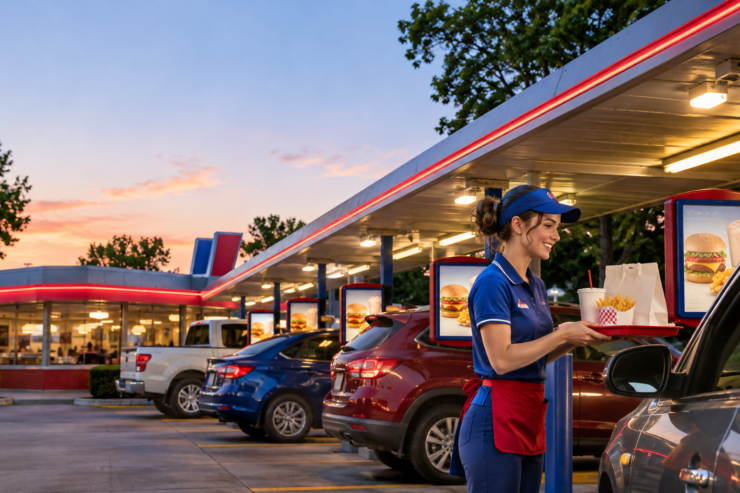
When the COVID-19 pandemic disrupted restaurant dining, many businesses had to quickly adapt to takeout, curbside pickup, and delivery. Sonic Drive-In already had a service model centered on customers ordering and eating in their cars.
I began calling this idea “the Sonic effect”: a restaurant can be better prepared for a major disruption when it offers convenient ways to serve customers beyond the dining room.
Sonic offered an experience that felt one step closer to dining in, without customers actually dining inside. Guests could order at a drive-in stall and have a carhop bring food to their vehicle, use the drive-through, or order ahead. They could enjoy a more personal restaurant experience while staying in their cars.
What Sonic Reported About 2020 Sales
In its official franchise brochure, Sonic reported: “Average unit volume reported by 1,155 traditional SONIC Drive-Ins that operated for the entire 2020 fiscal year was $1.448 million.” The brochure also says 39% of those locations exceeded that average.
These figures cover average sales per location for 1,155 traditional drive-ins that operated for the full fiscal year. They are not Sonic’s total companywide sales, and the brochure notes that individual results may differ.
Sonic’s president also described how the company used its drive-in format and ordering options during the pandemic. In an interview published by Inspire Brands, she explained that customers could order at a stall, use the drive-through, or place an order ahead.
What Other Restaurants Can Learn
Sonic’s success does not mean every restaurant should copy its exact setup. A drive-in model depends on the location, parking, staffing, and investment. But the broader lesson applies to many businesses: give customers convenient choices for ordering and receiving their food.
For one restaurant, that might mean improving online ordering. For another, it could mean adding curbside pickup, a dependable pickup area, or a more efficient drive-through. The right approach depends on the business and the people it serves.
Sonic’s advantage was that its car-centered service was already part of the brand when customer habits changed. It offered something between traditional takeout and dining in: customers could have food brought to their car and enjoy a more personal experience without going inside.
That readiness is what I call the Sonic effect.