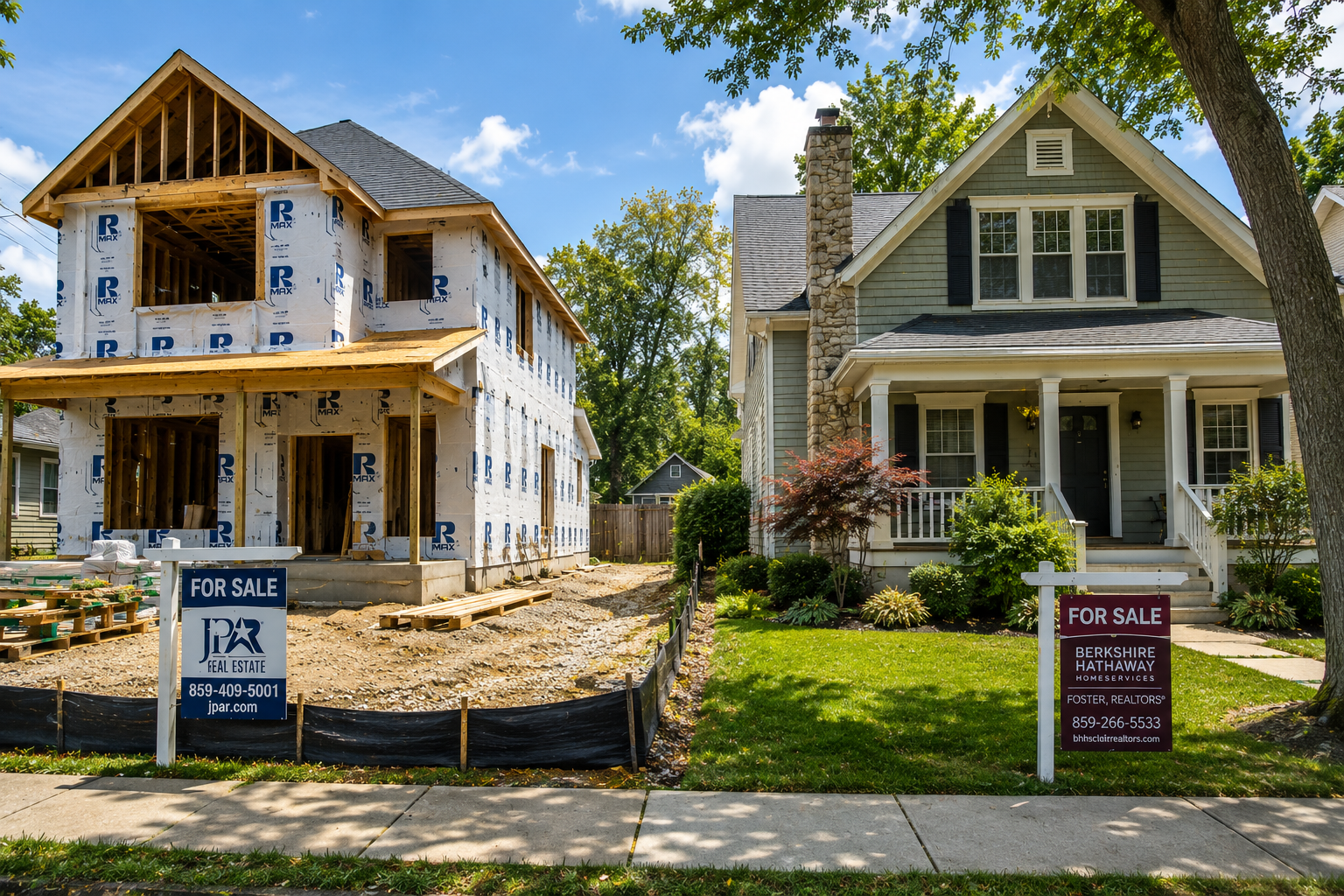
Two houses. Same budget. One has never been lived in. The other has been standing since before you were born.
That fork shows up in almost every home search, and it rarely resolves cleanly. A new build promises warranties, current code, and a floor plan designed around how families actually move through a house. An established home offers a settled street, shade you cannot buy, and construction details that stopped being affordable decades ago. Deciding between them comes down to budget, patience, and how long you plan to stay.
The Case for Buying New
The appeal breaks down into three things: what you will not have to fix, what you will not have to pay for monthly, and what you will have to tolerate in exchange.
Systems you can ignore for years
Everything starts its life the day you move in. HVAC, water heater, plumbing, electrical. Most builders back that with a tiered warranty: one year on workmanship, two on systems, ten on structure.
Lower bills, better layouts
Homes built in the last decade reflect current energy codes. Tighter envelopes, better window packages, modern insulation. In a Texas August, you feel that on the first utility statement.
Floor plans have evolved too. Open kitchens, dedicated offices, oversized primary closets, drop zones off the garage. Builders added those because buyers kept asking. Get into a phase early and you may pick your own finishes.
What you give up
Smaller lots. Thin landscaping for years. Construction trucks on Saturday mornings. HOA rules in newer communities also run stricter than what you find on an older block.
Why Established Homes Still Win Buyers Over
Older neighborhoods were built first, so they sit closer to schools, retail, and job centers. Lots run larger. Mature trees cut cooling costs in a way no builder upgrade replicates on day one.
Price per square foot usually favors resale, and resale sellers negotiate. Production builders often will not, since discounting one house drags down comps across the community.
Then there is the material you cannot buy at today’s price points: solid interior doors, thicker trim, full masonry, hardwood under old carpet.
The catch is maintenance. Someone eventually writes a check for a thirty-year-old system.
Comfort and the Building Envelope
Most of what buyers describe as an old house “feeling drafty” traces back to two components, and both are fixable.
Insulation and air sealing
A home built in 2019 holds conditioned air. A home built in 1978 mostly does not. Attic insulation delivers the highest return in nearly every older house, followed by air sealing around penetrations, rim joists, and duct runs. A blower door test finds the actual leaks instead of the ones you assume are there, and working through a guide to insulating an old home before you request bids makes contractor proposals much easier to judge.
Windows
Single-pane units leak air, fade flooring, and do almost nothing for noise. If the property backs to I-10, a rail line, or a flight path, look into soundproof windows rather than assuming you will adjust to the sound. Most buyers never do.
The Big-Ticket Items on an Older Home
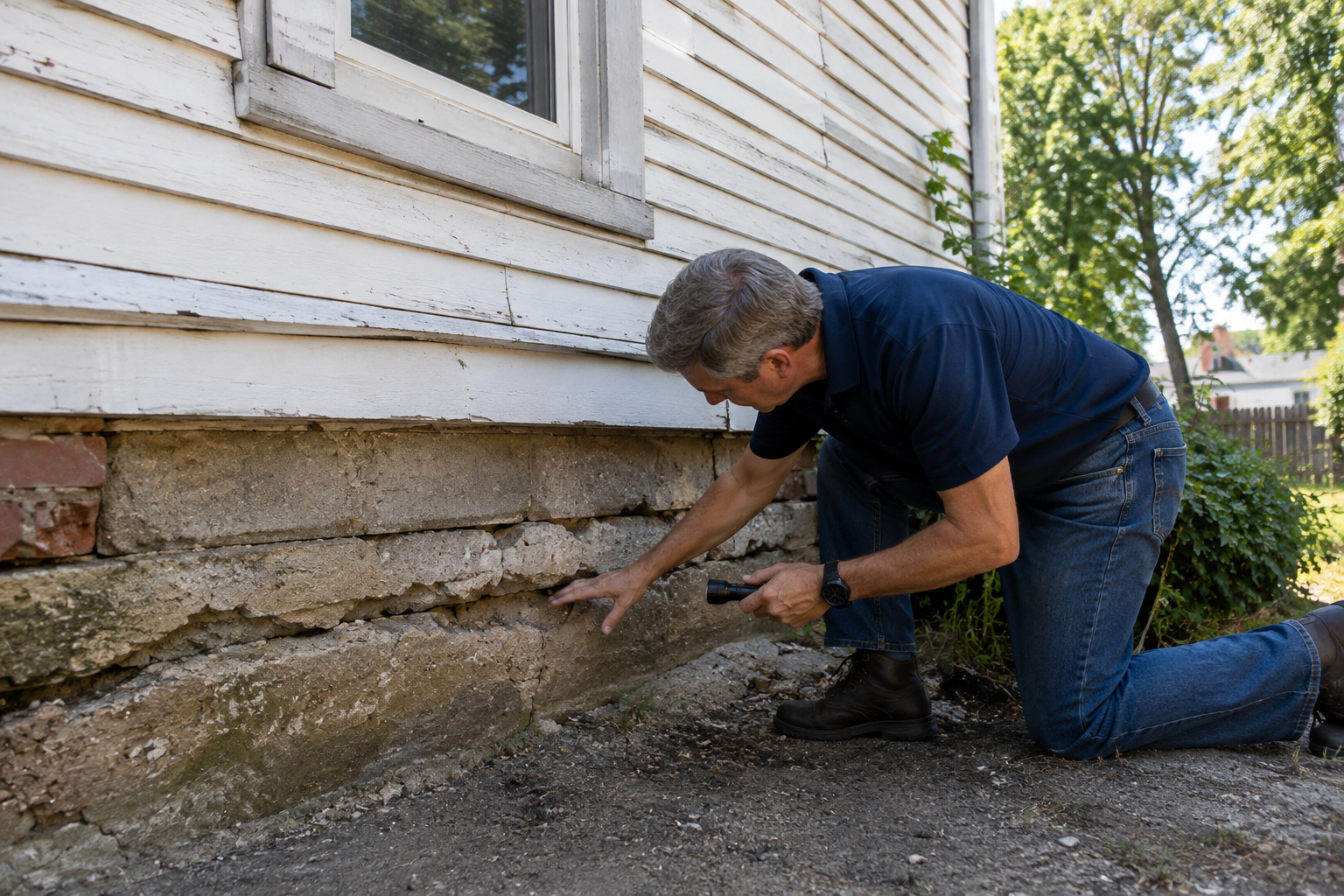
Four systems account for most of the expensive surprises, and your inspector should give you a clear read on all four.
Foundation
In Katy and across the Houston area, expansive clay soil swells and shrinks with moisture, and slabs move with it. Ask about slab type, drainage, watering history, and any engineer’s evaluation the seller can produce. Documented movement that has been monitored is manageable and often already priced into the listing. Undisclosed movement is a different problem, because it follows the property into your insurance application and your eventual resale disclosure.
Roof
Ask for its age and any paperwork the seller kept. A twenty-year-old composition roof is negotiating leverage. A five-year-old roof with a transferable warranty is an asset. Design matters as much as age, since pitch affects drainage, complex rooflines create valleys that collect debris, and ventilation varies widely between styles. Reviewing the common roof types helps you understand what an inspector is describing.
“Buyers treat the roof as a repair question. In Texas it is really an insurance question,” said Dennis Pittard of Recon Roofing Texas. “Carriers have tightened up on older composition roofs. Some drop you to actual cash value, some will not write the policy at all. Find that out during the option period, not three days before closing. Ask for the age in writing, and if nobody can produce it, get somebody on the roof before you waive anything.”
Wiring and plumbing
Aluminum branch wiring turns up in homes from the late sixties and early seventies. Federal Pacific and Zinsco panels appear across a wider stretch. Polybutylene supply lines run through a lot of eighties and nineties construction in this region. None of the three is exotic, and all three have known fixes, but some carriers will not write a policy over them at all. That turns a repair question into a closing question, so flag them early rather than during the option period.
Costs That Never Appear in the Listing
New construction hides money in the tax line. Plenty of newer developments sit inside MUD or PID districts, pushing the effective rate past what the ad implies, and first-year assessments often cover land only before jumping once the house is on the tax roll. Fencing, blinds, gutters, and landscaping usually come out of your pocket after closing.
Insurance runs the other direction. Carriers price off roof age, wiring type, and panel brand, so a new build can cost less to insure than an older home worth thirty percent less.
Time is its own cost. A build takes six to ten months, which leaves you exposed to rate movement between contract and closing. Builder-affiliated lenders sometimes offset that with buydowns, though the incentive usually comes attached to a higher base price.
One rule covers both: hire your own inspector. New builds fail inspections regularly, and a builder’s internal walkthrough is not an independent set of eyes.
Match the house to the life you actually live. Want your weekends free? New construction earns its premium. Want a specific street, a bigger yard, and equity you build through improvements? An older home gets you there.
Ready to keep up with what is happening in your market? Visit The Katy News for local real estate coverage, community updates, and the neighborhood reporting that helps you buy with confidence.
“Disclosure: This article contains sponsored links provided by our clients. Sponsored articles represent the views of the submitting party. The Katy News does not endorse or verify the content or links.”