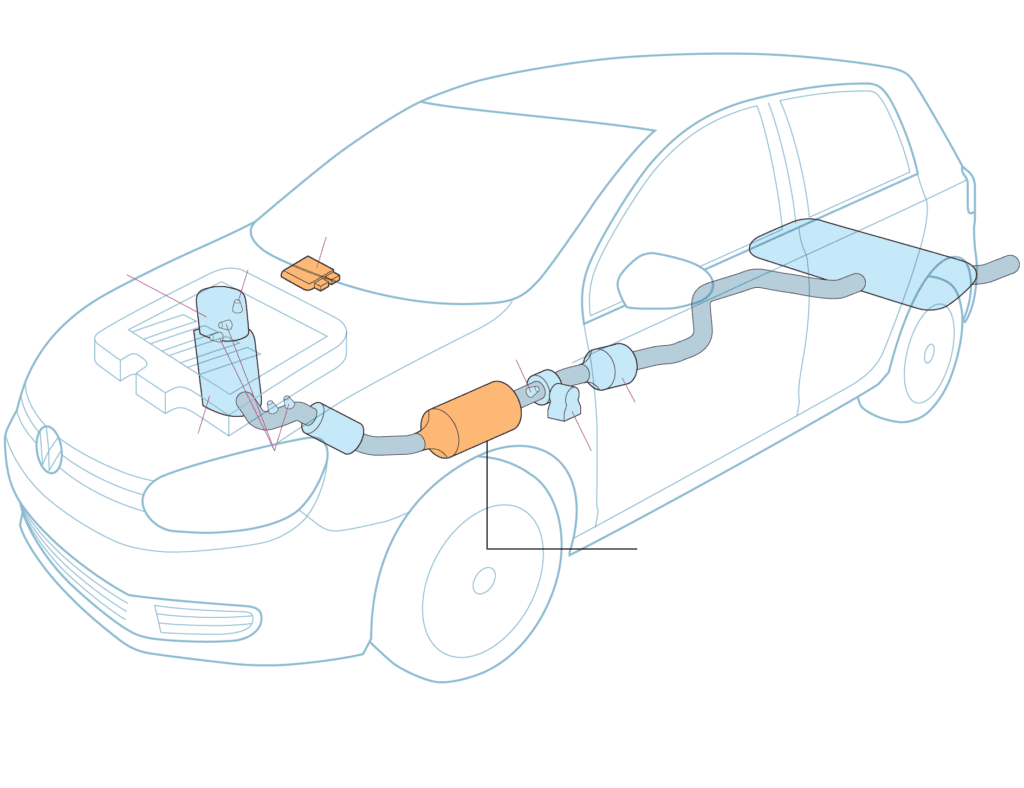
The Dieselgate scandal of 2015 saw Volkswagen Group admit to cheating emissions tests to make their cars appear cleaner than they were. Since then, numerous investigations and studies have revealed whether other automakers have engaged in a similar practice. A European Court of Auditors study estimated that air pollution causes around 400,000 premature deaths in Europe each year, with NOx being a major contributor. In the United Kingdom alone, a recent report suggests that up to one in five vehicles potentially emit overly dangerous emissions.
The Findings
The report was conducted by research firm Emissions Analytics and commissioned by law firm Leigh Day. The findings are concerning, as they reveal that up to 89% of diesel vehicles emit excessively dangerous nitrogen oxide (NOx) levels, which can be attributed to diesel vehicles manufactured under Euro 5 and 6 regulations between 2009 and 2014. These excess emissions are posing a significant danger to public health, as high levels of NOx and PM have been linked to respiratory problems, heart disease, and premature death. Furthermore, the World Health Organization has classified diesel exhaust as a Group 1 carcinogen.
Leigh Day urges immediate government intervention to rigorously enforce regulations on car companies. Leigh Day partner Shazia Yamin advocates for drivers holding motor manufacturers accountable for using cheat devices in their vehicles. She strongly believes that the detrimental effects of NOx on everyone is a scandal of massive proportions. While countries strive to maintain safe levels of air pollution for the sake of our environment, our health, and the well-being of our children, all these efforts become insignificant if car manufacturers can circumvent these regulations without facing harsher consequences.
Substandard Emission Testing Processes
UK regulators rely on laboratory tests to assess the compliance of new cars with emissions standards. However, these tests often involve artificial conditions that do not accurately represent real-world driving. For instance, the tests don’t account for cold starts, hard acceleration, and high-speed driving, which can lead to excess emissions on the road.
Discrepancies in the emissions performance of diesel cars from VW and other manufacturers highlight the difference between laboratory and on-road emissions. Laboratory tests showed that the VW cars were clean, but on-road testing revealed that they emit up to 40 times the legal limit of nitrogen oxides. This suggests that laboratory tests may be inadequate for assessing the emissions of diesel cars, which account for over half of UK car sales.
Why Are Emissions Standards Important?
Emissions standards are put in place to regulate the amount of pollutants that can be emitted from a vehicle’s tailpipe. In the UK, these standards are set by the European Union and enforced by the government’s Vehicle Certification Agency. The purpose of these standards is to protect public health and are based on the latest scientific evidence and technological advancements.
The consequences of not adhering to these standards are significant. Drivers of cars that exceed emissions limits ultimately end up paying more for higher taxes and lose out on other incentives such as reduced or waived congestion charges. Additionally, car manufacturers can face substantial fines for non-compliance.
What Can Be Done to Address the Issue?
While the UK government has proposed new emissions standards, more immediate action needs to be taken to address the issue of excess diesel emissions. Dealerships and manufacturers must be held accountable for selling vehicles that exceed emissions limits, and they should be required to rectify the issue through recalls and repairs.
In addition, consumers need to be better informed about the environmental impact of the cars they buy. This can be achieved through clearer labelling and information campaigns highlighting the benefits of buying low-emissions vehicles. They can also check their eligibility for a diesel emissions claim at https://www.claimexperts.co.uk. Governments can also incentivise the purchase of cleaner cars through tax breaks and other financial incentives.
Finally, a shift towards more sustainable forms of transportation, such as electric vehicles and public transportation can go a long way in reducing harmful emissions. The UK government has pledged to phase out the sale of new petrol and diesel cars by 2035, but more needs to be done to ensure a smooth and effective transition to cleaner transportation options.
Conclusion
The analysis of on-road emissions data shows that a significant proportion of vehicles on UK roads produce dangerous excess emissions. Excess emissions not only contribute to air pollution but also cause premature deaths and respiratory illnesses. To address this issue, regulators need to adopt more stringent emissions standards and improve their testing procedures to accurately reflect real-world driving conditions. Consumers also need to be more aware of the emissions performance of their vehicles and demand cleaner and greener cars. The road to net-zero carbon emissions requires a concerted effort from all stakeholders, and addressing excess emissions from cars is a crucial step in this direction.