Lavender Waves Farm in South Kingston, Rhode Island, may be best known for its fragrant, calming, and visually stunning lavender field, but there is much more to the farm than its namesake crop. Current owner Dr. Henry Cabrera also maintains quite the menagerie on his nearly 14 acres off of Route 1 in Wakefield.
From Minnie the Great Dane to the six Huacaya alpacas, to three llamas and Dr. Cabrera’s personal favorites, his camels, Lavender Waves Farm is home to an assortment of furry friends that can be both visited on-site and rented for events. Far beyond the traditional petting zoo offerings, Lavender Wave Farm’s camels make for a spectacular addition to any event.
At full grown, camels can range in size from 1,000-2,000 pounds, with lengths exceeding 11 feet and heights taller than six feet at the shoulder. Their magnificent size combined with their ability to carry passengers for rides, and the fact that they are a rare sight in New England, all add to the allure of Dr. Cabrera’s camels.
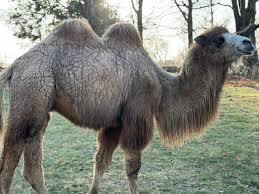 Three of Rhode Island’s Five Camels Reside at Lavender Waves Farm
In Rhode Island, there are estimated to be only five privately held camels. The three residing at Lavender Waves Farm represent both breeds of camels, dromedary and Bactrian. Humphrey, the resident Bactrian camel, arrived first in 2021 at only 5.5 months old. Bactrian camels are known by their two humps, and are much more rare than dromedary camels. Only about 1,500 remain in the wild.
Dr. Cabrera is extremely fond of Humphrey, and has been seen taking him for walks along the beach. In an effort to keep Humphrey from getting lonely, he purchased two dromedary camels, or one-hump camels, this past March. His brown camel is named Jack, and his white camel is named Bingham. Jack and Bingham are both about 15 years old and were raised together.
Bactrian camels are native to cold regions in Asia, primarily the Gobi and Taklamakan Deserts in China and Mongolia, and dromedary, or Arabian camels, originally hail from the sub-Saharan desert regions of the world. Luckily, both are thriving at Lavender Waves Farm.
Camel Rentals & Rides
As Dr. Cabrera continues to expand the offerings at his sprawling and unique farm, he is delving into both camel rentals and rides. Camel rentals are currently being offered, and include delivery and clean up of a pen that allows for petting and feeding the camel(s). Knowing how rare his camels are in the region, Dr. Cabrera is also willing to rent his camels for use in movie productions.
Depending on his continued observations of his camels’ behavior, Dr. Cabrera is hoping to soon add camel rides to his ever-growing list of things to do at Lavender Waves Farm. Bringing camels to help celebrate birthdays, weddings, and other festive gatherings may soon become a Rhode Island tradition.
What Makes Camels Special
In addition to their massive size, which Dr. Cabrera likens to dinosaurs, camels produce milk, are tolerant of drought, and feed on thorny plants that other herbivores won’t go near. Their hooves don’t erode soil and while independent, the working animals can be domesticated and used as livestock. Their meat is edible and textiles can be made from their hair.
Camels can live for up to 50 years and can run as fast as 40 mph, although 25 mph is a more maintainable pace for them. One common misconception about camels is that they store water in their humps; rather, their humps are full of fatty tissue. When food is scarce, camels metabolize the fat in their humps for nourishment.
An interesting fact is that when the fat inside of a hump has been used for sustenance, a camel’s hump will droop and become limp.
In order to survive and thrive in their traditional desert homes, camels had to adapt to long periods of time without access to water. They can go for 10 days without drinking any water at all, and when a camel does happen upon water, it can drink 35 gallons of water in just three minutes.
The majority of camels in today’s world are domesticated. Feral populations do exist in Australia, India, and Kazakhstan, but the only surviving wild camels are the Bactrian camels found in the Gobi Desert.
Camels are highly intelligent, rarely aggressive, and make for loving pets. They can be ridden – with their cooperation – and will communicate any discomforts to their handlers.
Lavender Waves Farm is a One-of-a-kind Gem in Rhode Island
Dr. Cabrera and his estimated 2,500 guests each year may be especially enamored with camels Humphrey, Jack, and Bingham, but Lavender Waves Farm is full of fascinating and hard-to-come-by activities. From cutting your own lavender to a themed picnic on the grounds to their luxurious and rustic Airbnb and more, Lavender Waves Farm provides experiences that set them apart from other attractions in the area.
Dr. Henry Cabrera has an eye for both the unique and the high-end, and of course, for camels. They may not be what you expect to find on a lavender farm in Rhode Island, but you’ll be glad you did.