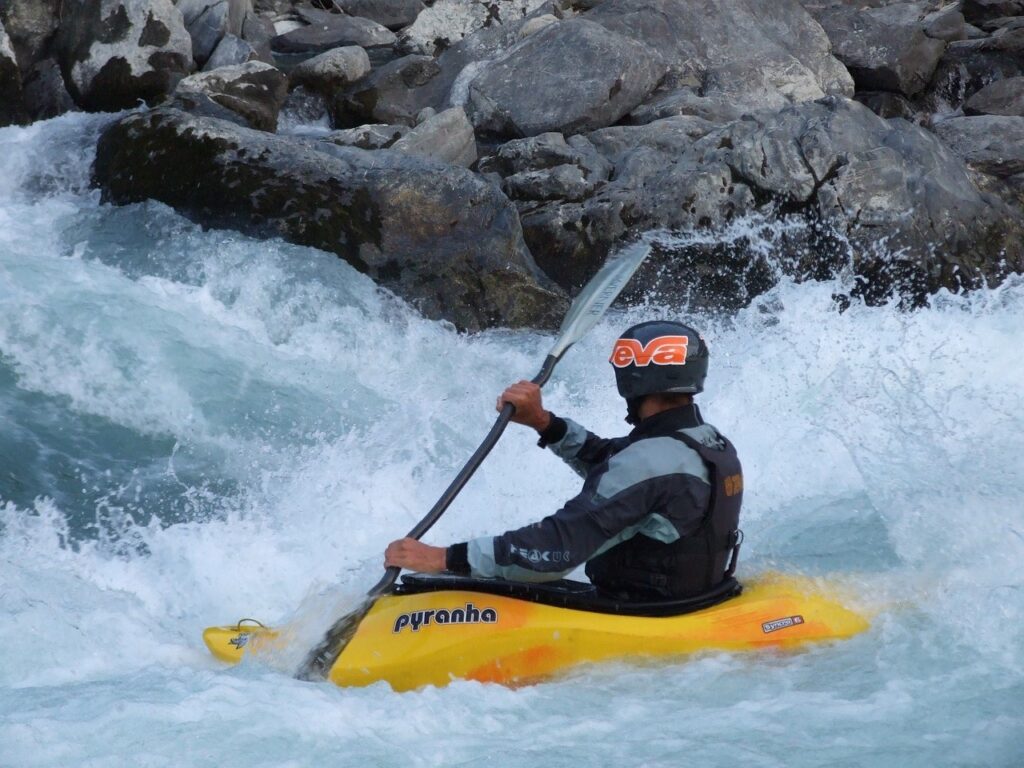
As you may know, kayaking on rivers can be much more dangerous than kayaking in a pond or small lake.
Below, we’ll give you X tips to stay safe when river kayaking.
And yes – we know some of these tips may seem obvious. But you’d be surprised at how many people don’t know about them.
1. Choose the right kayak
Select a kayak suitable for the river’s conditions and your paddling skill level. Longer kayaks are faster and more efficient, but they can be challenging to navigate in tight spaces.
Shorter river kayaks are more maneuverable and stable but can be slower. Also, ensure that your kayak is in good condition and appropriate for the river’s water level and flow rate.
2. Wear a personal flotation device (PFD)
A PFD is an essential safety item when kayaking. Always wear one that fits properly and is Coast Guard-approved. Ensure that it’s securely fastened and won’t slip off in the water.
3. Check the weather and river conditions
Before you head out, check the weather forecast and river conditions. Water levels can change rapidly, and river currents can be stronger than you think. Avoid kayaking during storms or high winds.
4. Know your limits and paddle within them
Don’t push yourself too hard, especially if you’re a beginner. Be honest about your skills and experience and choose a river that matches them. Don’t attempt rapids or sections of a river that are beyond your ability level.
If you’re kayaking on a calm river, you may even want to get a motorized kayak to go further without too much effort.
5. Stay alert and aware of your surroundings
Keep your eyes on the water and watch for obstacles such as rocks, logs, and low-hanging branches. Be aware of other kayakers, boaters, and swimmers in the area.
If you encounter rapids that you’re not familiar with, stop and scout them before paddling through. If you’re not comfortable with the rapids’ difficulty level, portage around them.
6. Practice your strokes and self-rescue techniques
Practice your paddling strokes and self-rescue techniques before heading out on the water. If you capsize, knowing how to perform a wet exit and how to re-enter your kayak can save your life. Learn how to perform an Eskimo roll, which can help you quickly right your kayak if it flips over.
7. Kayak with a buddy or in a group
Kayaking with a buddy or in a group is not only more fun, but it’s also safer. If you run into trouble, having someone else with you can make all the difference. Make sure that everyone in your group is familiar with basic paddling techniques and safety procedures.
How to Stay Safe While River Kayaking – Conclusion
Now you know how to stay safe during your next river kayaking trip.
As a last piece of advice, just remember to take it slow and don’t go beyond your limits.
Check our site for more kayaking tips.