Blood is a vital part of the human body that carries chemicals and nutrients. It is made up of different components, each responsible for carrying out a specific task in our body.
The components of blood consist of blood cells and plasma. There are two types of blood cells corresponding to 45% of blood, called white blood cells (WBC) and red blood cells (RBC). Plasma makes up 55% of the blood. The blood is circulated throughout the body by means of arteries and veins.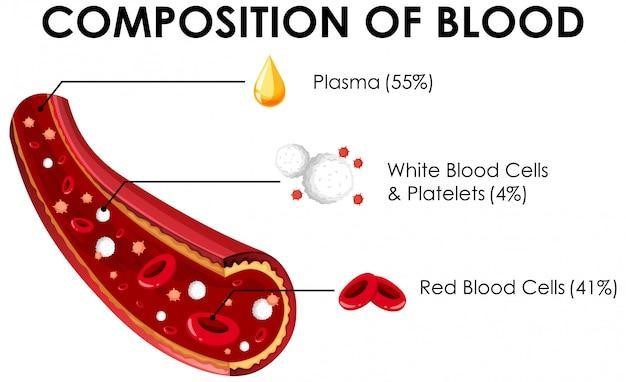
Quick comparison Table
| Differences | Red Blood Cells | White Blood Cells |
| Another name | Erythrocytes | Leukocytes |
| Life Span | 120 days | 13-20 days |
| Shape | Round and biconcave | Irregular |
| Types | None | Five types |
| Function | Transport carbon dioxide and oxygen | Fights against virus, bacteria, and germs |
| Nucleus | Absence of nucleus | Presence of Nucleus |
| Hemoglobin | Present | Absent |
| Motility | Non-motile | motile |
| Count | Approximately 5 million per microliter | 4500 to 100 per cubic millimeter |
| Movement | Through blood vessels only | It moves from blood vessels to tissues |
Red Blood Cells
Red blood cells are the components of blood that give it a reddish color. Components like RBCs, WBCs distinguish blood and plasma from one another.
Red blood cells function to transport oxygen from the lungs to all the tissues of the body by storing hemoglobin. Hemoglobin is the protein in RBCs that has the capability to keep oxygen and carry it to all the tissues.
While providing oxygen to the tissues, the cells carry carbon dioxide from the tissues to excrete the wastes out of the body. Red blood cells are produced in the bone marrow in several stages.
One drop of blood consists of millions of red blood cells in a healthy human body. A male body has 5.4 million red blood cells per microliter of blood, whereas a healthy female body has 4.8 million RBCs in a similar blood amount.
Structure
The cells are dumb-belled in shape and are small and biconcave. Red blood cells structure consists of hemoglobin for oxygen transfer and has no nucleus or other organelles in it. They are covered with a membrane that consists of lipids and proteins. The cells’ size is too small so that it can circulate from the thinnest veins inside the body.
In a healthy human body, red blood cells are made every second at a rate of 2 million cells per second. RBCs’ production involves glucose, amino acids, lipids, zinc, iron, copper, and B vitamins. According to pregnancy experts, Pregnant women often experience low red blood cells and hemoglobin because of increased demand. They are advised to take iron supplements to produce hemoglobin.
Lifespan
Red blood cells appear and disappear every second. Many investigations have been done to figure out its life span. It has been found that the average lifespan of red blood cells is 120 days, after which the cells die. When the cells die, they are naturally removed through the circulatory system and replaced by new blood cells produced every second.
People with diseases may have increased or decreased red blood cell life span depending upon the disease and its nature.
White Blood Cells
White blood cells make up the tiniest proportion in the blood but are the immune cells protecting the human body from diseases. The cells make up 1% of blood and flow through the circulatory system to fight against all the bacteria and viruses that can make a body ill.
White blood cells function primarily to identify any foreign material inside the body, defend the body against it, killing the virus or bacteria, and producing antibodies in the blood.
The cells are not only found within the circulatory system, but they are found in the tissues of the body to help ensure that the body can be protected from any illness by fighting with infections.
In a healthy human body, white blood cells count is 4,500 to 1,100 WBCs per cubic millimeter of blood. The count may decrease if a human body experiences some infections or illness.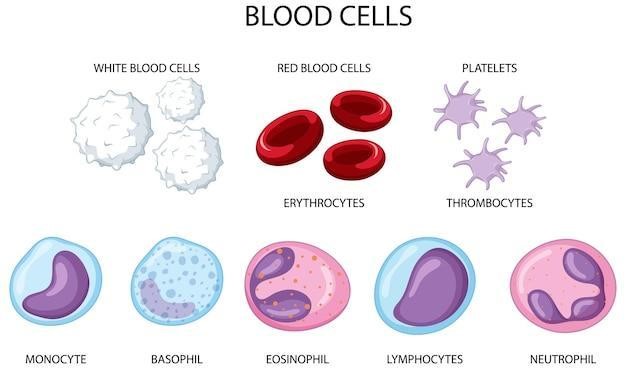
Types
White blood cell types are divided depending upon their function and immunity from fighting against various types of bacteria, viruses, and germs.
- Neutrophils
- Monocytes
- Lymphocytes
- Eosinophils
- basophils
Structure
White blood cell structure, unlike red blood cells, has a nucleus and does not contain hemoglobin. The cells have the ability to produce ribonucleic acid (RNA) because of the presence of a nucleus and can synthesize protein. White blood cells are typically larger in size and easily visible under a compound or any microscope used for microbiology.
The cells are formed in the bone marrow and are not capable of mitosis (cell division) and have a different structure based upon the type of cells. They by the structure are divided into two kinds, Granulocytes and Agranulocytes.
White blood cells have a unique ability for not only moving through the bloodstream, but they can move like an amoeba from the blood vessels to the surrounding tissues to ensure complete immunity of the body.
Lifespan
White blood cells have a shorter life span than red blood cells and disappear after 13 to 20 days in the lymphatic system.
Conclusion
Red blood cells and white blood cells are an integral part of blood and our body. The two cells differentiate entirely in terms of their function and structure. Both the cells are of equal importance for the proper functioning of the body and their increased or decreased count highlights diseases or illness that require appropriate medications.