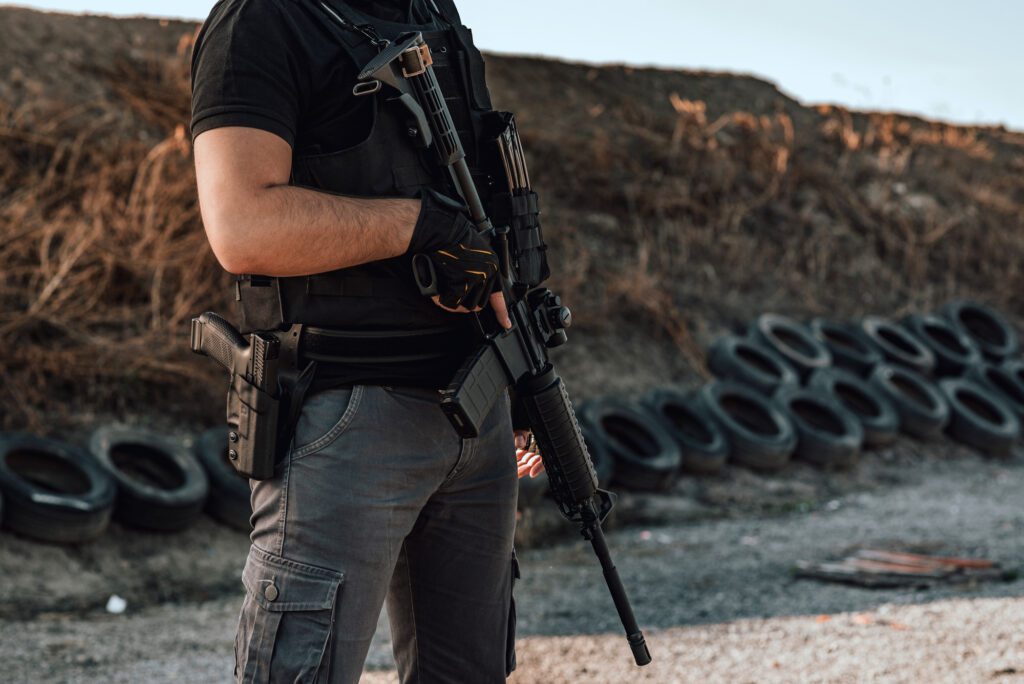
Image of armed man with rifle and gun standing outdoors, close-up.
Society has polarizing views concerning gun ownership. Some groups disdain firearms ownership and believe it harms the public more than reasonable. Meanwhile, other individuals on the other end of the spectrum contend that holding firearms is part of their legally protected rights and that their beliefs should be respected.
Wherever you stand in the political aisle, gun ownership is legal across the land. Nonetheless, you must remember that owning a gun is a right that comes with certain responsibilities, including being a responsible gun owner.
Responsible gun ownership involves different steps undertaken by firearms owners to ensure that their guns are correctly stored, handled appropriately, and so on – all in the name of their personal safety and the welfare of the general public.
Want to learn more about the key pillars of responsible gun ownership? Read on.
Strive To Achieve Safe Gun Storage
Secure gun storage is one of the most critical components for responsible gun ownership.
As a firearms owner, you must lock your guns’ ammunition in a separate storage facility away from the public eye. Check your local firearm shops for an at-home gun wall mount or buy a storage safe to store your arsenal. In addition, countercheck your guns before locking them away for safekeeping.
Further, gun holders like you can embrace and tap into technology to protect your guns. Technology-enabled security systems have strict access control that’s useful for guns stored at home or in the office. Usually, they integrate biometrics and smart devices, such as mobile phones, to grant access to only authorized individuals.
Undergo Gun Safety Training
As part of gun ownership, it’s vital to learn how guns work and how to handle and store them at home or in public properly. This will ensure that you safeguard your life and those around you.
Participating in gun safety training instills responsibility to firearm holders like you. For instance, one concept taught in gun safety training sessions is always assuming a firearm is loaded. You’ll be inclined to check whether the safety lock is always in the correct place – promoting safety.
Look for gun clubs and functions near you to further your training on gun safety. Most offer short courses covering gun safety basics and the like.
Always Report Stolen, Lost, And Found Guns
Guns can be stolen from homes, offices, and in public. Statistics show that stolen and illegally obtained guns contribute to firearms-related crimes such as illegal gun trafficking. Therefore, one of your responsibilities as a gun owner is to report stolen or lost and found firearms to the nearest police station. Authorities will appreciate your efforts and willingness to cooperate in upholding gun safety in your community.
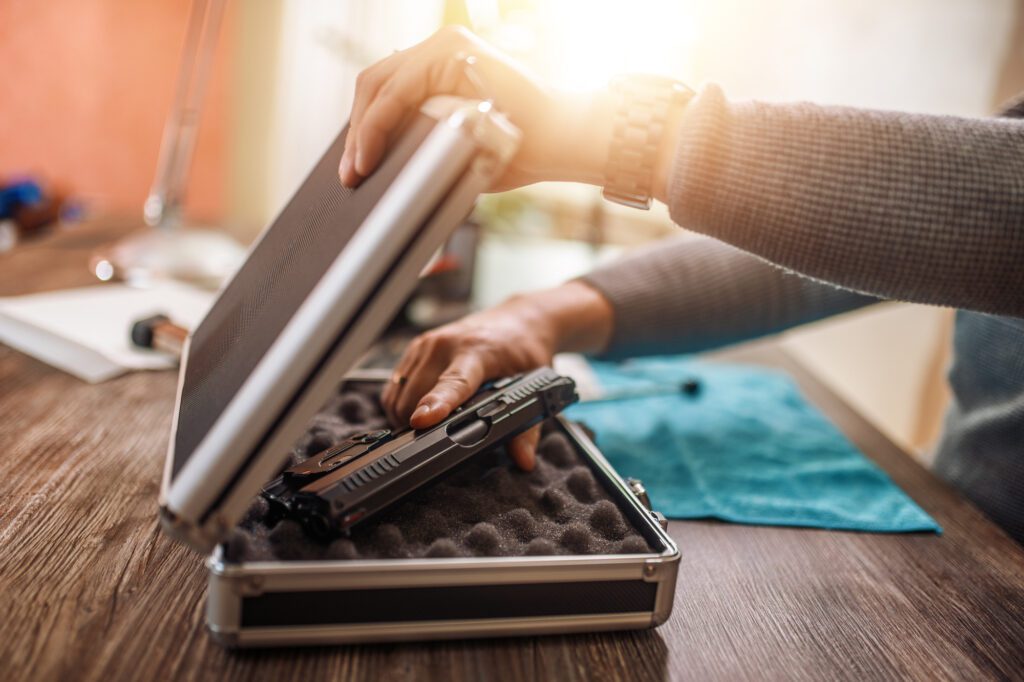
Man cleaning his pistol with bullets.
Keep In Mind The Different Rules On Gun Handling And Ownership
Responsible gun owners must consider different general rules concerning firearms handling and ownership. Check out some of them below:
- Point The Muzzle In A Safe Direction
Many gun-related accidents happen due to the gun owner’s careless muzzle pointing. A firearm can discharge without a warning if pointed in any direction. Therefore, it’s crucial to be mindful of the direction the muzzle is in, whether carrying it around your waist or during transportation.
- Unload Your Gun When In Storage
Firearms should be armed or loaded only when you’re ready to shoot or have a clear target. Hence, you need to unload your gun if it’s not in use or in storage. As another protective measure, the gun’s ammunition must be in separate storage from the firearm.
- Countercheck The Gun’s Safety
Guns have on-and-off safety features that control how guns function. When not in use, gun professionals insist you always turn the safety feature ‘on.’ Nevertheless, firearms are subject to mechanical failure, and the switch can turn off by itself. It’s crucial always to countercheck the gun’s safety features before use to avoid untoward gun accidents.
- Keep Your Finger Off The Trigger
Experts believe a gun’s trigger isn’t a resting place for your fingers while holding it. This is especially true when you’re handling an armed firearm. Once a bullet is discharged, there’s no going back. Keeping your finger straight or away from the trigger when handling a gun is critical.
Conclusion
Gun ownership is a huge and solemn undertaking that can change how you behave or relate to people around you. Handling a potentially dangerous weapon requires you to be held to a higher standard and always practice responsible gun ownership.
If you’re a would-be gun owner, check out the tips mentioned above to help you. It contains different points, including discussions on proper gun storage, handling, and so on.