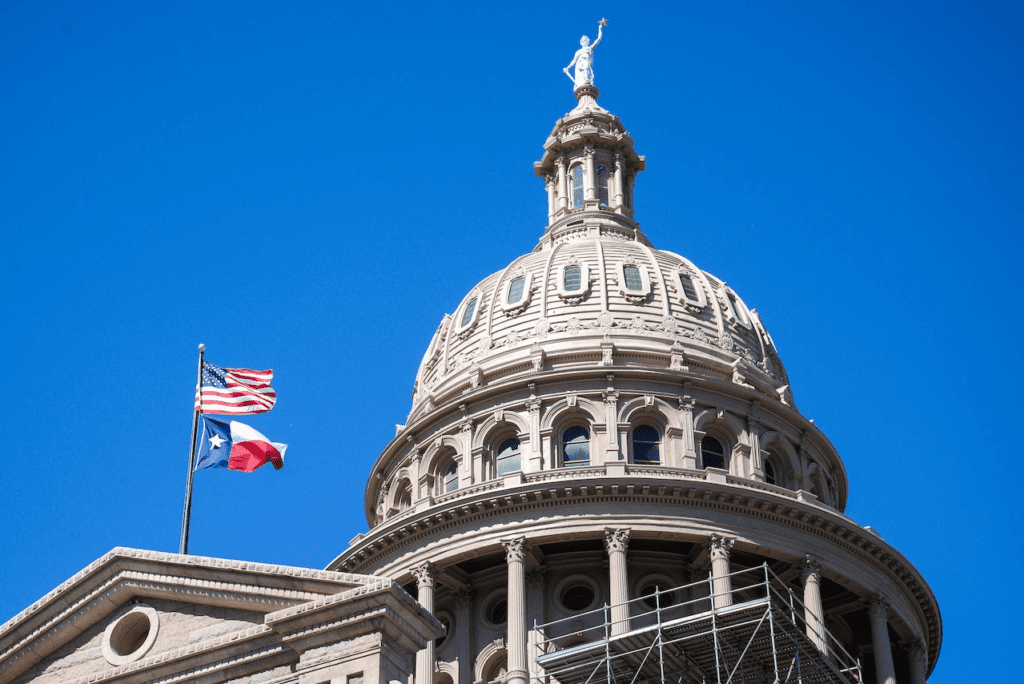
 Texas consistently ranks among the top states to open a company based on its economy, business climate, taxes, and cost of living, among others.
Online resources such as WalletHub ranked Texas as the third-best state to launch a startup in 2023, noting the business climate outpaced all others. Motley Fool put Texas in fourth place while lauding its new business survival rate and zero corporate taxes. Forbes, a traditional media outlet, declared Texas as the number two state to open an enterprise. The business magazine noted the Lone Star state enjoyed the top growth opportunity and lowest overall business costs. CNBC concurs with Forbes, basing its high marks on the state’s diversely skilled workforce as well as technological innovation.
During the third and fourth quarters of 2022, Texas outpaced the national average for gross domestic product growth of 2.6 percent at a stunning 7 percent, according to the Bureau of Economic Analysis. The state stands among the top 10 economies in the world, ahead of countries that include Canada, Korea, Russia, and Australia. Visitors spent a reported $91.7 billion during 2022 driving state sales revenue and infrastructure investment opportunities that exceed $3.6 billion monthly. Add a growing port system along the Gulf of Mexico coastline and few places can rival Texas. The following is a deep dive into the numbers and benefits of opening a business in Texas.
Business Incentive Programs:
It’s no coincidence the state possesses a business survival rate that exceeds the national average. Government incentives are in place to attract job-creating companies. These are commonly utilized business incentive programs provided by the Department of Economic Development Finance.
- Texas Enterprise Fund: Considered the largest “deal-closing” fund of its kind in the nation, it incentivizes projects that create jobs while in competition with out-of-state options.
- Events Trust Funds: This program supports venues hosting events. The business can receive up to $6.25 for every privately invested $1.
- Texas Enterprise Zone Program: An economic tool used to promote job creation from ventures between municipalities, private investors, and the state. Leveraging this incentive delivers a sales and use tax refund.
- Texas Small Business Credit Initiative: This resource helps entrepreneurs gain access to business loans and other resources.
The state also has a Skills Development Fund designed to assist members of the community to learn competitive new skills. Community colleges receive funding to provide customized job training to support a robust workforce and newly-minted companies. These incentives are part of a larger state plan that has successfully grown its economic landscape.
Texas Business Licenses, Permits, and Registration:
The regulatory process for businesses in Texas is relatively straightforward. Organizations are required to have a standard Employer Identification Number and file for permits routinely associated with a particular venture. General operating licenses, as well as those for occupations in health care, plumbing, and private security, among others, can be seamlessly handled online. Local permits are available through municipal offices and the costs are relatively low.
Certain employers are required to carry unemployment, workers’ compensation, and temporary disability insurance, among others. Entities are also required and register new hires with the state within 20 days. By comparison to other states, Texas is not particularly difficult to negotiate.
Cost of Living in Texas:
The median salary for Texans in 2022 was $58,728 against a national average of $56,420 per year. The cost of living in Texas remains lower than the national average.
Based on the median expenses ranked at 100, Texas scored 94.2. That essentially means that 94.2 cents is equal to one dollar in terms of living expenses. Despite the recent spike in inflation, groceries hovered at 93.7 in February 2023. Health insurance was on par with the national average but the cost of owning a home was far lower.
While the average cost of a home was $338,100, Texas enjoyed an average of $297,600, a savings of more than $40,000. Renters typically paid approximately $1,200 to $2,400 less annually than the national average. People who live and work in the Lone Star state are essentially ahead of the economic curve.
Texas Offers Low Tax Burden:
The Lone Star state earned a reputation for low taxes. It asks no personal income tax from residents and does not collect inheritance or estate levies either. The state sales tax is 6.25 percent with local governments adding to that figure. Cities, counties, and school districts collect a property tax to fund infrastructure projects, services, and education, among others.
There are certain ventures that experience slightly higher tax rates. Texas levies a franchise tax of 0.375 percent. That rate rises to 0.75 percent for operations that bring in revenues north of $1.23 million.
According to the Tax Foundation, the burden in Texas runs 8.6 percent. By contrast, New York has the heaviest tax load at 15.9 percent. The tax difference between opening a business in Texas versus New York is nearly double.
Texas Embraces Business Innovation:
The days of Silicon Valley and New York City being the hubs of innovation are fast giving way to Texas. Tesla, Oracle, Caterpillar, Hewlett Packard, Advanced Micro Devices, and Dell are among the household name corporations that are putting down roots in Texas. That represents a significant industry and cultural shift. And the migration of companies to the Southwest shows no sign of slowing. A slew of organizations from the following sectors are also taking advantage of the friendly business climate, low taxes, and robust talent pool.
- Manufacturing
- Aerospace, Aviation, and Defense
- Biotechnology and life sciences
- Renewable Energy
- Information Technology (IT)
- Computer Technology
Add to that the fact that 49 Fortune 500 companies are based there and the likes of Google, Amazon, Apple, and Facebook, have made more than $1 billion in investments in the Austin area. It would appear Texas is where the future of innovation will flourish.
Texas Possesses Superior Business Infrastructure:
The state’s infrastructure has enabled it to rank as the country’s top exporter for more than two consecutive decades. That may come as something of a surprise given Los Angeles and Long Beach ranked as the country’s busiest ports until recently. In 2022, the state of Texas exported goods internationally valued at $486 billion. California ran a distant second at $186 billion and New York only shipped $106 billion in goods.
The state also has upwards of 380 airports positioned across the landscape that move freight, an expansive railroad system, and well-maintained highways that support a massive trucking industry. If you’re considering starting a company that could profit from exports or freight transportation, Texas has the leading infrastructure.
Types of Business Structure in Texas
It’s important to select a business type that furthers your organizational goals and offers secure liability protection. Filings are made through the Secretary of State’s office, with the exception of general partnerships. The possible company structures include the following.
- Sole Proprietorship: Arguably the most prevalent type of small business in the state, it remains the preferred choice of individuals who perform a service.
- Limited Liability Partnership: Business partners wishing to reduce their personal liability can file this type of business with the state.
- Corporation: A corporation generally insulates the shareholders from liability due to actions and incidents related to the business.
- Limited Liability Company: An LLC combines the flexibility of a partnership with the protections of a corporation. Members also enjoy pass-through tax advantages among others. These elements make forming an LLC in Texas and filing the paperwork with the Texas Secretary of State a popular option.
The business opportunities in Texas are equal to its size. Entrepreneurs can take advantage of the friendly business climate, low tax burden, diverse workforce, and cost of living benefits. The question isn’t really whether or not to start a business in Texas. People with a vision simply have to choose between the shipping export options at the busy ports, tech hubs outside Austin, along the freight rail system, or in one of the many tight-knit communities that support small businesses. The startup survival rate is above the national average because the support systems are in place and the Texas economy is booming.
Sources:
- https://www.fool.com/the-ascent/small-business/articles/top-10-best-states-to-start-your-small-business/
- https://www.cnbc.com/2022/07/13/americas-top-states-for-business-2022-the-full-rankings.html
- https://www.entrepreneur.com/business-news/the-best-and-worst-places-to-start-a-business-in-2023/443100
- https://wallethub.com/edu/best-states-to-start-a-business/36934
- https://www.bea.gov/news/2023/gross-domestic-product-state-and-personal-income-state-4th-quarter-2022-and-year-2022
- https://gov.texas.gov/business/page/texas-economic-snapshot
- https://gov.texas.gov/business/page/incentives
- https://www.texas.gov/occupational-professional-licenses-in-texas/
- https://www.sofi.com/learn/content/average-salary-in-us/
- https://www.thebalancemoney.com/taxes-in-texas-a-state-tax-profile-3193310
- https://www.investopedia.com/why-silicon-valley-companies-are-moving-to-texas-5092782
- https://www.statista.com/statistics/258728/volume-of-us-exports-of-trade-goods-in-by-state/#:~:text=In%202022%2C%20the%20state%20of,around%20186%20billion%20U.S.%20dollars