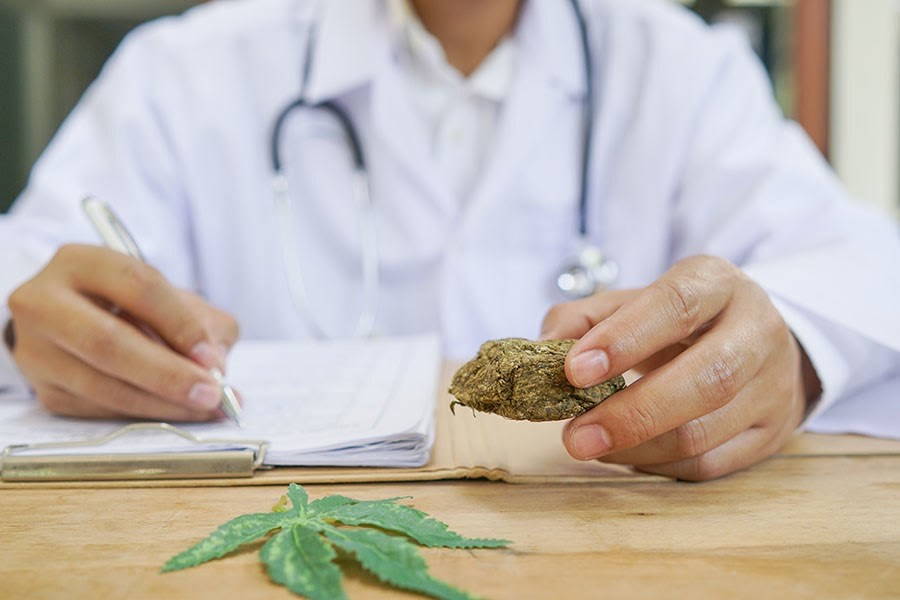
 A growing number of people are experiencing the healing power of marijuana. As two-thirds of states have legalized marijuana for medicinal purposes, approximately 2.97 million state-legal medical marijuana patients were recorded in 2020.
This growing use of medical marijuana remains contrary to the 1970 Controlled Substances Act, which continues to classify all forms of marijuana as illegal. Yet for over 3,000 years, people worldwide have utilized the marijuana plant to tackle various medical conditions.
In this article, we examine the healing power of medical marijuana.
Where We Stand on Medical Marijuana
Medical marijuana is still being studied to understand the true extent of its health benefits. Long prohibitions on marijuana research mean that the scientific community is just beginning to catch up.
While there are potential adverse side effects, such as dependence, paranoia, and agitation, scientific research has proven that the benefits far outweigh the negatives.
This research is why you can apply for an Oklahoma or Texas medical marijuana card, even though these states have traditionally been highly conservative on such issues.
So, let’s examine why medical marijuana has acted as a game-changer for so many.
Chronic Pain
The National Academies of Sciences, Engineering, and Medicine examined over 10,000 independent studies into the medicinal benefits of marijuana, with one of the focuses being on chronic pain.
As more than 25 million adults suffer from chronic pain, medical marijuana dramatically improves the quality of life for this group of Americans.
The review found that cannabinoids, the active ingredients in cannabis and marijuana-related products, interact with brain receptors responsible for creating feelings of pain.
Substance Abuse
Alcohol and drug addiction is a scourge within American society. And today, approximately 19.7 million Americans suffer from some form of substance misuse disorder.
Surprisingly, another comprehensive review of existing evidence revealed that cannabis might help people battling addiction. While this review in Clinical Psychology Review did support the idea that cannabis can help in fighting dependencies, this remains a contentious take.
More evidence will be required to determine whether substance abuse can be fought using medical cannabis.
Mental Illnesses
One of the most common uses for medical marijuana is in treating anxiety, depression, and Post-Traumatic Stress Disorder (PTSD).
As more than 40 million Americans suffer from an anxiety-related disorder, medical marijuana has provided an alternative to anti-depressants and opioids, which themselves can result in addiction.
The evidence thus far has shown that cannabis can relieve many of the symptoms of PTSD and depression. However, every form of mental illness is different. Not everyone can benefit from medical marijuana.
In particular, it has been suggested that people with bipolar disorder and psychosis may see their symptoms worsen from using medical marijuana.
Cancer
Although some commentators have suggested that medical marijuana could help to fight cancer, there is little concrete evidence to support this idea.
Instead, evidence has shown that oral cannabinoids are effective at helping people living with cancer overcome the impact of nausea and vomiting resulting from chemotherapy.
Multiple Sclerosis
Oral cannabinoids have also been shown to improve spasticity symptoms in people diagnosed with multiple sclerosis.
The evidence shows that the effects are modest and tend to work only with the short-term use of oral cannabinoids.
Epilepsy
Despite the U.S. Food and Drug Administration (FDA) opposition, the FDA approved cannabidiol (CBD) use for treating two types of epilepsy.
Their approval allows CBD to manage and control Dravet and Lennox-Gastaut syndromes. In response to this approval, the drug Epidiolex was manufactured.
Is Medical Marijuana Good or Bad for Your Health?
Nobody is suggesting that medical marijuana doesn’t have its downsides. When used in large quantities, dependency, and other side effects can occur.
On the other hand, the emergence of scientific studies proving the health benefits of medical marijuana has been enormous. Even today, most experts believe that we have barely scratched the surface of what is possible with medical marijuana.
Another area that the medical community must consider is the public health implications of increasing cannabis use. Both medicinal and recreational marijuana has been surging in popularity nationwide as states bring new laws to lift their former prohibitions.Most science and health bodies have taken the position that further scientific research is needed on medical cannabis and cannabinoids to figure out which conditions they treat and the potential side effects.
The problem is that cannabis remains a controlled substance. As a controlled substance, organizations receiving federal funding or those directly related to the federal government cannot study cannabis.
Until there is a change in the federal government’s position, research efforts won’t accelerate, and millions of people will potentially miss out on the healing benefits of marijuana.
Conclusion
According to the U.S. Centers for Disease Control (CDC), 18% of all Americans used cannabis in 2018. But we expect the actual numbers to be far higher due to increasing legalization in 2023.
As American perceptions change, medical marijuana plays a more significant role in treating and managing an array of health conditions. What’s quickly becoming clear is that medical marijuana has the potential to do a lot of good for the public.
Can you access medical marijuana legally in your state yet?