

Senior redhead woman hugging her friend who is suffering from leukemia
A terminal illness is a permanent medical diagnosis that’s mostly incurable and fatal. Once your loved one is diagnosed with such a disease, they may be told how many months or years they’ll live. Despite the timeline, seeing them going through terminal illnesses like cancer, dementia, Parkinson’s, and liver or lung diseases is heartbreaking. But you shouldn’t let your loved ones see the pain and sadness in your eyes because they also understand there’s nothing much you can do for them.
All you can do is make them comfortable so they won’t feel lonely and enjoy their remaining time to live. If they ask to live independently, respect their wishes. That said, providing an independent living to a person with a terminal illness is achievable through proper support and adequate planning.
Your priority is ensuring their physical, emotional, and mental health is well cared for. That way, even though you may not always be around, you know they’re in good condition. With that in mind, below are ways in which you can provide independent living for your loved ones:
- Finding Home Health Care Services
Considering your loved one is suffering from a terminal illness, they’ll need health care at home, especially when bedridden or physically weak and can’t do most household chores. Thus, providing the best healthcare services can assist them in being comfortable. They’ll also have someone to help them with daily tasks like pain management and personal care.
For this reason, start by looking into sites like https://www.onesourcehh.com/ or similar ones offering customized care plans to suit your needs. Moreover, the following are examples of home health care services your loved ones can get from such personnel:
- Nursing Care: Some terminal illnesses usually have complications that can arise anytime, like a decrease in appetite, fever, exhaustion, constipation, diarrhea, chronic pain, inability to control urine, inability to swallow food, bruises, or dry mouth. Your loved ones can get instant nursing care from skilled professionals for the above problems. They can also do intravenous infusions, give your loved one the proper medication, conduct blood tests to check for potential infections, and provide wound care to keep bruises and injuries in check.
- Physical Therapy: Your loved one needs exercise to move around and maintain physical fitness easier. Physical therapists can help them do balance exercises and bed-moving coaching, amongst other forms of exercise.
- Personal Care: Professional home aides can help your loved ones with cleaning, showering, moving from the bed to the chair, and feeding them.
Other care your loved ones can get from home healthcare providers includes spiritual and emotional services, respite, speech, and occupational therapy through highly skilled professionals. The most important thing you should do is search for the right healthcare providers that offer exceptional services.
Consider their experience and expertise in providing care for terminally ill patients. They should be loving and caring in every unique condition. You can read feedback from other families who have used such services to get insight into what they have to say about a particular home service provider.
In addition, it’d be helpful if you looked into the availability of healthcare providers. Ideally, they should operate weekly and 24 hours a day to attend to terminally ill patients effectively. Moreover, look into the costs of such services to see if you can manage to pay for the long term and whether insurance payments are accepted. Doing so will ensure you choose the right one for your loved one.
- Discussing The Different Care Options
Depending on the type of terminal illness, you can speak to your loved ones about the different care options. They can live independently in other facilities while they continue to get excellent care from the doctor. Below are some care options to consider:
- Palliative Care: It’s a treatment option where the patient’s entire well-being is addressed, not just the disease they’re suffering from. Nurses, aides, doctors, and other healthcare professionals monitor their condition.
- Hospice Care: This treatment option aims at making the patient’s life more comfortable rather than focusing on curing the disease. It’s also referred to as end-of-life care. So, if your loved one ceases medication, hospice care can assist with helping them be cozy while surrounded by a lot of love, either at home or in a healthcare facility. In either case, skilled specialists like doctors, social workers, or aides are there for their needs.
The right care option promotes independence, as the specialists empower your ailing loved one to manage most tasks individually.
- Speaking To Your Loved One
Most patients who suffer from terminal illnesses would like to be the ones to make life decisions. But they may be afraid of bringing up the conversation because they might feel it’s too demanding. For such reasons, you shouldn’t organize an independent living for them solely based on your needs. Put their needs at the forefront, as they know best how they’d like to live the rest of their lives.
So, sit down with your loved one and ask them about their wishes on how they’d like to live. It’ll help you to understand their needs better and help you make decisions in their best interest. It makes them feel loved and appreciated, eliminating the typical stresses of end-of-life care. While at it, you must keep the lines of communication open throughout their illness.
With time, their requirements and preferences may change. Thus, constantly checking in with them and talking about any alteration can assist in guaranteeing their care is tailored to their needs.
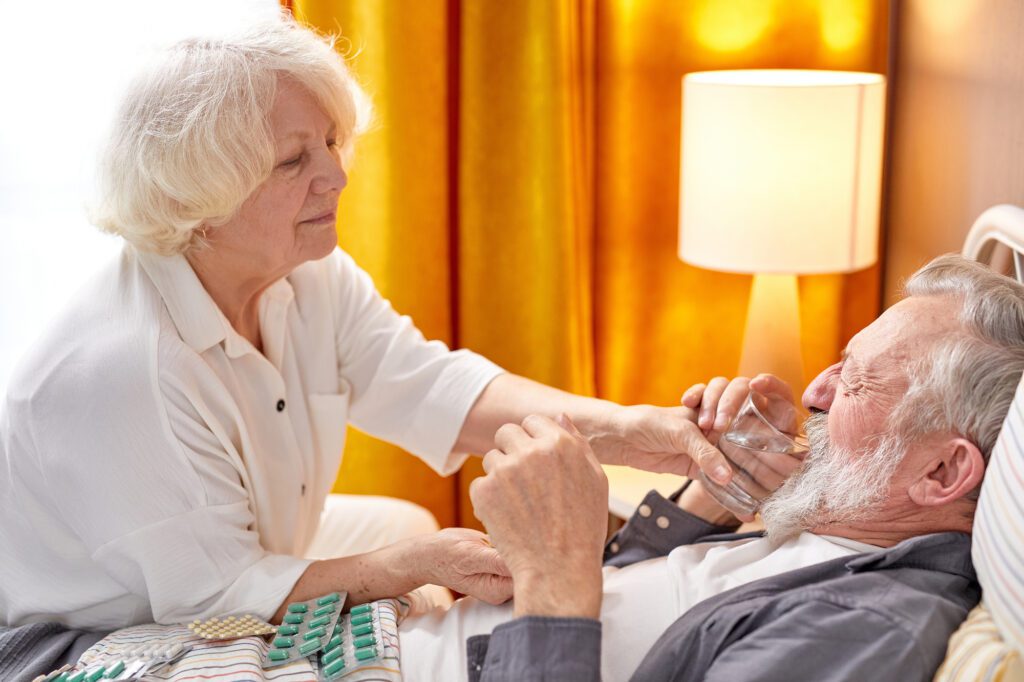
woman concerned with health condition of husband, checking fever temperature lying on bed, give medicaments, pills for treatment. side view
- Communicating With Healthcare Providers
Ensuring constant communication with the healthcare providers is critical for providing independent living for your patient. They should always be in the know about how your loved one is faring on. There’s no limit to the information you can disclose to them, like the shift of medicines, the new signs and symptoms, and their adverse reaction to the drugs. From there, your healthcare providers will examine the medicines or recommend lifestyle adjustments.
- Making Essential Home Modifications
As mentioned earlier, terminal illness conditions vary, and sometimes your loved ones may be confined to a wheelchair or bedridden. In such a case, the current living situation may not suffice; modifications are essential.
If the bedrooms are upstairs, getting up and down the staircases may be challenging. Thus, you’d want to shift their bedroom and bathroom downstairs and have all essentials on the same level. If your lounge is crowded with furniture, it can limit movement, especially if they use a wheelchair or walker. In this case, you’d want to discard all unnecessary furniture and only remain with a few essential ones.
Also, you may need to put up grab bars or wheelchair ramps in entryways. It’d also help to rearrange furniture to create pathways for more effortless movement.
You can put up a bathtub and raised toilet seats to make it easier to shower and go to the toilet independently.
If the doorways are narrow such that they struggle moving in with the wheelchair, it’d be best to widen them. Double doors are usually wide enough.
Independent living also entails cooking for oneself. If a senior is confined to the wheelchair, the kitchen countertops may be too high and out of reach, making it difficult to operate appliances. Thus, you may want to lower them to a friendlier level. Likewise, modify high cabinetry to ensure the patient can access the stored foodstuff without undue struggle.
Finally, work on some flooring modifications. Tile, hardwood, laminate, and vinyl flooring tend to be slippery and may cause falls. You’d want to add rugs or wall to wall carpets to enable the patient maneuver seamlessly with a walker or wheelchair. Ensure the carpet has shorter nap to reduce the likelihood of tripping.
- Creating A Care Plan
Developing a care plan is essential in providing independent living for your loved one with a terminal illness. Ideally, it’s a brief but detailed document that outlines their goals and priorities. It also entails information about their medical condition, drugs, and essential details. If they stay with someone other than you, they can access the care plan in an emergency and act according to the guidelines.
When developing the care plan, you shouldn’t design it based on your preferences. Incorporate professional insight from key stakeholders like doctors. Also, honor loved ones’ wishes. Depending on their healthy development, you can change the plan occasionally.
- Developing A Support Network
Terminally ill patients need more people around, so they don’t feel alone. Even though they live independently, around-the-clock physical presence can make them feel connected. You may create a support network when providing independent living for a loved one with a terminal illness.
It can include neighbors, community personnel, close mates, and other family members. It’ll help you delegate tasks and arrange care to receive their needed support. Everyone can take turns looking after their favorite pets, preparing food, washing clothes, shopping, or simply keeping them company.
You can have a schedule for healthcare workers and volunteers so that each person can take care of your patient. It’ll also help ensure no one gets a burnout. You can read their favorite books aloud, sing together, or generally chat about life to take one’s mind off the fact that they’re suffering from a terminal illness.
- Seeking Professional Counseling
It may not always be simple to cope with your loved one’s terminal illness. It can be emotionally draining since it’s someone close to you. You may constantly feel furious, frightened, or gloomy about the sad situation. Thus, enlist the help of a professional counselor for you, your loved ones, and the caregiver. Ensure you find a therapist who works with individuals with terminal illnesses. It’ll help develop coping skills and provide emotional support.
- Being Mindful Of Your Own Well-Being
Even though you provide independent living for your loved ones with a terminal illness, you shouldn’t ignore your overall well-being because you’ll be physically and emotionally exhausted by the end of the day. Thus, it’s essential to take care of yourself.
You can ensure you get enough sleep and eat a healthy, balanced diet. Take time to engage in activities you enjoy, like swimming, skiing, reading, or cooking. You can relax and have an easier time caring for your loved one.
- Preparing For End-Of-Life Care
With most terminal illnesses, death is possible, which you should be ready and prepared for. You can discuss their preferences and choices about what they’d like to happen when they die. It’s essential to do it early because, in most cases, at this stage, your loved one may not be able to speak about their wishes. And they may be angry about the choices you made in a crisis.
You can start by creating an advance directive. It’s a legal document that outlines medical treatment and preferences. They can also have a power of attorney put in place. It’ll help, especially if their wishes aren’t to be brought back to life after collapsing.
They can also tell you their wishes on how they’d like the rest of their life to look, i.e., how they’d like to be buried or cremated and have their assets handled.
- Helping Your Loved Ones With Their Final Wishes
Finally, listening to your loved ones’ choices on how they’d like to celebrate life and make the most of your time together is essential. Emphasize developing meaningful experiences and memories and relish your time together. You can help accomplish their goals, like making up with some of the people they’re estranged from and completing the project they’ve set out to do. You can also explore new hobbies, help them with exercises such as yoga or meditation or engage in various games.
Conclusion
Providing independent living for a loved one with a terminal illness can be daunting and emotionally painful. Still, with careful planning and support, you can develop safe and cozy surroundings to live their life as they want it to be. For assistance, you can enlist the help of a reliable home healthcare service company. They can send their most skilled nursing, therapist, and personal care persons to assist your loved one. All in all, they can ensure the symptoms that may arise are managed and treated on time.