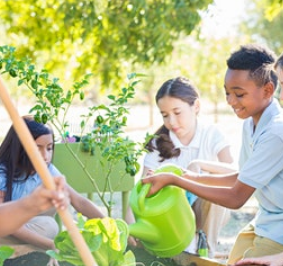
 Texas A&M AgriLife Extension will present a mid-summer conference on “Cultivating School Gardens” for educators to prepare youth for healthy learning.
The effort works as illustrated by an elementary school in Katy that has been providing students a hands-on gardening experience for eight years.
Stacy Slater, Stephens Elementary School science teacher, said “Students are getting gardening experience and taking that home to their families. Several students have shared that they have started their own garden because of these efforts. Our garden provides hands-on, real-life experiences that make learning meaningful.”
The online AgriLife conference is set for 8 a.m.-4:20 p.m. on Wednesday, July 20, and will cover the topics of preparation, planting and care, support and success stories. The seven hours of continuing professional education are recognized by the Texas Education Agency. The fee for the online course is $30. Register at https://bit.ly
The seminar includes preparation such as garden types, site, layout, planning, irrigation, soil and common challenges. Planting and care includes vegetable varieties, seeds, transplants, timing, harvest, beneficial insects and maintenance.
Support will focus on volunteers, funding, partnerships, resources, the Junior Master Gardener Program and curricula. Success Stories will include first-hand accounts of gardens as outdoor classrooms for learning, health and wellness.
One of the benefits of a school garden, said Slater, is that students get to see where fresh produce comes from. “It also increases their interest in eating fruits and vegetables by sampling food they might not otherwise get to taste,” she added. The school garden allows students to see science in action, she said. “It encourages collaboration, teamwork and a sense of accomplishment and pride as we see our plants grow and produce.”
The Stephens garden got started in 2014 with a Katy Education Foundation grant. The original grant was an integration of all subjects but mainly science, math and writing, said Slater. The idea was to create an environment where students could do life science “in their backyard” and find inspiration/motivation to write fiction and non-fiction based on their garden experiences. The project has since expanded and improved through various grants and donations, she said.
Slater offers advice to educators considering a school garden:
- Apply for grants and ask for donations! There is money out there for school gardens.
- Get community support through Rotary Clubs, churches, Boy Scouts, Extension Agencies, master gardeners etc.
- Let students have ownership in the garden. Let them weed, plant, harvest, add soil, mulch etc.
- Start a garden committee and share the responsibilities.