The vegan diet is one of the most fast-spreading diets around the globe now.
Be it for the perceived health benefits (you’ll encounter anecdotal evidence of it fixing everything from skin conditions to chronic gastrointestinal issues), or ethical issues, such as minimizing the greenhouse emissions of which factory farming is the primary culprit or love for animals and perceiving them as friends rather than food – thousands of people go vegan every day.
Most of them don’t do it the right way.
Here’s the thing – being vegan is more of an ideology now than just a diet, and as with every ideology, there are multiple views on which way of doing it is right.
There are those who show clear signs of orthodoxy and claim that simply cutting out animal products isn’t enough, but all highly processed foods should be cut from the diet.
There are those who claim that humans shouldn’t be eating cooked food at all, and going “fully raw” is the way (the most extreme of the bunch even claim that eating just raw fruits is enough, but luckily “fruitarianism” at least, is widely considered to be just a fad – which it is!).
And there are of course those, who claim that it’s not about what you eat, but about the ideology itself – if you’re cutting animal products for any other reason but wanting to minimalize animal suffering, then you’re not truly vegan, you’re just plant-based.
Call it what you want, at the end of the day, veganism is still widely used as a term interchangeable with cutting animal products. If you’ve decided to cut all animal products from your diet, then you’ve decided to become a vegan.
So now there’s a question in front of you…
What do healthy vegans eat?
Most of the dietitians luckily agree on one thing – veganism is already restrictive enough as it is and requires supplementation to boot. There’s no need to further complicate it when existing science has proved again and again that yes, cooked food is good for us, and yes, eating just fruits will in the end lead to malnourishment.
Healthy vegans don’t do “fully raw”, “raw till 4”, or any other overtly specific and complicated fad diet. Healthy vegans eat a wide variety of foods to ensure they consume all micronutrients and vitamins they can from their food, and then they supplement to account for the rest.
Here’s what you need to include in your diet to keep it well-balanced:
Fruits and Vegetables
Fruits and vegetables should take the lion’s share of your plate on a vegan diet. Good news! They can be cooked! No need to eat salads for breakfast, lunch, and dinner. You can grill, roast, or bake your fruits and veggies, and combine them in any way you like. They’re still a great, healthy source of energy, micronutrients, vitamins, and fiber.
Cutting animal products from your diet may increase the chances of iron deficiency, so it would be prudent to include iron-rich foods in your diet. Among vegetables, dark leafy greens like spinach, kale, and broccoli are known to be good sources.
Nuts and Seeds
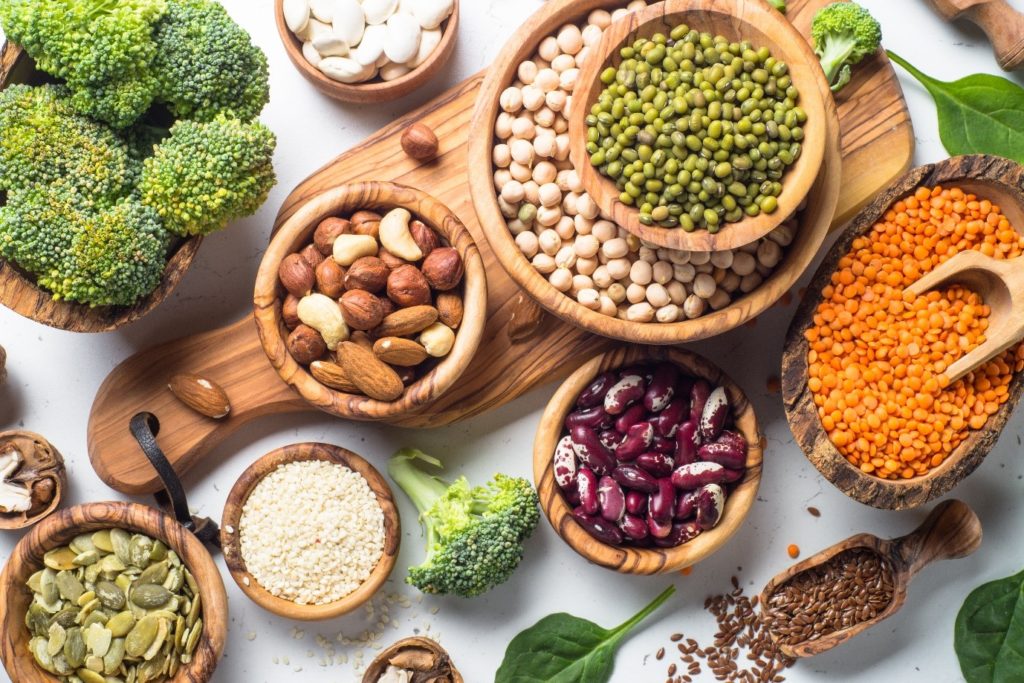
Nuts are often regarded as superfoods, and for a good reason! As plant-based foods go, they’re jam-packed with almost all micronutrients required for a healthy diet. Nuts and seeds are a great source of healthy unsaturated fats, contain a decent amount of protein and next to no sugar, and are rich in several important micronutrients, such as zinc, magnesium, and iron.
Not all nuts are equal when it comes to micronutrients, with cashews for example being a better source of iron than others, and brazil nuts being the best source for selenium.
But if you make a mix out of 4-6 different nuts, you’re pretty much guaranteed to make an excellent healthy snack.
Grains
Grains-based products are a staple of a vegan diet since they’re a great source of healthy carbohydrates and fiber. And also because maintaining a vegan lifestyle is much easier if you don’t cut hunger-crushing staples such as bread, pasta, rice, and oatmeal out.
Protein
Protein, along with iron, is another thing many vegans often find themselves falling short on – even though there are many excellent sources of plant-based protein out there. Seitan, for example, which is made from wheat gluten, contains around 75g of protein per 100g of product – over a daily norm of protein intake for an adult! To compare, 100g of beef only has 26g of protein.
Tofu is another popular plant-based protein source. Made out of processed soy milk, it is also called bean curd. It contains around 8g of protein per 100g of product, which makes it a good addition to your meal if you wish to bump up the protein.
Speaking of soy, most beans and legumes contain around 7-10g of protein per 100g product, which puts them on the list of some of the best vegan protein sources. In addition, they’re also rich in fiber, iron, calcium, potassium, phosphorus, zinc, and folate.
And last, but not least, if you have trouble with consuming healthy amounts of protein – then these days there are plenty of options for vegan protein powders. Unlike classic protein powder, most often made of whey, vegan alternatives are made out of hemp, soy, or pea, and contain around 18-20g of protein per 1 scoop of product.
Vegan Mock Foods
In the 21st century being a vegan, luckily, doesn’t mean depriving yourself. If you’re worried about how you’ll fair without dairy or meat, then good news – most of your current staples have vegan alternatives.
There have been plenty of options for plant-based milk for years now (soy, almond, oat, rice, etc.), as well as butter, but nowadays you can easily find different types of cheeses (cheddar slices, Parmigiano, mozzarella, etc.), egg replacements, prosciutto and ham slices, chicken strips, and even burgers that actually taste like meat (or so Beyond Meat fans claim).
Supplementing
And while it’s clear at this point that being a vegan means neither depriving nor malnourished yourself, there are still several things you need to pay attention to:
- Vitamin B-12 is, unfortunately, only found in animal products and we, humans, cannot create it ourselves. We need to consume it. You’ll need to supplement for it on a vegan diet.
- Iron and calcium deficiencies are common on vegan diets. Even if you consume foods rich in these micronutrients, you should periodically still check their levels to ensure you’re not lacking.
- Protein can be hard if you prioritize fruits, veggies, grains, and nuts as many vegans do. But this is easily solved with a scoop or two of vegan protein powder, so just keep a container in a cupboard, and you should be good.