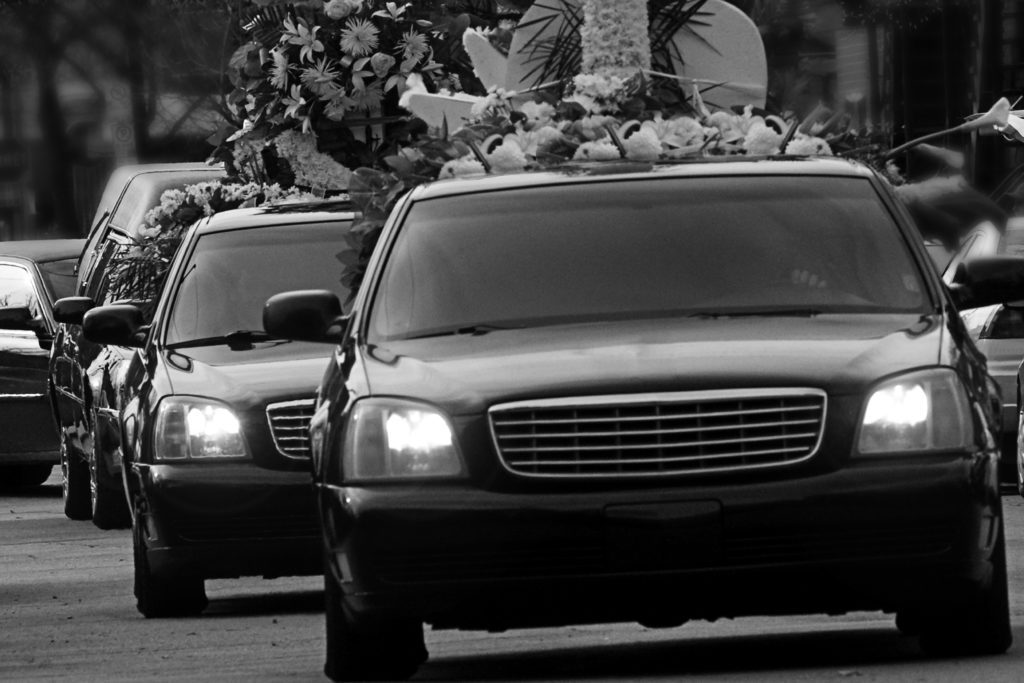
Funeral cortege
A funeral procession refers to the path walked or driven from the funeral service at the funeral parlor or church and to the cemetery or crematorium.
When this distance covered is so near, typically, the family members and attendees of the funeral are going to walk. If it’s a little far, that’s when driving comes in necessary. It is the reason why funeral traffic laws exist.
On the outset, it may seem simple; drive your car slow, as you follow the hearse. But, there’s more that comes into joining a funeral procession.
With that said, here are seven things you have to know when driving in a funeral procession:
- You Will Be Driving Very Slowly
Without a doubt, you have seen a funeral procession before. The cars that follow the hearse are traversing very, very, slow. If you don’t have the patience to drive slowly, then you may not as well join the funeral procession. The farther the distance is, the longer you’ll have to stay behind the wheel, at a slow pace.
On average, the speed is only around 30 to 40mph. On the highway, the maximum speed can be 55mph.
The purpose is the sustainable solemnity of the occasion and ensures the hearse carrying the casket arrives and the cemetery safely.
- Keep Your Headlights On Dip
Another funeral procession etiquette you should apply is to keep your headlight on dip while driving. It is to give a signal to other drivers that you’re a part of the funeral procession.
- You Have To Arrive Early
If you’re a close family member or relative of the deceased, this isn’t the time for you to arrive at the funeral service.
Wherever may be held, arrive early. It is to give time to the parking attendants to instruct each vehicle as to the order of parking and arrival. That way, the procession right after the service can commence with ease and without delays.
Don’t be that family member who causes the funeral plans to be disrupted.
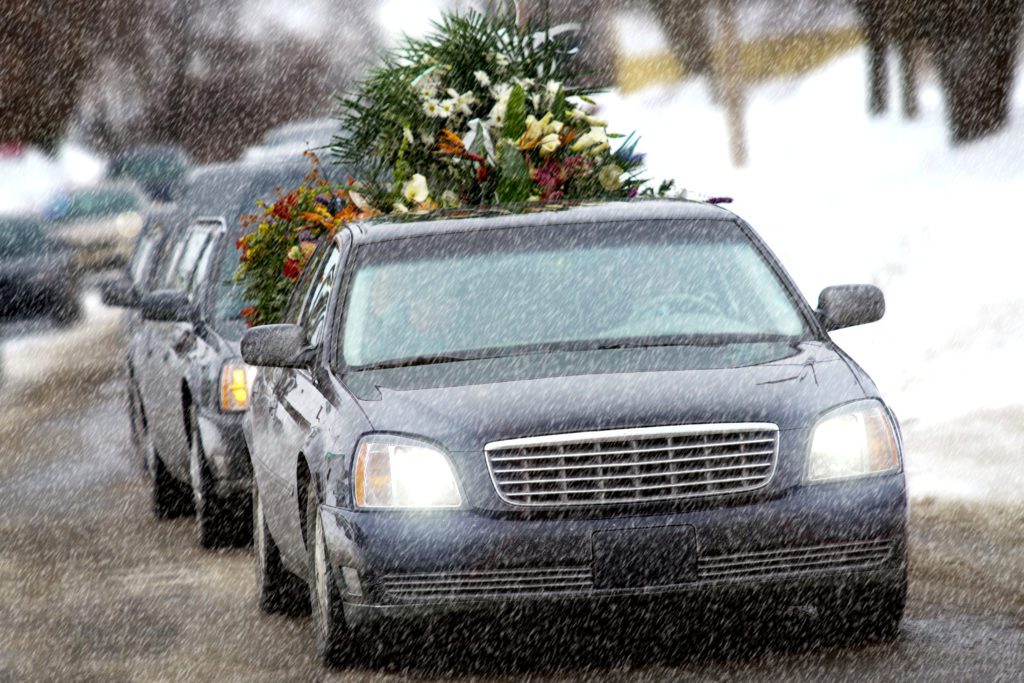
Funeral cortege
- Check The Route
Yes, you’re going to be following the vehicles in front of you during the entire funeral procession. But this doesn’t mean you shouldn’t have an idea as to what the route will be. It’s, therefore, a must for you to check the path at least on the day before the funeral.
The reason behind this is for the vehicles joining the funeral procession to maintain a smooth flow.
You should get separated from the other cars in front of you during the whole journey, at least you have an idea where you should proceed.
- Stay Close To The Car In Front Of You
Another challenge that may make driving during a funeral procession harder is the need to stay close to the car in front of you. Don’t allow any room for a vehicle not a part of the procession to cut in.
It is the reason why you must stay in line with the other cars, as much as you can. Many local traffic laws and ordinances give funeral processions. If the other vehicles in front are already in the intersection, you may be permitted to cut through a red light.
During the funeral procession, the only time you should leave is when there is an emergency. For example, an ambulance needs to pass through. The same traffic rules still apply, where you have to stop to let the ambulance go first.
- A Procession Order Will Be Implemented
Don’t drive close to the hearse carrying the coffin if you’re not the bereaved family of the deceased as a matter of tradition and respect.
The hearse or vehicle carrying the coffin goes first. It is followed by through the minister and pallbearers. Then, the immediate family, followed by the relatives.
All the other guests always are expected to be the last in the procession.
- Listening To Loud Music Is Disrespectful
Even when you’re just inside the vehicle and your windows are closed, it’s still typically disrespectful to listen to loud music.
You never know when you’ll be asked to pull your windows down or open your door. Imagine the embarrassment if, when you do that, your loud music will be blazing through.
Utmost respect for the deceased and their family members is expected during this time.
Conclusion
While driving in a funeral procession may seem safe and simple, it is not straightforward. There’s a lot you have to know, certainly following the funeral procession laws.
The list above is the only general matter you must be aware of. But, depending on the state where the funeral procession is located, there may be other laws as well. If you’re soon going to drive in a funeral procession, it’s best to be aware of what those laws are.
Whatever you do, remember to observe silence, respect, and solemnity of the occasion.