


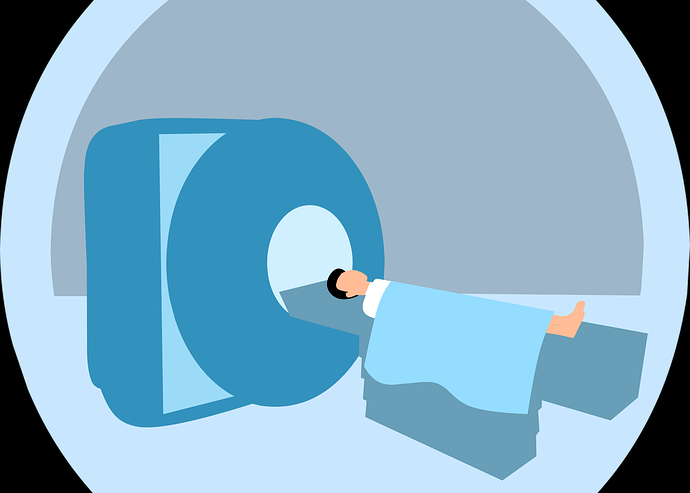

MRI scans, or magnetic resonance imaging scans, as they are more professionally known, are non-invasive scans that take detailed images of soft tissues around your body. They are the preferred method of many healthcare professionals because they do not use radiation, unlike X-rays and CT scans, and use a magnetic field and radio waves to create highly detailed three-dimensional images. The images are viewed in layers, like slices. These tests are used to detect abnormalities in soft tissue, tumours, strokes, and hernias.
On this page, we will hope to explain to you what happens during an MRI scan. Let’s find out, shall we?
What is an MRI Machine?
An MRI machine is a machine that produces detailed and three-dimensional images of soft tissue throughout the body. The machines are composed of a doughnut-shaped magnet and a rolling table, that rolls you in and out. The machines are of very high-quality and are very safe. MRI machines have no complications associated with them, owing to the high-quality and workmanship that goes into MRI parts; the process is fast, painless, and safe. If you are due an MRI scan, you needn’t be concerned, for you have absolutely nothing to worry about.
How Does an MRI Scan Work?
MRI scans use the powerful magnets mentioned previously, radio waves, and computers to create high-definition images of your body’s soft tissue. As eighty percent of our bodies are comprised of water, we have millions of hydrogen atoms. These atoms are magnetic, and when in a magnetic field, align with the field. The radio wave then disrupts this alignment. The machine measures the time it takes for the atoms to return to their alignment after the disruption. Once complete, an image is formed, which can show even the tiniest and imperceptible abnormalities in your body’s tissue.
The MRI Procedure
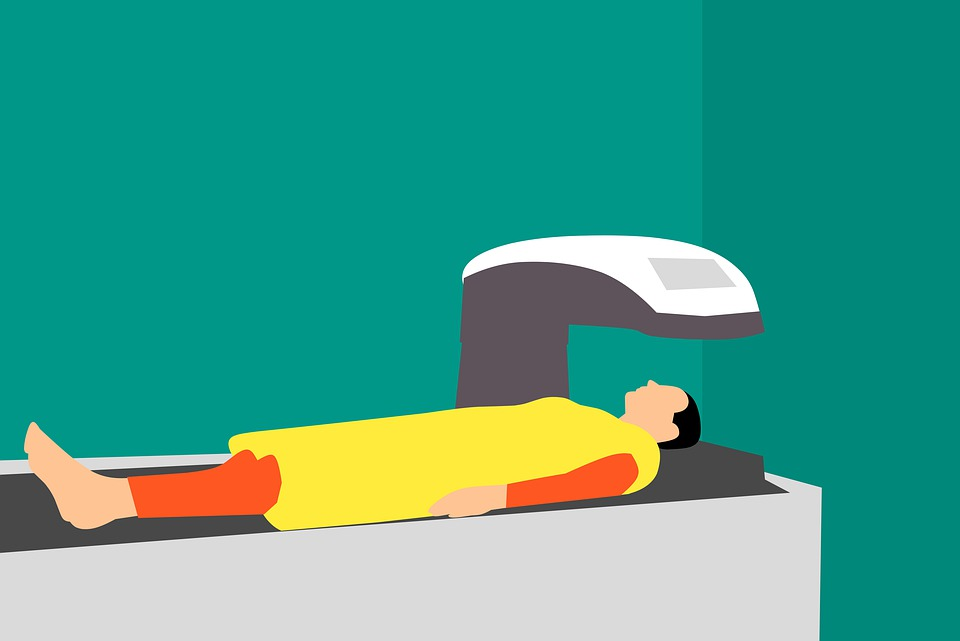
The procedure for an MRI scan is very straightforward and requires very little preparation, the procedure is as follows:
- You will go into the radiography department of your centre, clinic, or hospital; they will ask you to remove any metal objects or jewellery. On an MRI scan, metal objects and jewellery can show up as blanks and can obstruct the clarity of the image. You may also be asked not to drink caffeinated or highly sugary beverages. If you require sedation, they may require you to fast for twelve hours prior to your appointment; the reason for this is to ensure your stomach is empty. You may require sedation if you are claustrophobic and cannot stand to be confined in small enclosures;
- You will be asked to lie on a rolling table, which will then roll into the machine. The machine makes repetitive noises, which makes some people uncomfortable. If this is something you think you will find it uncomfortable, you can ask the technician to provide you with headphones, which can be used to play music or listen to audiobooks. You will also have a panic button on the inside of the machine in case you find yourself growing very uncomfortable. The scan takes no longer than forty-five minutes. You may also be required to have an intravenous dye administered to your body which makes it easier to see hard-to-reach parts of your brain and body.
Once complete, you will be removed from the machine. A doctor will then go over your results from the images, which can take some time, and should write to you to tell you whether or not any abnormalities have been found. This can take a while, more so during this current global pandemic, as medical staff are very stressed out and finding it difficult to do anything other than cater to SARS-CoV-19 patients.
Why MRI?
MRI scans are an alternative to CAT scans and X-rays. They can be used for a number of reasons, from simple injury to suspected tumour. MRI scans are used to detect a large number of conditions of the brain and spine, from cysts, tumours, to bleeding, swelling, structural and developmental abnormalities, infections, and injuries. They are quite often used in the diagnosis of migraines and may also be used if you suffer from frequent weakness, dizziness, blurry vision, or seizures. They can also be used to detect chronic diseases, such as multiple sclerosis.
In some instances, an MRI scan can provide images of parts of the brain that would otherwise be inaccessible. They are a very valuable part of our healthcare industry, and without them, we would rely on surgery and more antiquated, dangerous methods.
We hope that by now, you understand what an MRI is, how the procedure takes place, and why they are used. MRIs are a fantastic way to test for health problems and a non-invasive one, too. Hopefully, you understand why that is now.






