Many different variables influence the value of any kind of collectible. It’s also true for coins. They’re interesting and fun to add to your collection, yes, but knowing their true worth is actually very difficult.
 Is your coin a real one or some sort of trade or gaming token? Is it so worn, making it barely identifiable, or does it look brand new? What country is your old coin from? Is it made of gold or silver? These questions can confuse any person who isn’t familiar with coin collecting or the hobby of numismatics. Maybe, you got a coin that you want to sell or use to apply for a pawn loan in a local coin shop, like Infinity Coins. The problem is that identifying and putting value or prices on old coins can be difficult, especially if you don’t know the answers to the questions above or don’t even know what your coin is called. In this case, how would you know that a coin in your possession could actually make you a decent amount of fast money?
As already mentioned, several factors are influencing the value of coins. To determine the value of your collection, you have to check the following:
- Rarity
A 1913 Liberty Nickel is valued at over $1,000,000.00 despite being less than 100 years old. The reason for that is because only five of them are known to exist. The truth is that there are many ancient coins (those that are over 1,500 years old) that aren’t actually worth more than even a couple of bucks because there are literally thousands of them in existence. As a general rule, an old coin isn’t necessarily rare. Always keep that in mind.
- Demand
To see demand in action, all you need is to look at eBay coin and paper money prices. If you notice, the price often goes up when there’s a high demand or when more people want to purchase a certain item. It’s essential to note that demand varies according to the coin’s availability and popularity. It might be lower or higher during different years or in different parts of the world.
- Provenance
One valuable information in determining coin value is where it originated. Knowing the exact story of where your coin came from will benefit you. It’s called provenance, and it plays an important role among ancient coins (those over 1000 years old) when it comes to determining their value. It also helps if you can recall the coin’s history of ownership before making it to your coin collection.
- Material Purity And Weight
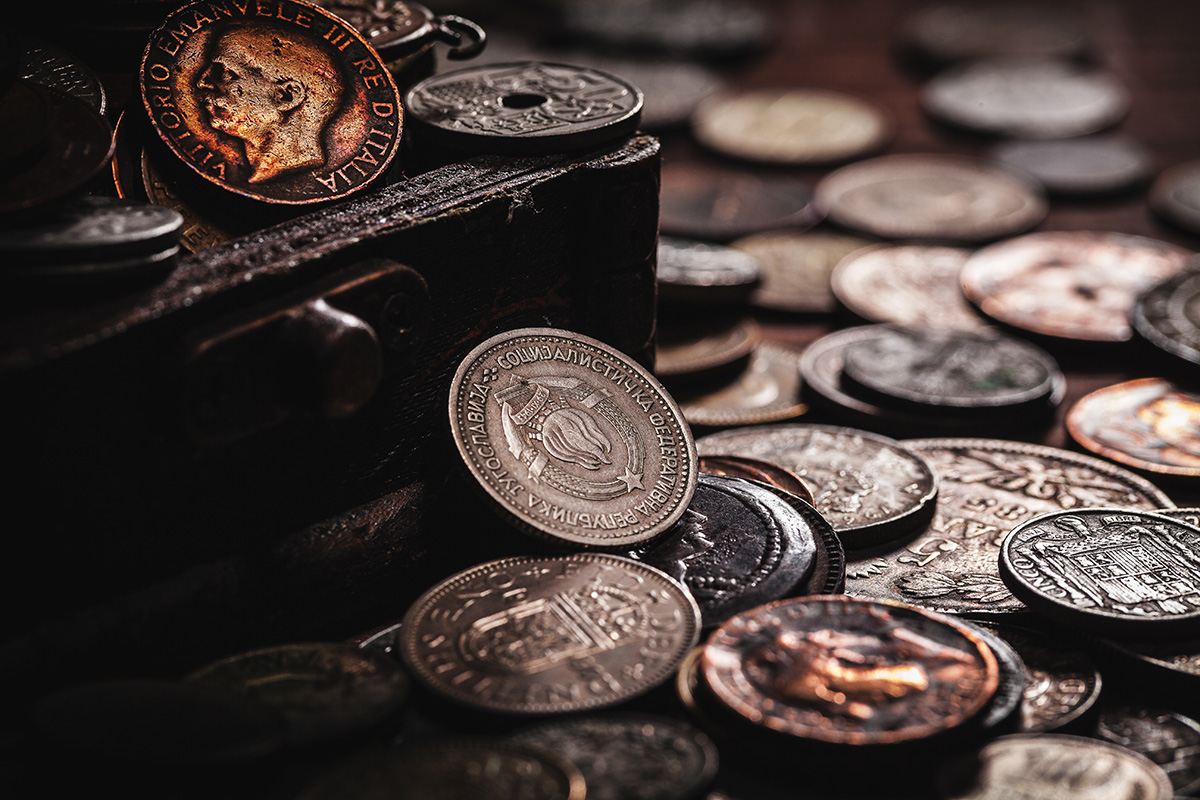
old coins from around the world from 1940 to the new millennium
If you have a precision scale at home, it will come in handy this time. You can use it for determining weight and, more importantly, for fishing forgeries. Do you know what material is your coin made of? Is it silver, platinum, or gold? You might want to check its purity. Keep in mind that a fake and a genuine coin will often have a noticeable difference in weight. Also, the use of different alloys often will only result in different weights.
- Certification
It also adds value to a coin when it is slabbed by the Professional Coin Grading Service or Numismatic Guaranty Corporation. It’s because of the high value of trust that potential buyers develop after seeing that your coin has an official certification from a trusted, professional grader. As you may have guessed right, such trust will often lead to higher bids during auction.
- Quality
Some coin designs are widely considered as more beautiful than others. An excellent example is the high relief Saint-Gaudens Double Eagle. Well, obviously, coins aren’t aesthetically equal. The designs that coins bear appeal to the public’s taste, which significantly influences the value of the coins.
The quality of your coins is, therefore, quite important. Coins with higher quality not only always sell faster, but also usually command higher prices. The design isn’t merely for aesthetic enjoyment; it’s also for the liquidity and value of your gold and precious metal investment.
- Condition
The final major factor that determines the value of coins is their condition. Obviously, a coin has less value when it has undergone more wear and tear. It’s the reason why uncirculated coins often have more value than those that have been passed from one person’s hand to another. Uncirculated coins are more valuable since they usually are kept to preserve their very best conditions.
When you compare two same coins, one being the low-grade version, and the other has a flawless condition, the latter may usually be worth hundreds of times more. How do you measure the quality of individual coins? Well, those with an above-average appearance in terms of toning, color, luster, strike, and eye appeal have a much greater demand and are considered to be of higher quality than those that don’t look as nice.
Conclusion
Now that you already know the different factors that determine an old coin’s value, you can start examining your collection to check if you have any that’s extremely valuable. And, if you discover one in your possession, you have the option to sell it in your local coin shop or offer it up for auction.