Nearly 15% of active Social Security numbers have undergone corrections in the agency’s largest database cleanup. Here’s what Katy-area residents need to know.
KATY, TX — October 22, 2026 — Your Social Security number follows you throughout your life. It connects to your employment history, retirement benefits, disability payments, financial records, and government services. But what happens when the information attached to that number is missing or incorrect?
Millions of Americans may now be asking that question following a sweeping overhaul of federal Social Security records.
On October 20, the Social Security Administration (SSA) announced what it describes as the most comprehensive cleanup of its Social Security number database in the agency’s 91-year history.
The agency says it has corrected records associated with nearly 15% of active Social Security numbers since the beginning of the Trump administration, as part of an effort to improve identity verification, reduce errors, and prevent improper government payments.
For families in Katy, Fulshear, Brookshire, Cinco Ranch, and surrounding communities, the announcement raises a practical question: Could incorrect information in a federal database affect your benefits or identity?
What Did Social Security Discover?
According to the Social Security Administration, its record-correction initiative has addressed millions of missing or inaccurate entries across a database containing nearly 390 million records.
The changes include:
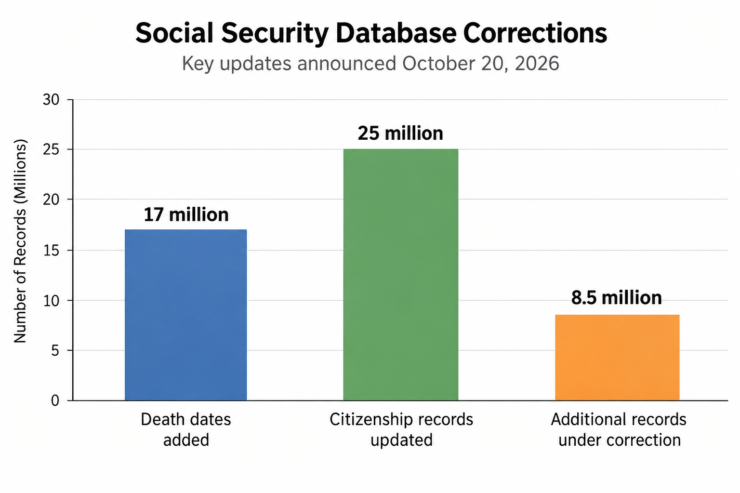
- 17 million death dates added: Records that previously lacked a date of death were updated using existing SSA information and U.S. Department of State data.
- 25 million citizenship records updated: Missing citizenship information was filled in using information from the Department of Homeland Security’s SAVE verification system.
- 8.5 million additional records under correction: The agency is working to address records containing inaccurate citizenship information.
- Stronger internal controls: New safeguards are intended to reduce future mistakes caused by manual data entry.
These figures do not mean that millions of people committed fraud or improperly received Social Security payments. Missing information and inaccurate records are not, by themselves, evidence of criminal activity.
Why Does This Matter?
For many Americans, Social Security is more than a retirement check.
The federal system helps administer retirement, disability, and survivor benefits. Social Security information is also used by other government agencies to verify identities and determine eligibility for certain programs.
If the information connected to someone’s Social Security number is wrong, the consequences can extend well beyond a government database.
A person mistakenly recorded as deceased, for example, could face interruptions in benefits or difficulties with financial institutions. Incorrect citizenship information can also create complications when government agencies attempt to verify someone’s status.
For seniors living on fixed incomes and families depending on disability or survivor benefits, even a temporary administrative problem can become a financial hardship.
Could Your Social Security Payments Be Affected?
The important distinction is that this overhaul is focused on correcting records, not announcing new benefit reductions.
The SSA’s October 20 announcement did not introduce changes to benefit eligibility requirements, monthly payment amounts, or payment schedules.
That means recipients should not assume their benefits are being reduced or canceled simply because the government is updating its database.
However, individual record errors remain a concern, particularly when inaccurate information affects identity verification or eligibility determinations.
Anyone experiencing an unexpected payment interruption should contact Social Security directly rather than assuming the problem is related to the overhaul.
What About People Incorrectly Listed as Dead?
This is one of the most serious consequences of inaccurate government records.
In July 2026, the Social Security Administration’s Office of Inspector General reported that the agency had posted approximately 5.6 million death records during 2025. Of those, 12,504 were later determined to be erroneous.
The watchdog also examined how employees corrected earlier mistakes and found documentation weaknesses in a sample of cases.
These findings demonstrate why the accuracy of federal records matters.
A person incorrectly listed as deceased may need to prove they are alive to restore benefits or resolve problems with other organizations.
The Social Security Administration advises affected individuals to visit a local Social Security office promptly with acceptable identification.
The Bigger Question: Who Is Checking the Corrections?
While the agency describes the overhaul as an important step toward preventing fraud, the announcement leaves questions unanswered.
How many corrections have actually prevented improper payments? How will the government verify that newly entered information is accurate? What safeguards protect someone whose information is mistakenly changed?
The October 20 announcement did not provide detailed figures showing how much taxpayer money has been saved or how many of the corrections involved actual fraud.
A separate September 2026 Inspector General report also identified weaknesses in the agency’s automated systems for matching information received from outside sources.
That report found that some legitimate records failed to match because of relatively minor differences in personal information.
It reinforces an important point: improving database accuracy requires more than adding missing information. The systems must also distinguish between genuine errors, harmless discrepancies, and suspected fraud.
What Should Katy-Area Residents Do Now?
There is no general requirement for every American to submit new identification or reapply for Social Security benefits because of this announcement.
However, reviewing your information periodically is a sensible precaution.
Check your Social Security account. Visit www.ssa.gov/myaccount to access your available earnings history, benefit information, and Social Security statements.
Review your earnings history. Missing wages or incorrect income information can affect future retirement and disability benefit calculations.
Keep citizenship records current. If you became a naturalized U.S. citizen or your immigration status changed, confirm that Social Security has been notified and follow the agency’s instructions for updating your records.
Pay attention to unexpected notices. If you receive a letter indicating that your benefits or records have changed, verify the information directly with Social Security.
Protect your personal information. Do not provide your Social Security number or financial information to an unexpected caller, email sender, or text message claiming you must urgently update your records.
For assistance, contact the Social Security Administration at 1-800-772-1213 or visit its official website at www.ssa.gov.
A Massive Cleanup, But Accuracy Must Come First
The Social Security database overhaul represents a significant federal effort to address years of missing or incorrect information.
Accurate records can help protect taxpayer dollars, reduce administrative mistakes, and support the people who rely on government benefits.
But the size of the cleanup also illustrates how much Americans depend on information they rarely see and may not even know is incorrect.
For Katy-area families, the lesson is straightforward: understanding what the government has on file about you is becoming increasingly important.
A database correction may seem like a minor administrative task. For the person whose retirement income, disability benefits, or identity is at stake, getting that correction right can make all the difference.
The Katy News will continue following developments in the Social Security overhaul and what they mean for local residents.
Sources: Social Security Administration, October 20, 2026; Social Security Administration Office of Inspector General reports dated July 2 and September 3, 2026.