If you’re looking to obtain residency in Malta, this is the only guide you will ever need. There are different rules if you are from the EU/EEA, and if you’re a third-country national. Here’s further information on this.
For EU and EEA citizens
Any potential residents from the EU (European Union) and EEA (European Environment Agency) that want to work and live in Malta need to apply for the Ordinary Residence permit. This permit needs to be applied for within 4 weeks before the arrival. There is one thing that can significantly work towards your advantage when the residence permit application is reviewed. Renting or even purchasing a property in Malta can be a game-changer in this case.
Some of the general conditions for gaining a long-term stay in Malta are that EU citizens need to pay a 125 EUR fee for the permit to reside in Malta. In addition to this, foreigners need to take courses on Malta’s history and need to provide proof of their English language skills. Moreover, the permanent residence application needs to be made with the proper authorities in charge and all of the required documents need to be translated into English before they are submitted.
Residency Programs
Another way you can obtain residency in Malta is through a residency program. These specific residency programs enable successful applicants to get a Certificate of Maltese Residence. This entitles the applicants to reside in Malta with their family members. As the consultants from Malta Residency By Investment will tell you, these programs are ideal for individuals that have enough capital assets who want to enhance their quality of life and mobility.
All Malta residency programs are managed by the Residency Malta Agency, which is the official government body. The eligibility criteria for these programs are that the applicants are non-EU, non-EEA, and non-Swiss (third-country nationals), and they don’t have enough financial resources to sustain their families without leaning on Malta’s social system. There are further detailed eligibility criteria for applicants that can be found on the website of the program. In addition to this, you need to check if you are from any of the countries that have been banned from these programs.

How to Qualify for Tax Advantages
A big part of the guide for how to obtain residency in Malta is the instruction on how to qualify for Malta’s Tax Residency Advantages. Firstly, it’s important to note that Malta decides who is a tax resident. They do so by considering several fact-based tests such as whether your primary place of residency is in Malta. Next, they review whether you were present in Malta for more than exactly 183 days in a calendar year. If you were not, where were you?
In addition to these Malta reviews if you have declared an intention to be their resident. One of the biggest factors for obtaining residency in Malta is if you were born in Malta or have a family that lives there and whether you own a business in Malta. Malta has a very favorable tax system that is even better if you are a part of a residency scheme that can promise a flat tax rate as opposed to the escalating tax rate under their system of tax brackets.
Why Choose Malta?
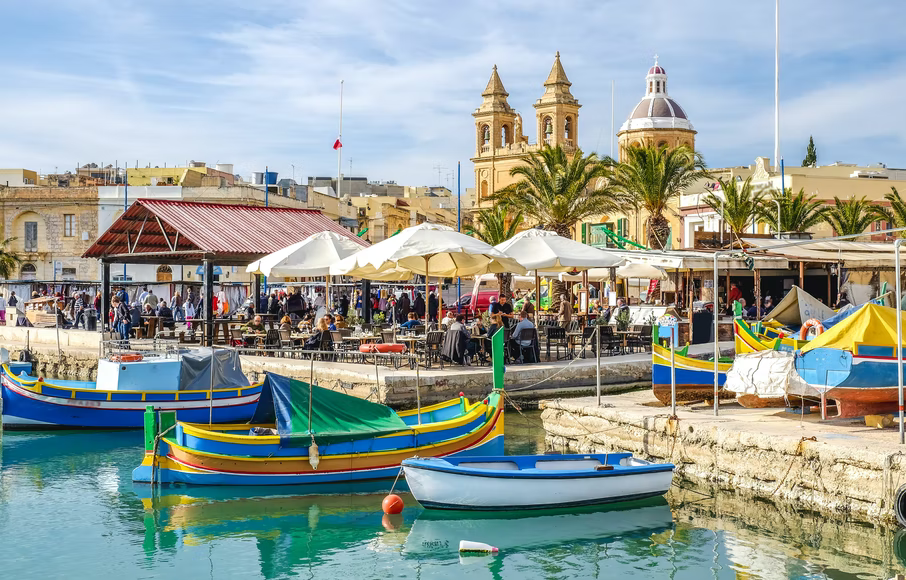
Malta is a wonderful island country in the Mediterranean Sea that lies close to Italy, Tunisia, and Libya. The total population is about half a million citizens, making Malta a country with the smallest capital city in the European Union. However small it may be, the size shouldn’t fool anyone because Malta has political and economic stability and an even richer culture. More specifically, Malta is the only country in the Schengen area to maintain very good economic growth.
Moreover, it was ranked to have some of the strongest banks in the world. Adding on the list of outstanding reasons why to choose Malta are the following: childcare, free universal healthcare, and free education. Ultimately, a big reason why people want to obtain residency in Malta is because of its natural beauty. The weather is never too hot or too cold, and the beaches have easy access. Malta truly offers a good quality of life.
Whether you’re an EU/EEA national or a third-country national there are many ways you can obtain residency in Malta. Third-country nationals are even eligible for residency programs that can provide them with residency if they meet all the eligibility criteria. This is yet another reason why Malta is so great.