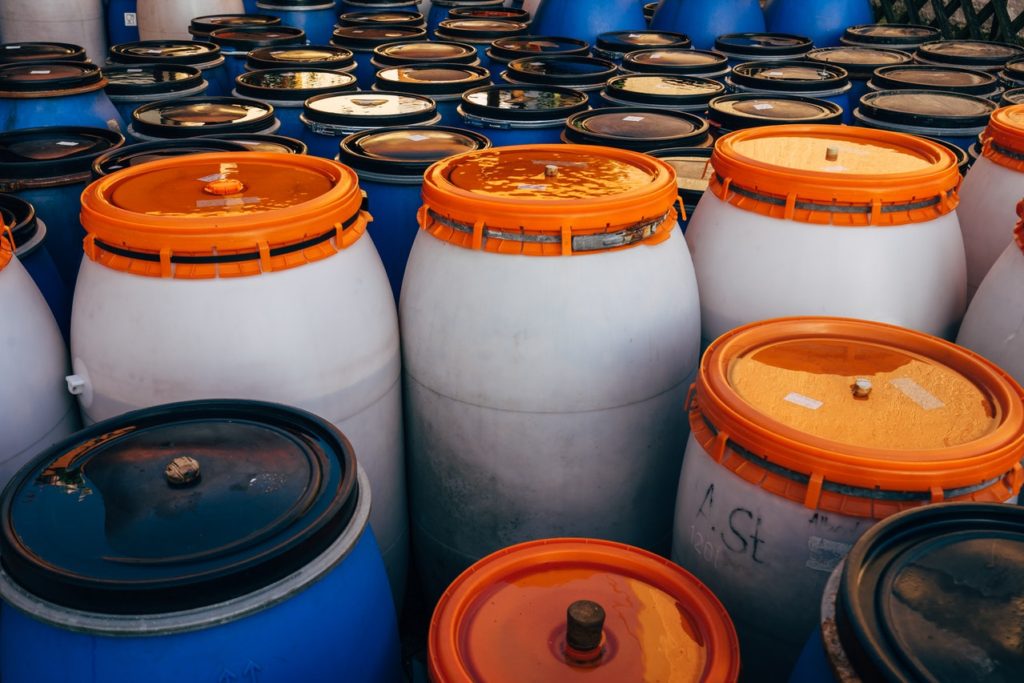
Would you like to know about indoor and outdoor drum storage at your workplace? If ‘yes’ then you are at the right article. No matter whether you are storing corrosive substances, flammable liquids, organic peroxides, oxidizing agents or toxic substances in your warehouse, you have to meet some requirements to keep them safe. When looking at fuel drum, outdoor chemical storage, or oil drum, a few factors must be considered to build a secure working environment. Let’s have a look at 6 key points that you must consider when choosing chemical drum storage at your worksite.
How to store your chemical drums?
When you have stored chemical drums at your workplace, first you need to minimize the risks related to the dangerous goods you are storing. After all, storing bulk of chemicals can probably raise the risk of fire, environmental damage, or human harm. Let’s not waste time and quickly move to our list of 6 things.
- Spill containment
You need to manage multiple risks when storing chemical drums at your worksite. A chemical spill can result in several problems. There can be the danger of harm or asphyxiation, higher chances of explosion or fire, property damage, and pollution of soil and waterways. As huge quantities of hazardous chemicals are involved, IBC spill pallets must comply to chemical spill containment. Every category of dangerous goods has some requirements associated with spill containment capacities. So, you must always consider them.
- Impact damage protection
You have to face the threat of impact damage when having outdoor chemical drum storage. By storing chemicals outdoors, they might get hit by debris or a moving automobile. Thus, it’s necessary that your outdoor chemical storing containers are built to protect dangerous goods against the incidents linked to impact damage.
- Chemical resistance
When you are having indoor and outdoor drum storage of hazardous goods, there’s a probability of a chemical reaction to some construction materials. That chemical reaction not just damages the effectiveness of chemical storage drum and raises the risk, but it also decreases the lifetime and durability of the storage container. Therefore, chemical resistance construction materials like poly sump liners and fiberglass floors are necessary for containers storing corrosive substances as they provide safety against chemical reaction.
- Ventilation
Some dangerous goods like toxic substances and flammable liquids discharge hazardous vapors that can cause human harm and asphyxiation. So, you must abide by Workplace Exposure Standards For Airborne Contaminants when storing bulk of chemicals.
- Hazardous goods signage
For decreasing risk at the worksite, it’s necessary that each store has proper hazardous goods signage. It’s a mandatory requirement for storing bulk of chemicals. Proper signage is essential for many reasons, including:
- Determining the category of dangerous goods being stored.
- Warning employees, contractors, and supervisors to the threats related to stored chemicals.
- Helping with right chemical partition.
- Potential for customization
Sometimes, you need a customized chemical storage solution to fulfill your business requirements. You will be glad to know that chemical storing containers can be customized by manufacturers by including features like emergency eyewash equipment and compliant decanting systems.